2nd Grade Common Core Collecting and Organizing Data Resources
Common Core Quick Links:
Common Core Standards for 2nd Grade Math, Common Core Standards for 2nd Grade ELA
11 results
Math
✕2nd Grade
✕Common Core
✕11 results
2nd Grade Common Core Collecting and Organizing Data Resources
Common Core Quick Links:
Common Core Standards for 2nd Grade Math, Common Core Standards for 2nd Grade ELA11 results
Math
✕2nd Grade
✕Common Core
✕11 results










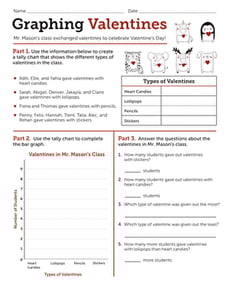




About 2nd Grade Common Core Collecting And Organizing Data Resources
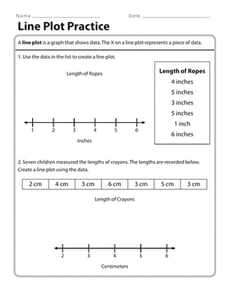
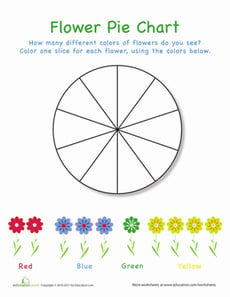
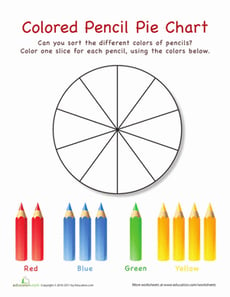
On Education.com, 2nd grade Common Core collecting and organizing data resources include worksheets, activities, and charts that help students learn to gather, record, and analyze information. The materials focus on tally marks, picture graphs, and bar graphs, enabling young learners to practice surveys, observations, and experiments to answer questions. These resources promote hands-on learning and provide teachers and parents with engaging tools to reinforce foundational math and data literacy skills.
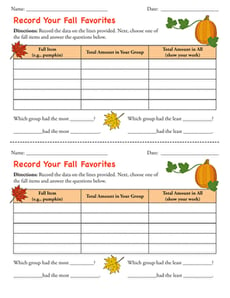
Access collections of printable conclusiveness activities such as graphing exercises, survey templates, and observation charts on Education.com. These resources allow students to practice creating survey questions, using tally marks to record answers, and organizing data visually in tables and graphs. The materials support skills outlined in the 2.MD.D.10 data collection standard while making learning interactive, practical, and fun.
Educators and parents can use these resources to plan classroom lessons or at-home practice that builds confidence in data collection and analysis. By providing structured activities that encourage counting, grouping, and comparing information, these tools help students make connections between textbook concepts and real-world examples. This familiarity aids in developing critical thinking, problem-solving, and communication skills essential for mathematical and scientific exploration.
Access collections of printable conclusiveness activities such as graphing exercises, survey templates, and observation charts on Education.com. These resources allow students to practice creating survey questions, using tally marks to record answers, and organizing data visually in tables and graphs. The materials support skills outlined in the 2.MD.D.10 data collection standard while making learning interactive, practical, and fun.
Educators and parents can use these resources to plan classroom lessons or at-home practice that builds confidence in data collection and analysis. By providing structured activities that encourage counting, grouping, and comparing information, these tools help students make connections between textbook concepts and real-world examples. This familiarity aids in developing critical thinking, problem-solving, and communication skills essential for mathematical and scientific exploration.