Fiction Make Predictions Resources

56 results
English Language Arts
✕Fiction
✕56 results
Subtopics:
Fiction Make Predictions Resources
56 results
English Language Arts
✕Fiction
✕56 results



















About Fiction Make Predictions Resources
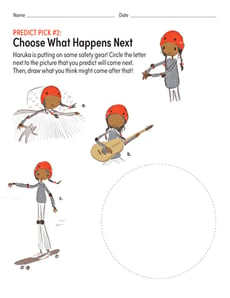
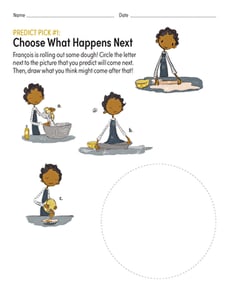
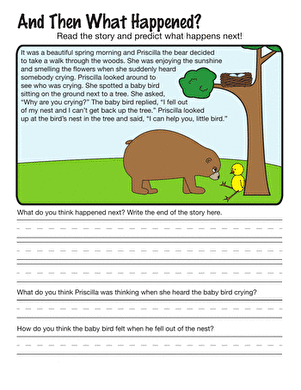
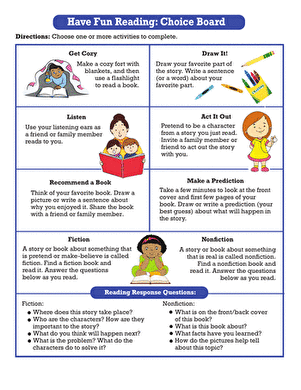
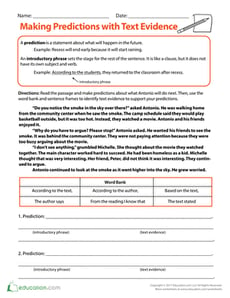
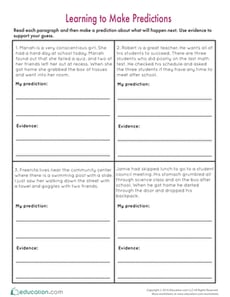
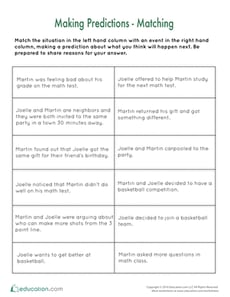
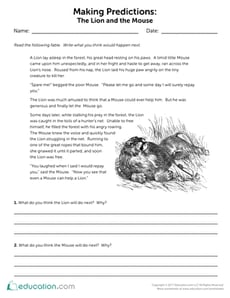
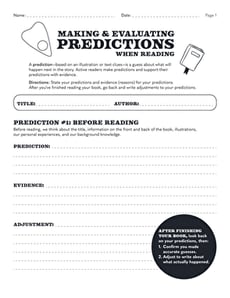
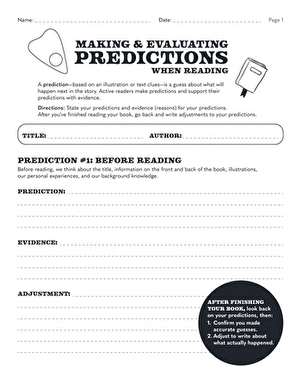
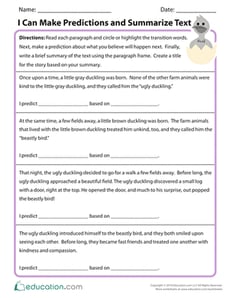
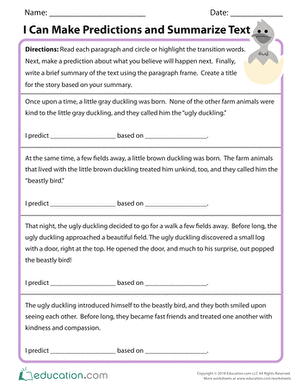
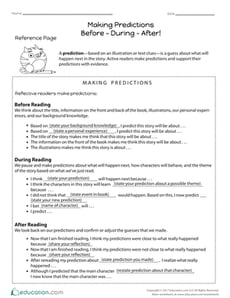
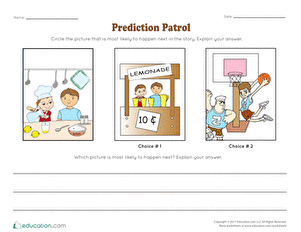
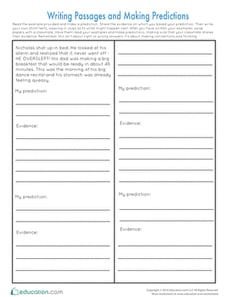
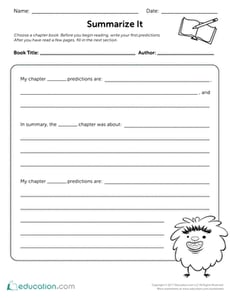
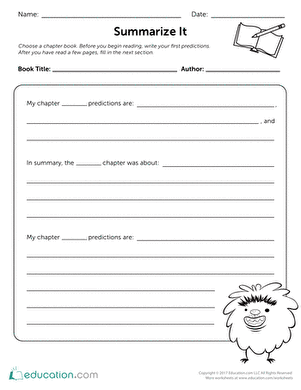
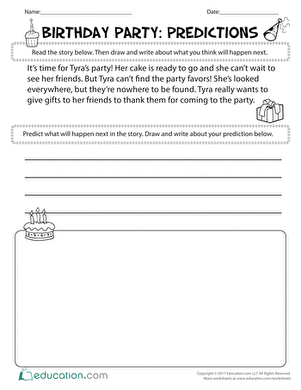
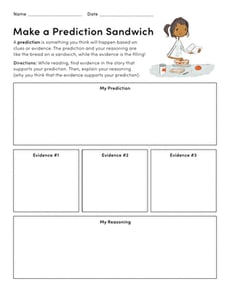
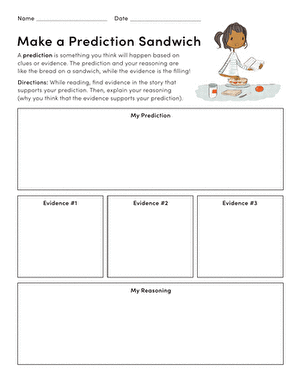
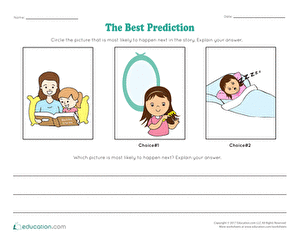
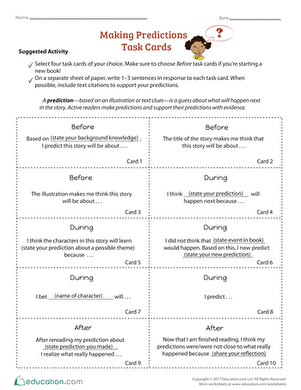
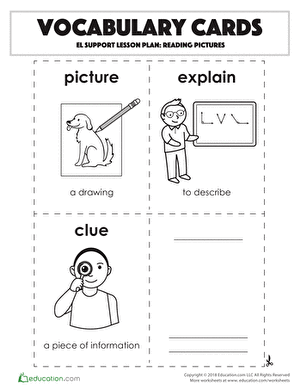
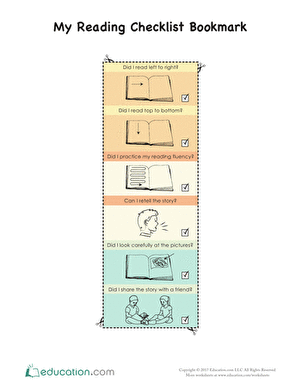
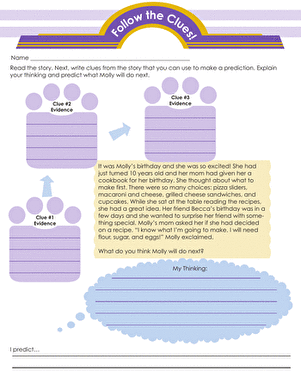
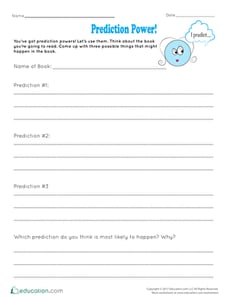
On Education.com, fiction make predictions resources provide students with tools to enhance reading comprehension by forecasting story events based on text clues, titles, and images. These resources include printable graphic organizers, lesson plans, and interactive activities that encourage active engagement with stories from preschool to upper elementary. Educators and parents can access structured materials designed to develop students' judgment, reasoning, and textual analysis skills.
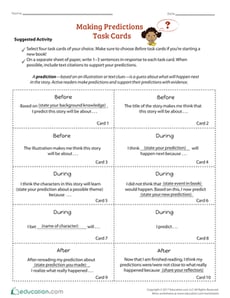
This page offers materials such as prediction charts, story frames, and classroom printables that supporting before-, during-, and after-reading strategies. These resources also promote class discussions, interpretive thinking, and the integration of visual and textual clues. Students practice making educated guesses about plot developments, character actions, and story outcomes while gaining confidence in their literary analysis abilities.
Educators and families can use these materials to create targeted lessons, reinforce literacy concepts, or provide engaging at-home activities. Structured prediction exercises help track progress in comprehension and inference skills, making reading instruction both fun and educational. By utilizing these resources, drills become opportunities for creative thinking, collaboration, and critical evaluation.
This page offers materials such as prediction charts, story frames, and classroom printables that supporting before-, during-, and after-reading strategies. These resources also promote class discussions, interpretive thinking, and the integration of visual and textual clues. Students practice making educated guesses about plot developments, character actions, and story outcomes while gaining confidence in their literary analysis abilities.
Educators and families can use these materials to create targeted lessons, reinforce literacy concepts, or provide engaging at-home activities. Structured prediction exercises help track progress in comprehension and inference skills, making reading instruction both fun and educational. By utilizing these resources, drills become opportunities for creative thinking, collaboration, and critical evaluation.