Preschool Arts & Crafts Classifying Two-Dimensional Shapes Activities

13 results
Math
✕Pre-K
✕Activities
✕Arts & Crafts
✕13 results
Preschool Arts & Crafts Classifying Two-Dimensional Shapes Activities
13 results
Math
✕Pre-K
✕Activities
✕Arts & Crafts
✕13 results






About Preschool Arts & Crafts Classifying Two-dimensional Shapes Activities
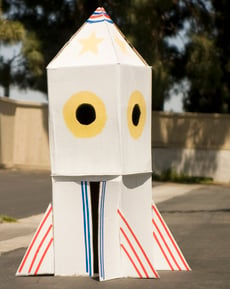
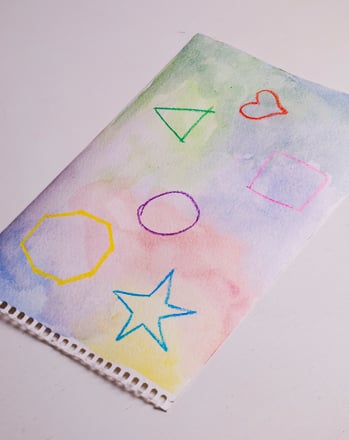
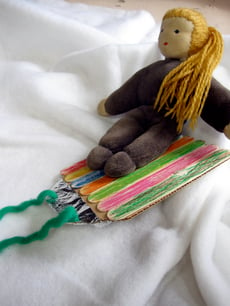
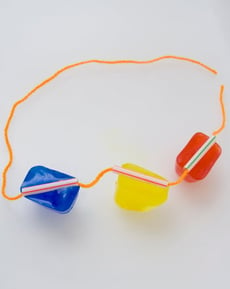
On Education.com, preschool arts & crafts classifying two-dimensional shapes activities provide young children with hands-on, engaging opportunities to learn about geometry through creative arts and crafts. These activities help children recognize shapes such as circles, squares, triangles, and rectangles, while developing fine motor skills and spatial awareness. Examples include making shape collages, creating DIY shape stamps, and building with craft sticks or paper cutouts. Such exercises combine artistic expression with foundational mathematics concepts, reinforcing shape identification, counting, and shape-creation skills.
On Education.com, you can find a range of worksheet pages that allow children to practice recognizing and sorting shapes in structured activities. These printables provide interactive ways to identify geometric figures, enhance visual perception, and solidify shape distinctions. Consistent exposure to these exercises supports early childhood early math readiness and shapes foundational geometrical understanding. Educators and parents can easily integrate shape-based worksheets into lesson plans, choose activities appropriate for various skill levels, and reinforce learning through repetition.
On Education.com, these preschool arts & crafts color and shape-based activities help children explore geometry while encouraging creativity. By tracing, coloring, or designing objects with multiple shapes, young learners experiment with spatial relationships, proportions, and patterns. Such crafts support cognitive development by connecting shape recognition to real-world objects and music-sing or pattern-based procedures. Using familiar materials keeps learning fun and accessible, making shape recognition a natural and enjoyable part of daily activity and classroom lessons.
On Education.com, you can find a range of worksheet pages that allow children to practice recognizing and sorting shapes in structured activities. These printables provide interactive ways to identify geometric figures, enhance visual perception, and solidify shape distinctions. Consistent exposure to these exercises supports early childhood early math readiness and shapes foundational geometrical understanding. Educators and parents can easily integrate shape-based worksheets into lesson plans, choose activities appropriate for various skill levels, and reinforce learning through repetition.
On Education.com, these preschool arts & crafts color and shape-based activities help children explore geometry while encouraging creativity. By tracing, coloring, or designing objects with multiple shapes, young learners experiment with spatial relationships, proportions, and patterns. Such crafts support cognitive development by connecting shape recognition to real-world objects and music-sing or pattern-based procedures. Using familiar materials keeps learning fun and accessible, making shape recognition a natural and enjoyable part of daily activity and classroom lessons.