Kindergarten Common Core Classifying Two-Dimensional Shapes Interactive Worksheets
Common Core Quick Links:
Common Core Standards for Kindergarten Math, Common Core Standards for Kindergarten ELA
4 results
Math
✕Kindergarten
✕Interactive Worksheets
✕Common Core
✕4 results
Subtopics:
Kindergarten Common Core Classifying Two-Dimensional Shapes Interactive Worksheets
Common Core Quick Links:
Common Core Standards for Kindergarten Math, Common Core Standards for Kindergarten ELA4 results
Math
✕Kindergarten
✕Interactive Worksheets
✕Common Core
✕4 results





About Kindergarten Common Core Classifying Two-dimensional Shapes Interactive Worksheets
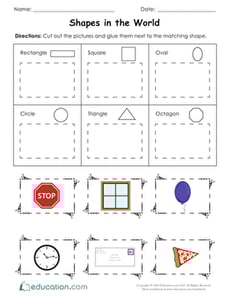
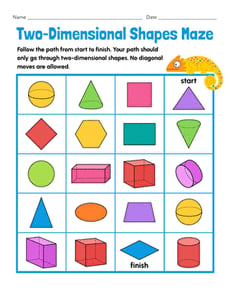
On Education.com, social studies educators and parents can access a variety of PDFs, printable activities, and lesson plans to help children identify and classify two-dimensional shapes. These resources support young learners in recognizing basic shapes like circles, squares, triangles, and rectangles by attributes such as sides and corners. Educators can use practical tools such as shape sorting mats, geoboards, and digital matching games to make learning interactive and engaging.
Browse Math worksheets for Kindergarten Common Core that include shape classification activities. Educators and parents can download and print materials that combine visual recognition with hands-on exercises, reinforcing geometry concepts. These resources allow structured practice and variation, helping students identify shapes across different contexts while supporting pattern recognition, sorting, and categorization skills.
Use resources such as shape sorting templates, drawing pages, and interactive exercises on Education.com to create lessons focused on identifying and classifying two-dimensional shapes. Multipurpose classroom materials such as worksheets and digital sorting activities help explain geometric attributes clearly, making it easier for early learners to understand shape concepts and apply them in many contexts.
Browse Math worksheets for Kindergarten Common Core that include shape classification activities. Educators and parents can download and print materials that combine visual recognition with hands-on exercises, reinforcing geometry concepts. These resources allow structured practice and variation, helping students identify shapes across different contexts while supporting pattern recognition, sorting, and categorization skills.
Use resources such as shape sorting templates, drawing pages, and interactive exercises on Education.com to create lessons focused on identifying and classifying two-dimensional shapes. Multipurpose classroom materials such as worksheets and digital sorting activities help explain geometric attributes clearly, making it easier for early learners to understand shape concepts and apply them in many contexts.