Painting & Drawing Math Activities

Painting & Drawing Math Activities
22 results
Math
✕Activities
✕Painting & Drawing
✕22 results


















About Painting & Drawing Math Activities
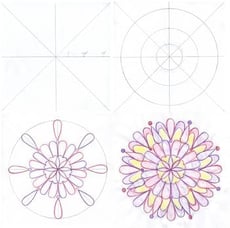
On Education.com, Painting & drawing math activities provide hands-on ways for children to learn concepts like symmetry, patterns, geometry, measurement, and number sense through creative art projects. These activities combine practical art-making with math practice, helping young learners see the connection between visual arts and mathematical ideas. Educators and parents can access printable worksheets, classroom lesson plans, and activities that make math engaging and accessible while fostering creativity.
Visit Education.com for resources that include coloring pages, pattern tracing exercises, tessellation activities, and scattered number artwork to teach math concepts visually. These interactive tools support a range of grades from early childhood through elementary, encouraging hands-on experimentation and critical thinking. Materials are designed to be both educational and fun, helping learners connect abstract concepts to real-world applications and stimulating an interest in math.
Practicing imagination in coloring, drawing, and tracing activities facilitates understanding of mathematical shapes, numbers, and patterns. Teachers and parents can use these resources to support structured lessons or encourage independent exploration. This mix of art and math activities simplifies learning, enhances motivation, and nurtures curiosity in young students while providing valuable educational experiences.
Visit Education.com for resources that include coloring pages, pattern tracing exercises, tessellation activities, and scattered number artwork to teach math concepts visually. These interactive tools support a range of grades from early childhood through elementary, encouraging hands-on experimentation and critical thinking. Materials are designed to be both educational and fun, helping learners connect abstract concepts to real-world applications and stimulating an interest in math.
Practicing imagination in coloring, drawing, and tracing activities facilitates understanding of mathematical shapes, numbers, and patterns. Teachers and parents can use these resources to support structured lessons or encourage independent exploration. This mix of art and math activities simplifies learning, enhances motivation, and nurtures curiosity in young students while providing valuable educational experiences.