Offline Educational Common Core Two-Dimensional Shapes Games
Common Core Quick Links:
Common Core State Standards
11 results
Math
✕Offline Games
✕Common Core
✕11 results
Offline Educational Common Core Two-Dimensional Shapes Games
Common Core Quick Links:
Common Core State Standards11 results
Math
✕Offline Games
✕Common Core
✕11 results
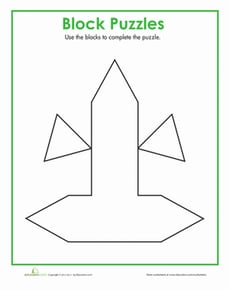


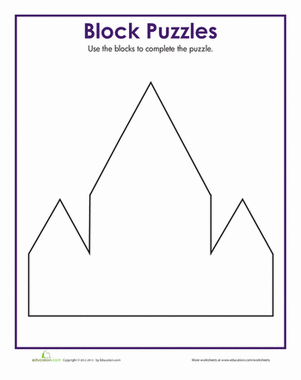


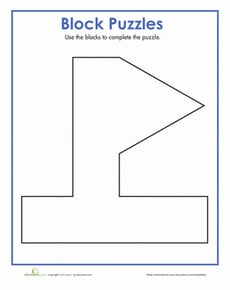


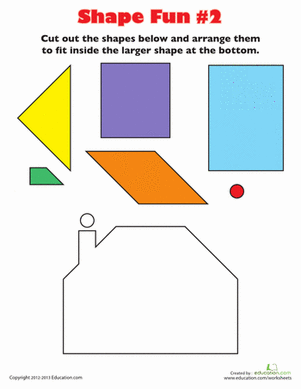





About Offline Educational Common Core Two-dimensional Shapes Games
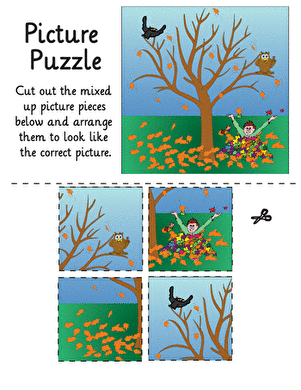
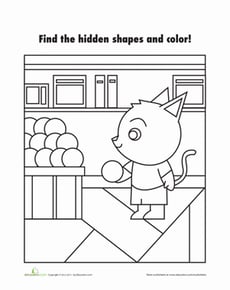
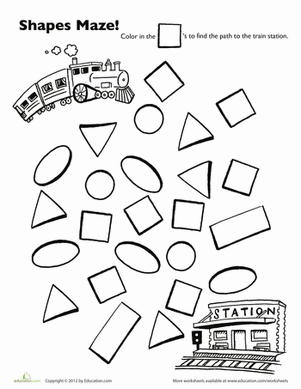
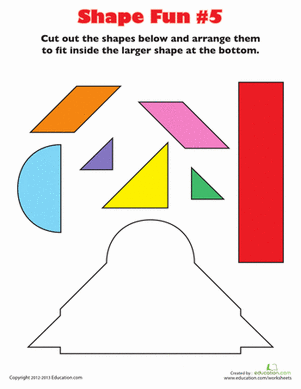
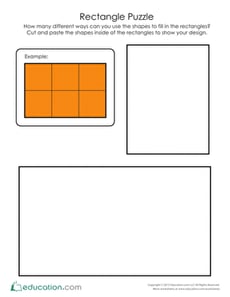
On Education.com, offline Common Core 2D shape games use hands-on activities like shape sorting, tangrams, bingo, and shape hunts to build skills in recognition, classification, and spatial awareness. These activities support early math concepts by encouraging children to interact with cutouts, worksheets, and everyday objects. Such activities develop fine motor skills and help children understand geometric attributes naturally and playfully.
This page on Education.com features printable worksheets, interactive shape matching games, and lesson plans focused on two-dimensional shapes. Educators and parents can find resources that reinforce shape identification, comparison, and creation while aligning with Common Core standards. These materials provide structured yet flexible exercises that cater to diverse learning styles and classroom settings.
Using offline shape games from Education.com helps teachers and parents save planning time while providing engaging ways for children to explore geometry. The resources enable educational interactions that promote learning through physical activity, observation, and creative exploration. Overall, these materials encourage fun, meaningful hands-on experiences that strengthen foundational mathematical skills.
This page on Education.com features printable worksheets, interactive shape matching games, and lesson plans focused on two-dimensional shapes. Educators and parents can find resources that reinforce shape identification, comparison, and creation while aligning with Common Core standards. These materials provide structured yet flexible exercises that cater to diverse learning styles and classroom settings.
Using offline shape games from Education.com helps teachers and parents save planning time while providing engaging ways for children to explore geometry. The resources enable educational interactions that promote learning through physical activity, observation, and creative exploration. Overall, these materials encourage fun, meaningful hands-on experiences that strengthen foundational mathematical skills.