Common Core Elapsed Time Resources
Common Core Quick Links:
Common Core State Standards
22 results
Math
✕Common Core
✕22 results
Subtopics:
Common Core Elapsed Time Resources
Common Core Quick Links:
Common Core State Standards22 results
Math
✕Common Core
✕22 results

















About Common Core Elapsed Time Resources
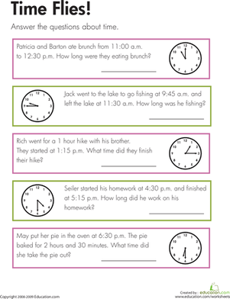
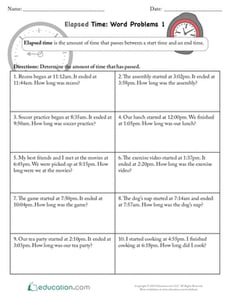
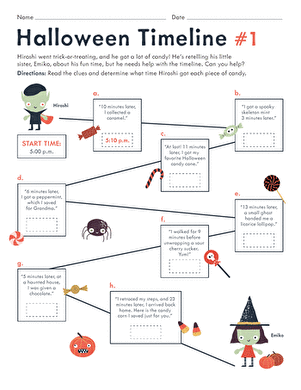
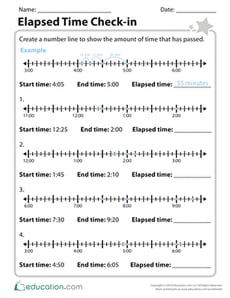
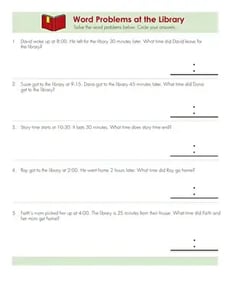
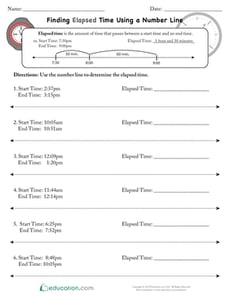
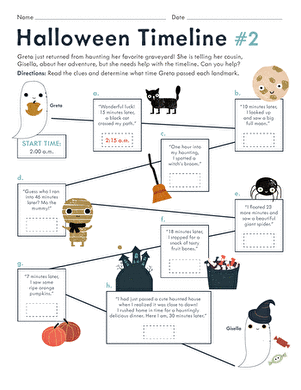
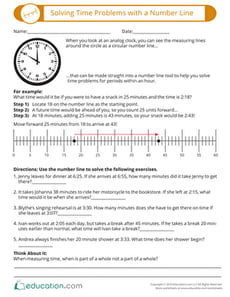
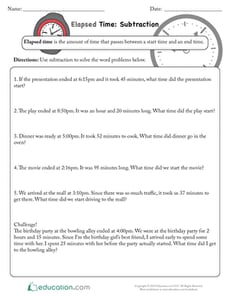
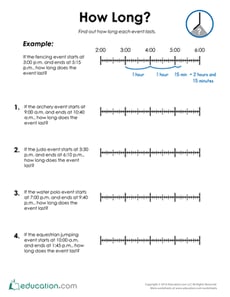
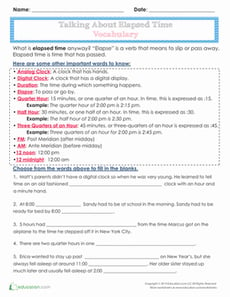
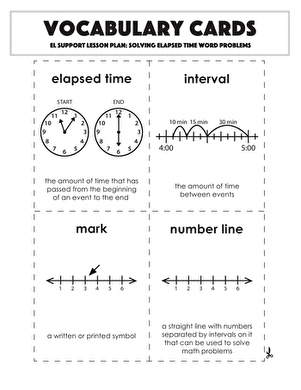
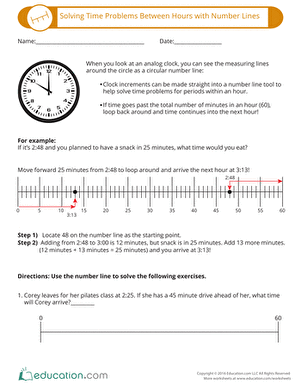
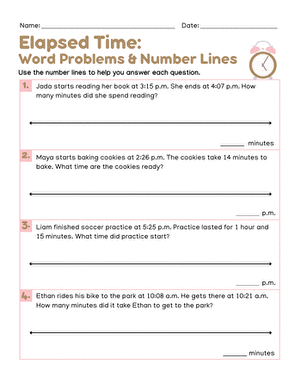
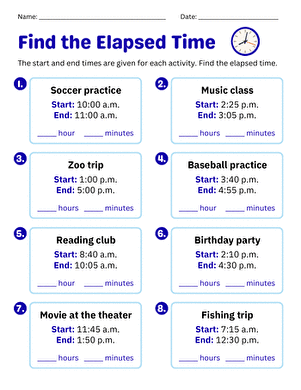
On Education.com, the Common Core elapsed time resources include lesson plans, worksheets, and practice activities designed to help students understand and measure the passage of time. These materials provide foundational skills for tracking hours, minutes, and seconds, essential for math, science, and everyday life applications. Educators and parents can use these resources to reinforce concepts through guided exercises, arithmetic problems, and real-world time tracking activities.
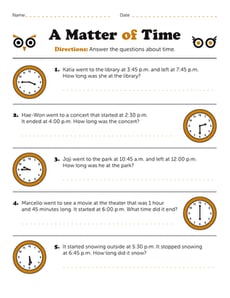
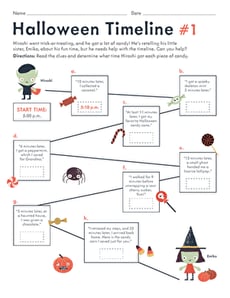
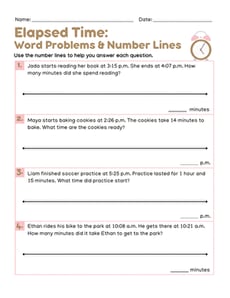
Course materials on Education.com feature printable worksheets and interactive lessons focused on teaching children to read and interpret elapsed time. These resources support structured learning by providing timers, puzzles, and exercises that help students develop counting, strategy, and problem-solving skills. Materials are designed to cater to 3rd to 6th-grade learners, promoting both conceptual understanding and practical application.
Educators and parents can use these resources to create engaging classroom activities or at-home learning sessions. Using structured practice pages can help students gain confidence in measuring time with clocks, calculating durations, and applying time concepts to everyday situations. This makes connecting theoretical knowledge to real-world relevance easier while saving planning time for educators and caregivers.
Course materials on Education.com feature printable worksheets and interactive lessons focused on teaching children to read and interpret elapsed time. These resources support structured learning by providing timers, puzzles, and exercises that help students develop counting, strategy, and problem-solving skills. Materials are designed to cater to 3rd to 6th-grade learners, promoting both conceptual understanding and practical application.
Educators and parents can use these resources to create engaging classroom activities or at-home learning sessions. Using structured practice pages can help students gain confidence in measuring time with clocks, calculating durations, and applying time concepts to everyday situations. This makes connecting theoretical knowledge to real-world relevance easier while saving planning time for educators and caregivers.