Common Core Relating Decimals and Fractions Resources
Common Core Quick Links:
Common Core State Standards
16 results
Math
✕Common Core
✕16 results
Common Core Relating Decimals and Fractions Resources
Common Core Quick Links:
Common Core State Standards16 results
Math
✕Common Core
✕16 results






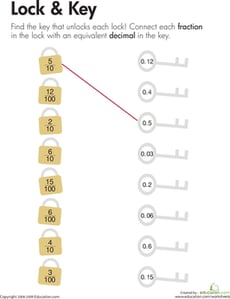



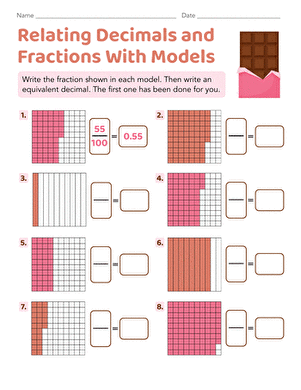







About Common Core Relating Decimals And Fractions Resources
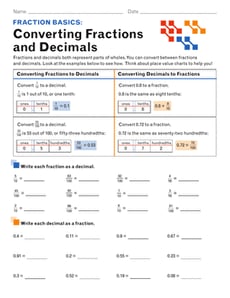
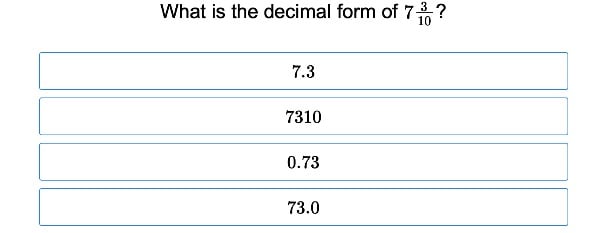
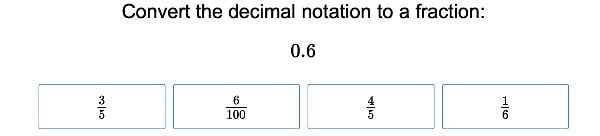
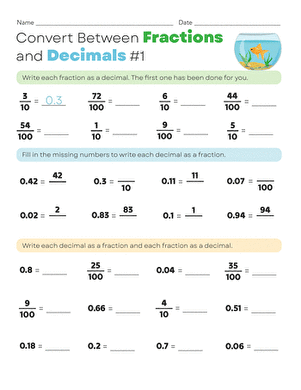
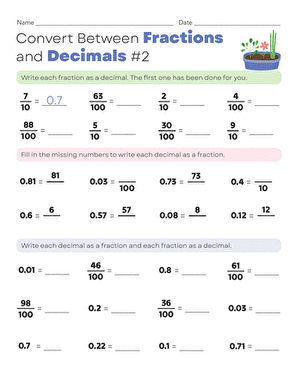
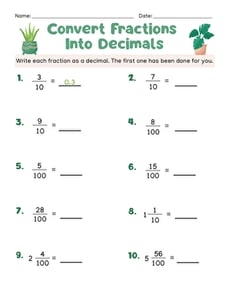
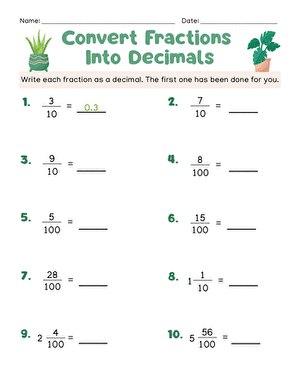
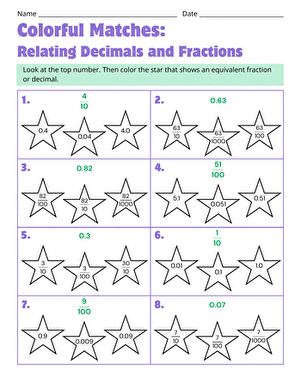
On Education.com, students and teachers can access a variety of worksheets and activities that explore relating decimals and fractions, aligning with Common Core standards 4.NF.5-7. These resources include number line exercises, visual models, and conversion practice, helping learners understand how decimals and fractions connect numerically and conceptually. Each page provides hands-on practice to reinforce skills essential for everyday math applications.
Explore printable exercises, interactive games, and teacher-created lesson plans on Education.com designed to support students' understanding of decimals and fractions. These materials offer a structured way to learn about converting fractions to decimals, using money as a model, and exploring tenths and hundredths through engaging activities and visual charts. Educators and parents can easily access a range of tools to strengthen numerical literacy and number sense.
Using these resources in the classroom or at home allows for personalized, structured instruction that tracks student progress. Educators can use adapted worksheets for differentiated learning, while parents can practice concepts with children in an interactive, self-guided way. Access to on-demand grade-appropriate materials makes it easier to support students’ mathematical development.
Explore printable exercises, interactive games, and teacher-created lesson plans on Education.com designed to support students' understanding of decimals and fractions. These materials offer a structured way to learn about converting fractions to decimals, using money as a model, and exploring tenths and hundredths through engaging activities and visual charts. Educators and parents can easily access a range of tools to strengthen numerical literacy and number sense.
Using these resources in the classroom or at home allows for personalized, structured instruction that tracks student progress. Educators can use adapted worksheets for differentiated learning, while parents can practice concepts with children in an interactive, self-guided way. Access to on-demand grade-appropriate materials makes it easier to support students’ mathematical development.