Common Core Shape Patterns Interactive Worksheets
Common Core Quick Links:
Common Core State Standards
Subtopics:
Common Core Shape Patterns Interactive Worksheets
Common Core Quick Links:
Common Core State Standards1 result
Math
✕Interactive Worksheets
✕Common Core
✕1 result


About Common Core Shape Patterns Interactive Worksheets
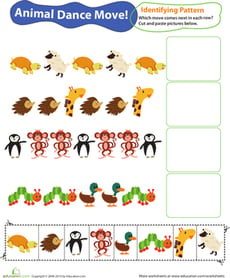
On Education.com, this page provides a variety of teacher-designed worksheets focused on common core shape patterns for early learners. These materials help students recognize, classify, and extend visual patterns using shapes such as circles, squares, triangles, and rectangles. Educators can use printable activities to reinforce pattern recognition and sorting skills, laying the foundation for more complex mathematical concepts.
This resource offers structured printables, interactive exercises, and guided lessons that make pattern learning engaging and accessible. Parents and teachers can print worksheets for classroom activities or at-home practice, providing consistent learning opportunities that support curriculum standards. The materials encourage critical thinking, observation, and reasoning by integrating pattern practice with shapes students encounter in everyday life.
By using these shape pattern worksheets, educators and parents can efficiently strengthen young students' pattern recognition and early math skills. The structured pages let learners practice identifying, creating, and extending shapes in sequence, enhancing both visual perception and logical thinking. This structured approach makes it easier to monitor progress and provide tailored support or challenges.
This resource offers structured printables, interactive exercises, and guided lessons that make pattern learning engaging and accessible. Parents and teachers can print worksheets for classroom activities or at-home practice, providing consistent learning opportunities that support curriculum standards. The materials encourage critical thinking, observation, and reasoning by integrating pattern practice with shapes students encounter in everyday life.
By using these shape pattern worksheets, educators and parents can efficiently strengthen young students' pattern recognition and early math skills. The structured pages let learners practice identifying, creating, and extending shapes in sequence, enhancing both visual perception and logical thinking. This structured approach makes it easier to monitor progress and provide tailored support or challenges.