Preschool Beads & Jewelry Geometry Resources

Subtopics:
Preschool Beads & Jewelry Geometry Resources
1 result
Math
✕Pre-K
✕Beads & Jewelry
✕1 result
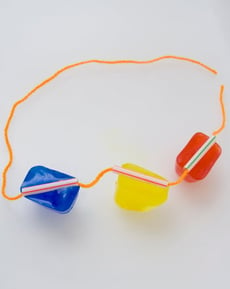

About Preschool Beads & Jewelry Geometry Resources
On Education.com, this collection introduces young learners to preschools beads and jewelry activities that develop foundational geometry skills. These hands-on exercises emphasize pattern recognition, sorting by shape and color, and identifying two-dimensional shapes. Students practice using fine motor skills for precise placement while exploring spatial awareness, counting, and symmetrical design concepts.
The page features printable worksheets, activities that involve tracing, matching, and creating bead patterns, as well as step-by-step guides for simple jewelry projects. It provides resources that encourage early geometry and pattern recognition using accessible materials and instructions suitable for young children. Educators and parents can also find crafts and lesson plans that tie in math with creativity and sensory play.
Using these preschool bead and jewelry activities helps children strengthen hand-eye coordination, develop pattern and shape recognition, and practice counting in engaging ways. Accessing ready-to-use educational resources simplifies lesson planning and enhances interactive learning experiences. These materials make learning geometry fun and accessible while encouraging experimentation, patience, and fine motor skill mastery.
The page features printable worksheets, activities that involve tracing, matching, and creating bead patterns, as well as step-by-step guides for simple jewelry projects. It provides resources that encourage early geometry and pattern recognition using accessible materials and instructions suitable for young children. Educators and parents can also find crafts and lesson plans that tie in math with creativity and sensory play.
Using these preschool bead and jewelry activities helps children strengthen hand-eye coordination, develop pattern and shape recognition, and practice counting in engaging ways. Accessing ready-to-use educational resources simplifies lesson planning and enhances interactive learning experiences. These materials make learning geometry fun and accessible while encouraging experimentation, patience, and fine motor skill mastery.