Preschool Common Core Consonants Lesson Plans
Common Core Quick Links:
Common Core Standards for Kindergarten Math, Common Core Standards for Kindergarten ELA
1 result
English Language Arts
✕Lesson Plans
✕Pre-K
✕Common Core
✕1 result
Preschool Common Core Consonants Lesson Plans
Common Core Quick Links:
Common Core Standards for Kindergarten Math, Common Core Standards for Kindergarten ELA1 result
English Language Arts
✕Lesson Plans
✕Pre-K
✕Common Core
✕1 result
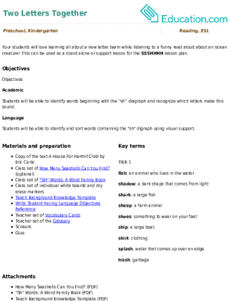

About Preschool Common Core Consonants Lesson Plans
On Education.com, preschool consonant lesson plans help young learners recognize and produce the sounds of letters (such as /b/ for 'b') by combining hands-on activities like songs, letter-sorting games with blends, and interactive exercises that meet When educators or parents can access structured lesson plans, we provide resources that promote phonemic awareness and foundational literacy skills while making learning engaging and developmentally appropriate. These plans incorporate printable charts, sound-matching activities, and sensory experiences to support early reading readiness. Using these lessons simplifies curriculum planning, enables consistent practice, and keeps lessons interactive and fun for young students.
On Education.com, check out hundreds of worksheets, lesson plans, and activities designed to teach preschoolers consonant recognition, sound production, and letter-sound connection. Resources such as printables, digital exercises, and interactive games allow educators and parents to tailor activities to different learning styles, craft multisensory experiences, and make handwriting and reading practice hands-on. Clear, structured plans ensure each lesson builds vocabulary, phonemic awareness, and early phonics skills while maintaining student engagement and enjoyment.
On Education.com, practice connecting letter shapes with sounds through themed lessons that include finger-tapping exercises, picture matching, and sight-word games. These structured activities make early literacy education accessible and enjoyable, encouraging confidence in young learners as they build essential phonics skills. By integrating hands-on craft projects, movement-based activities, and collaborative games, educators and parents can reinforce learning, support student creativity, and create a strong foundation for future reading success.
On Education.com, check out hundreds of worksheets, lesson plans, and activities designed to teach preschoolers consonant recognition, sound production, and letter-sound connection. Resources such as printables, digital exercises, and interactive games allow educators and parents to tailor activities to different learning styles, craft multisensory experiences, and make handwriting and reading practice hands-on. Clear, structured plans ensure each lesson builds vocabulary, phonemic awareness, and early phonics skills while maintaining student engagement and enjoyment.
On Education.com, practice connecting letter shapes with sounds through themed lessons that include finger-tapping exercises, picture matching, and sight-word games. These structured activities make early literacy education accessible and enjoyable, encouraging confidence in young learners as they build essential phonics skills. By integrating hands-on craft projects, movement-based activities, and collaborative games, educators and parents can reinforce learning, support student creativity, and create a strong foundation for future reading success.