Kindergarten Coloring Classifying Two-Dimensional Shapes Worksheets

8 results
Math
✕Kindergarten
✕Worksheets
✕Coloring
✕8 results
Kindergarten Coloring Classifying Two-Dimensional Shapes Worksheets
8 results
Math
✕Kindergarten
✕Worksheets
✕Coloring
✕8 results







About Kindergarten Coloring Classifying Two-dimensional Shapes Worksheets
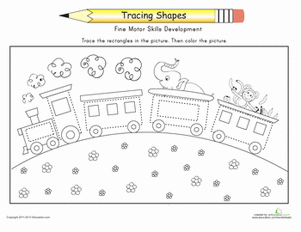
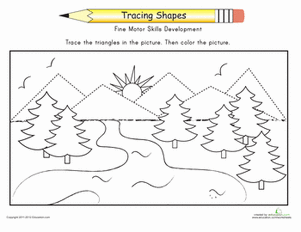
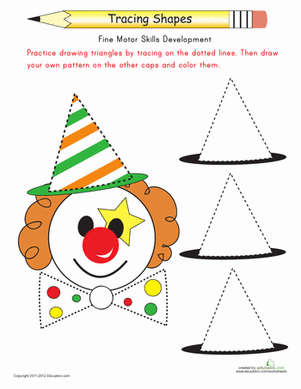
On Education.com, parents and teachers can access a variety of printable worksheets that help young learners color and classify two-dimensional shapes. These resources include activities like ‘Color the Correct Shape,’ shape sorting exercises, and pattern recognition puzzles. Such materials support early math skills, shape recognition, and fine motor development while keeping children engaged. Each worksheet provides structured, hands-on practice suitable for foundational geometry learning.
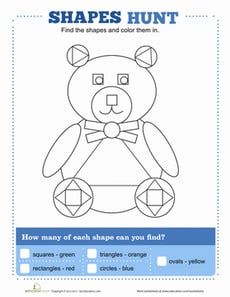
Other pages provide interactive shape hunts, ‘I Spy’ games, and themed activities like shape monsters that make learning geometry fun and educational. These materials help kids identify common 2D shapes such as circles, squares, triangles, and rectangles through direct tracing, coloring by shape, and sorting exercises. Educators and parents can use these games to reinforce shape naming and classification in classroom or homeschooling settings.
This set of worksheets allows children to learn and practice shape recognition and classification at home or in structured learning environments. Educators can incorporate these activities into math lessons, while parents can enjoy guiding children through creative hands-on exercises. The resource makes learning geometry interactive, engaging, and accessible for young learners.
Other pages provide interactive shape hunts, ‘I Spy’ games, and themed activities like shape monsters that make learning geometry fun and educational. These materials help kids identify common 2D shapes such as circles, squares, triangles, and rectangles through direct tracing, coloring by shape, and sorting exercises. Educators and parents can use these games to reinforce shape naming and classification in classroom or homeschooling settings.
This set of worksheets allows children to learn and practice shape recognition and classification at home or in structured learning environments. Educators can incorporate these activities into math lessons, while parents can enjoy guiding children through creative hands-on exercises. The resource makes learning geometry interactive, engaging, and accessible for young learners.