Kindergarten Fall Plants Resources

4 results
Science
✕Kindergarten
✕Fall
✕4 results
Subtopics:
Kindergarten Fall Plants Resources
4 results
Science
✕Kindergarten
✕Fall
✕4 results


About Kindergarten Fall Plants Resources
On Education.com, kindergarten fall plant resources include activities, worksheets, and lesson plans that help young learners explore seasonal changes. These materials guide children through teaching plant parts, seed growth, and distinguishing indoor and outdoor vegetation. Educators and parents can use printable activities to support hands-on learning and classroom enrichment. These resources make learning interactive and engaging while reinforcing science concepts.
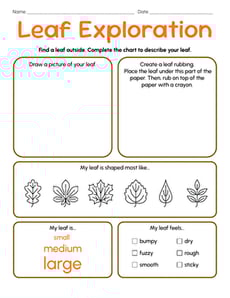
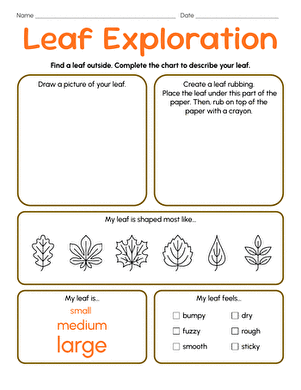
The site provides materials such as plant-themed coloring sheets, seed planting projects, leaf rubbings, and sensory sensory bins with gourds and oats. These resources are designed to introduce young children to plant biology and seasonal changes through practical experiments and creative crafts. Using structured activities, students observe plant growth, explore different leaves, and understand the track of seasons while having fun. This collection offers accessible, hands-on learning for early science education.
Educators and parents can use these resources to facilitate STEM learning while encouraging curiosity about the natural world. By including interactive projects and visual tools, such as storybooks or child-friendly experiments, children connect scientific concepts with everyday experiences. These tools support standards-aligned teaching, promote critical thinking, and inspire exploration. Students gain foundational science knowledge while enjoying creative, seasonal activities.
The site provides materials such as plant-themed coloring sheets, seed planting projects, leaf rubbings, and sensory sensory bins with gourds and oats. These resources are designed to introduce young children to plant biology and seasonal changes through practical experiments and creative crafts. Using structured activities, students observe plant growth, explore different leaves, and understand the track of seasons while having fun. This collection offers accessible, hands-on learning for early science education.
Educators and parents can use these resources to facilitate STEM learning while encouraging curiosity about the natural world. By including interactive projects and visual tools, such as storybooks or child-friendly experiments, children connect scientific concepts with everyday experiences. These tools support standards-aligned teaching, promote critical thinking, and inspire exploration. Students gain foundational science knowledge while enjoying creative, seasonal activities.