Kindergarten Common Core Earth and Space Science Resources
Common Core Quick Links:
Common Core Standards for Kindergarten Math, Common Core Standards for Kindergarten ELA
20 results
Science
✕Kindergarten
✕Common Core
✕20 results
Subtopics:
Kindergarten Common Core Earth and Space Science Resources
Common Core Quick Links:
Common Core Standards for Kindergarten Math, Common Core Standards for Kindergarten ELA20 results
Science
✕Kindergarten
✕Common Core
✕20 results

















About Kindergarten Common Core Earth And Space Science Resources
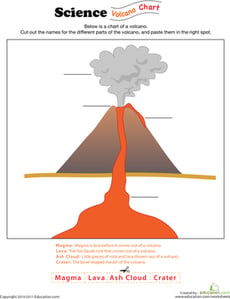
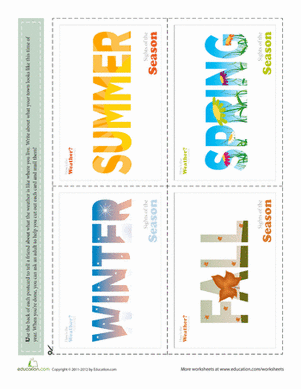
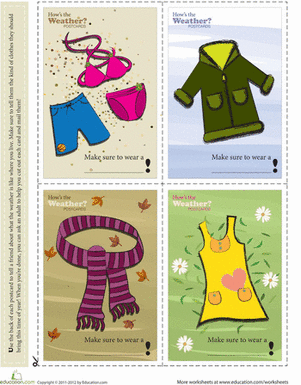
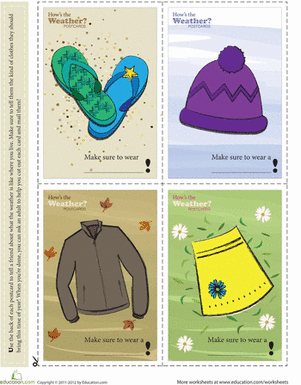
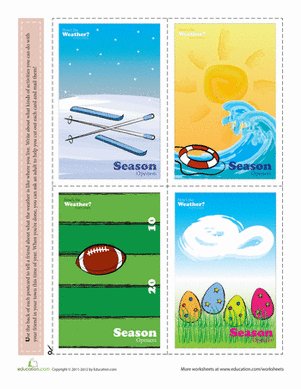
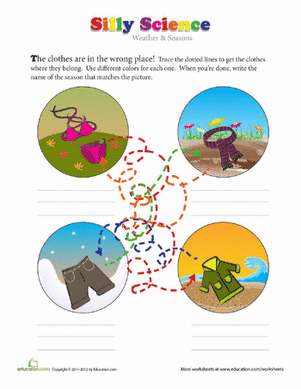
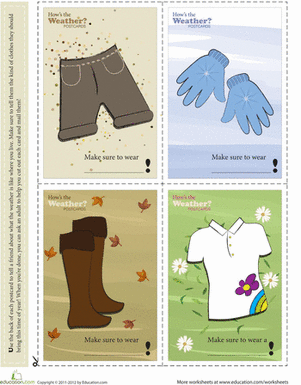
On Education.com, the Kindergarten Common Core Earth and Space Science Resources provide hands-on materials and lesson plans to help young learners explore the natural world. These resources include weather charts, seasonal sorting activities, and diagrams of the sun, moon, and stars that support early understanding of Earth's celestial phenomena. The objective is to introduce students to key concepts about the environment and the universe in an engaging way.
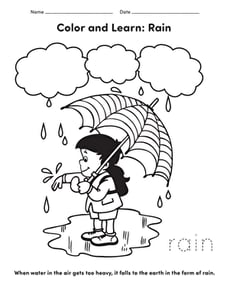
Additionally, on Education.com, educators and parents can access digital simulations, printable worksheets, and interactive activities that cover topics like day and night cycles, seasons, water patterns, and plant and animal needs. These resources are designed to reinforce foundational science skills, encourage observation, and promote curiosity about the environment.
Finally, by practicing with these materials, students can develop critical thinking and investigative skills while enjoying practical and educational activities. Educators can integrate structured lessons into classroom instruction, while parents can support at-home learning through fun, interactive projects that connect students with science concepts in everyday life.
Additionally, on Education.com, educators and parents can access digital simulations, printable worksheets, and interactive activities that cover topics like day and night cycles, seasons, water patterns, and plant and animal needs. These resources are designed to reinforce foundational science skills, encourage observation, and promote curiosity about the environment.
Finally, by practicing with these materials, students can develop critical thinking and investigative skills while enjoying practical and educational activities. Educators can integrate structured lessons into classroom instruction, while parents can support at-home learning through fun, interactive projects that connect students with science concepts in everyday life.