Kindergarten Halloween Subtraction Fact Fluency Resources

3 results
Math
✕Kindergarten
✕Halloween
✕3 results
Subtopics:
Kindergarten Halloween Subtraction Fact Fluency Resources
3 results
Math
✕Kindergarten
✕Halloween
✕3 results
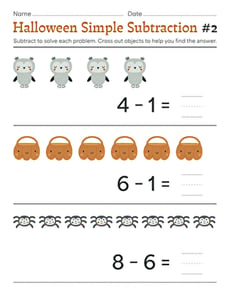

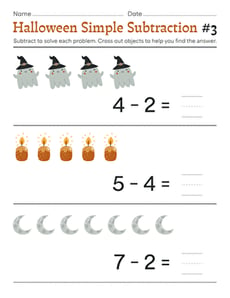

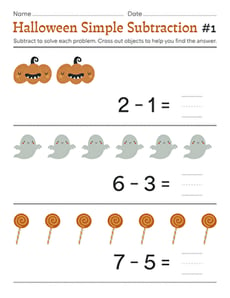

About Kindergarten Halloween Subtraction Fact Fluency Resources
On Education.com, parents and teachers can find a variety of fun and educational resources to help kindergarten students practice subtraction within 10. Resources include printable worksheets, interactive game templates like Spiderweb and Haunted House, as well as addition and subtraction fact family activities. These materials provide engaging ways to build fact fluency while reinforcing math concepts and enhancing problem-solving skills. They are suitable for classroom centers, small groups, or at-home practice.
Materials on Education.com allow educators and caregivers to create structured learning experiences that make practicing subtraction fun and accessible. Structured worksheets offer systematic practice, while games provide hands-on, interactive ways to reinforce mathematical concepts. Lesson plans and activities are designed to make learning engaging, helping young learners develop confidence and fluency with basic math facts.
Using this page on Education.com, parents and teachers can access a wide range of printable subtraction fact fluency resources. These materials reduce preparation time and ensure consistent, customizable practice for young students. Educators and caregivers can create a dynamic learning environment that encourages repetition alongside creativity and exploration.
Materials on Education.com allow educators and caregivers to create structured learning experiences that make practicing subtraction fun and accessible. Structured worksheets offer systematic practice, while games provide hands-on, interactive ways to reinforce mathematical concepts. Lesson plans and activities are designed to make learning engaging, helping young learners develop confidence and fluency with basic math facts.
Using this page on Education.com, parents and teachers can access a wide range of printable subtraction fact fluency resources. These materials reduce preparation time and ensure consistent, customizable practice for young students. Educators and caregivers can create a dynamic learning environment that encourages repetition alongside creativity and exploration.