Kindergarten Common Core Skip Counting Interactive Worksheets
Common Core Quick Links:
Common Core Standards for Kindergarten Math, Common Core Standards for Kindergarten ELA
1 result
Math
✕Interactive Worksheets
✕Kindergarten
✕Common Core
✕1 result
Subtopics:
Kindergarten Common Core Skip Counting Interactive Worksheets
Common Core Quick Links:
Common Core Standards for Kindergarten Math, Common Core Standards for Kindergarten ELA1 result
Math
✕Interactive Worksheets
✕Kindergarten
✕Common Core
✕1 result
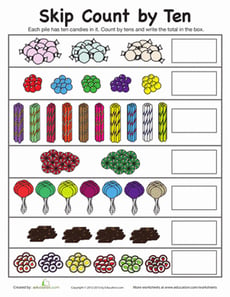


About Kindergarten Common Core Skip Counting Interactive Worksheets
On Education.com, this page provides worksheets and learning activities that help kindergarten students practice skip counting, a foundational math skill. Educators and parents can access printable materials that reinforce counting by twos, fives, tens, or other intervals increasingly. These resources make learning engaging and accessible in classroom or home settings.
Educational content on Education.com includes interactive worksheets, games, and lesson plans that support early math development. These materials enhance counting confidence, promote number pattern recognition, and prepare students for addition and subtraction. By providing structured practice, they strengthen foundational mathematical thinking and problem-solving skills.
Using these skip counting worksheets saves educators and parents time by providing ready-to-use, structured activities that reinforce classroom learning at home. They serve as effective tools for practicing math concepts, building number fluency, and supporting adaptive learning practice. Accessing hands-on resources fosters a positive learning environment and encourages continued mathematical exploration.
Educational content on Education.com includes interactive worksheets, games, and lesson plans that support early math development. These materials enhance counting confidence, promote number pattern recognition, and prepare students for addition and subtraction. By providing structured practice, they strengthen foundational mathematical thinking and problem-solving skills.
Using these skip counting worksheets saves educators and parents time by providing ready-to-use, structured activities that reinforce classroom learning at home. They serve as effective tools for practicing math concepts, building number fluency, and supporting adaptive learning practice. Accessing hands-on resources fosters a positive learning environment and encourages continued mathematical exploration.