Kindergarten Word Puzzles English Language Arts Resources

9 results
English Language Arts
✕Kindergarten
✕Word Puzzles
✕9 results
Subtopics:
Kindergarten Word Puzzles English Language Arts Resources
9 results
English Language Arts
✕Kindergarten
✕Word Puzzles
✕9 results

About Kindergarten Word Puzzles English Language Arts Resources
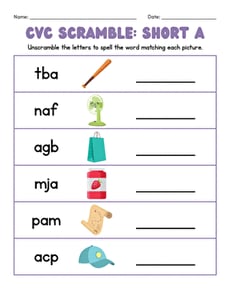
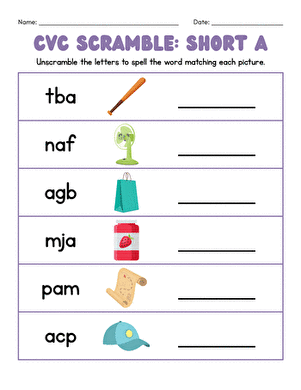
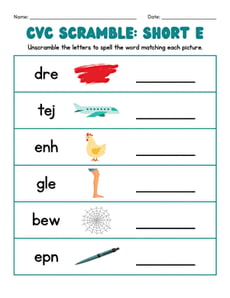
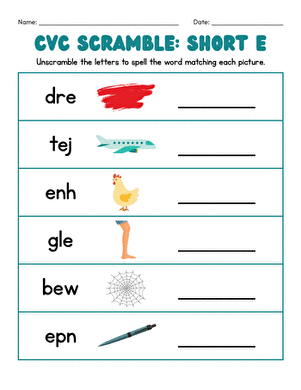
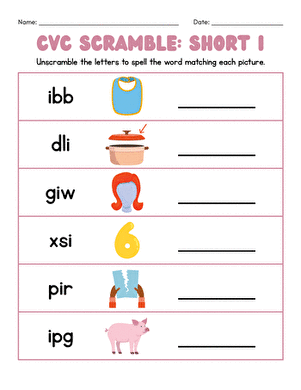
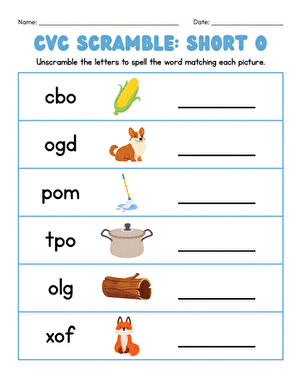
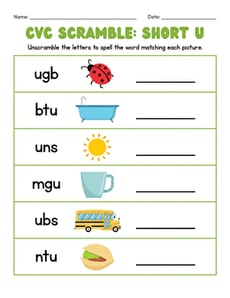
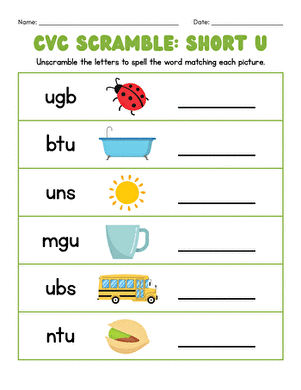
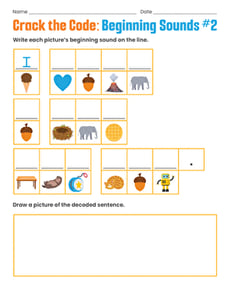
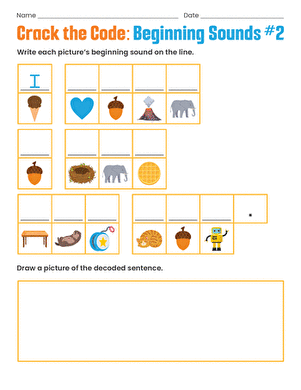
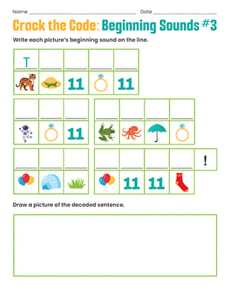
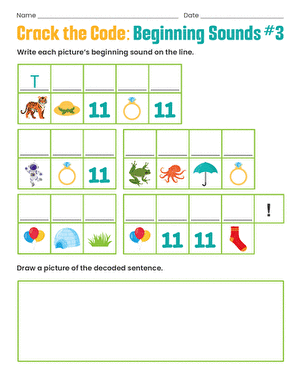
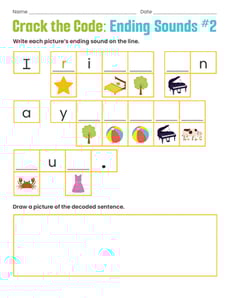
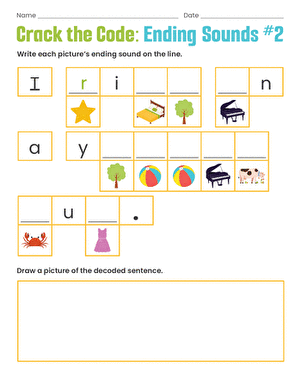
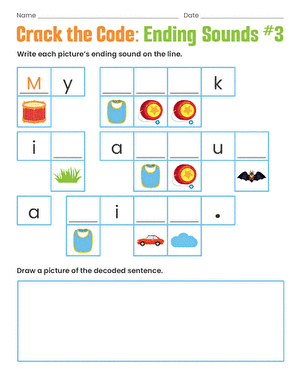
On Education.com, parents and teachers can explore a variety of kindergarten word puzzles designed to support early literacy and language development. These puzzles incorporate interactive activities such as matching, fill-in-the-blank, and word-building challenges that make learning engaging and fun. Each worksheet encourages children to recognize sight words, expand vocabulary, and strengthen spelling skills while providing hands-on educational experiences.
Education.com offers a collection of printable kindergarten word puzzles organized by themes and skill levels, making it easy to find structured learning resources. The puzzles are designed to reinforce phonics, improve problem-solving, and boost confidence in young learners. These materials serve as classroom augmentations or at-home practice tools that ensure children stay engaged while developing foundational language skills.
By using these kid-friendly word puzzles from Education.com, educators and parents can easily incorporate literacy-centered activities into everyday learning routines. Educators can prepare themed classroom exercises, while parents can provide structured practice during homework time or reading sessions. Each activity promotes critical thinking, enhances word recognition, and nurtures early reading confidence across a variety of playful formats.
Education.com offers a collection of printable kindergarten word puzzles organized by themes and skill levels, making it easy to find structured learning resources. The puzzles are designed to reinforce phonics, improve problem-solving, and boost confidence in young learners. These materials serve as classroom augmentations or at-home practice tools that ensure children stay engaged while developing foundational language skills.
By using these kid-friendly word puzzles from Education.com, educators and parents can easily incorporate literacy-centered activities into everyday learning routines. Educators can prepare themed classroom exercises, while parents can provide structured practice during homework time or reading sessions. Each activity promotes critical thinking, enhances word recognition, and nurtures early reading confidence across a variety of playful formats.