5th Grade Claims and Counterclaims Worksheets

5 results
English Language Arts
✕5th Grade
✕Worksheets
✕5 results
5th Grade Claims and Counterclaims Worksheets
5 results
English Language Arts
✕5th Grade
✕Worksheets
✕5 results




About 5th Grade Claims And Counterclaims Worksheets
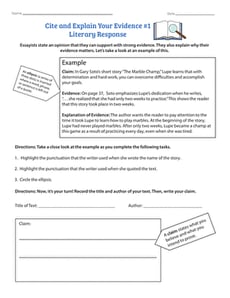
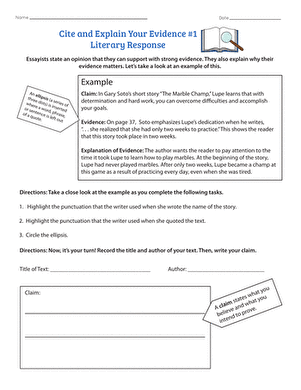
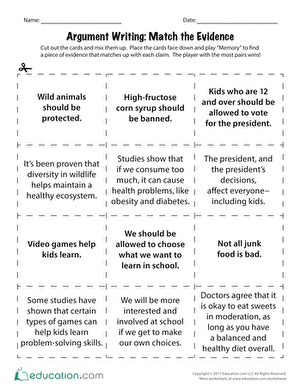
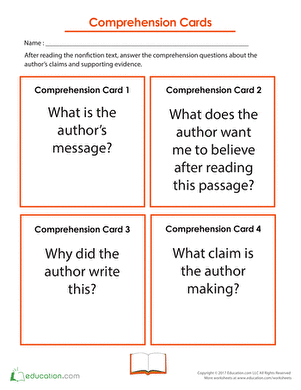
On Education.com, claims and counterclaims worksheets provide students with practice in understanding and analyzing arguments, strengthening critical thinking skills essential at the 5th grade. These worksheets help learners identify main ideas, evaluate evidence, and distinguish between facts and opinions, making them valuable for language arts and reading comprehension lessons.
Learners can explore a variety of printable materials such as primary source analysis, debate-based activities, and structured exercises that guide students through comparing statements and understanding different perspectives. These resources support educators and parents in delivering engaging math and language arts lessons at home or in the classroom. Clear explanations and step-by-step instructions make it easy for young students to develop reasoning skills.
Educators and parents can use these claims and counterclaims worksheets to create interactive exercises, stimulate critical thinking, and prepare students for more advanced arguments and discussions. Providing structured practice helps young learners evaluate different viewpoints and build confidence in analyzing arguments effectively.
Learners can explore a variety of printable materials such as primary source analysis, debate-based activities, and structured exercises that guide students through comparing statements and understanding different perspectives. These resources support educators and parents in delivering engaging math and language arts lessons at home or in the classroom. Clear explanations and step-by-step instructions make it easy for young students to develop reasoning skills.
Educators and parents can use these claims and counterclaims worksheets to create interactive exercises, stimulate critical thinking, and prepare students for more advanced arguments and discussions. Providing structured practice helps young learners evaluate different viewpoints and build confidence in analyzing arguments effectively.