5th Grade Mazes Figurative Language Worksheets

7 results
English Language Arts
✕Worksheets
✕5th Grade
✕Mazes
✕7 results
Subtopics:
5th Grade Mazes Figurative Language Worksheets
7 results
English Language Arts
✕Worksheets
✕5th Grade
✕Mazes
✕7 results




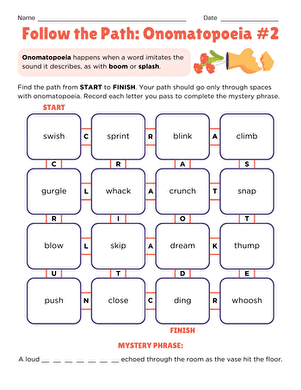

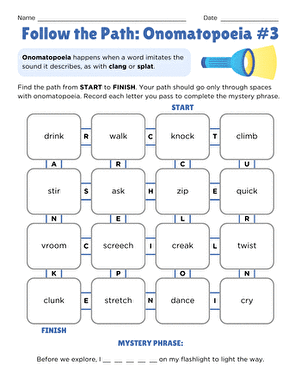
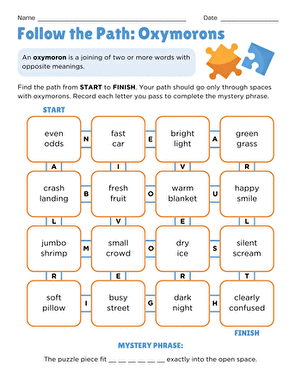
About 5th Grade Mazes Figurative Language Worksheets
On Education.com, students can explore a variety of resources including 5th grade mazes and figurative language worksheets that make learning engaging and interactive. This includes printed exercises, puzzles, and teaching guides that help students develop critical thinking and language skills while practicing problem-solving and creative expression. The site offers dozens of printable materials that support literacy, cognitive development, and instructional standards.
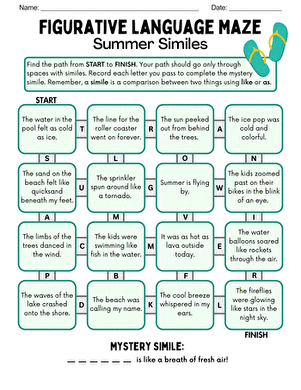
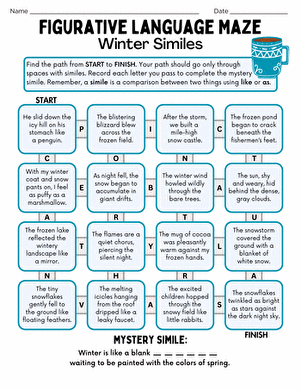
These worksheets provide tailored exercises for 5th graders to practice drawing and completing mazes while reinforcing problem-solving strategies. They also feature vocabulary and sentence exercises focused on figurative language, such as metaphors, similes, and idioms, encouraging students to analyze and apply language concepts in context. Together, these resources offer comprehensive practice across math, language arts, and cognitive skills, seamlessly blending fun and education.
Educators and parents can save time by accessing ready-to-use worksheets and interactive materials that support classroom lessons or at-home learning. Tracking progress becomes easier with structured activities that build foundational skills while keeping students engaged. Using these, teaching whole-group instruction, small-group activities, or independent practice becomes more convenient and effective.
These worksheets provide tailored exercises for 5th graders to practice drawing and completing mazes while reinforcing problem-solving strategies. They also feature vocabulary and sentence exercises focused on figurative language, such as metaphors, similes, and idioms, encouraging students to analyze and apply language concepts in context. Together, these resources offer comprehensive practice across math, language arts, and cognitive skills, seamlessly blending fun and education.
Educators and parents can save time by accessing ready-to-use worksheets and interactive materials that support classroom lessons or at-home learning. Tracking progress becomes easier with structured activities that build foundational skills while keeping students engaged. Using these, teaching whole-group instruction, small-group activities, or independent practice becomes more convenient and effective.