5th Grade Common Core Conclusion Resources
Common Core Quick Links:
Common Core Standards for 5th Grade Math, Common Core Standards for 5th Grade ELA
2 results
English Language Arts
✕5th Grade
✕Common Core
✕2 results
5th Grade Common Core Conclusion Resources
Common Core Quick Links:
Common Core Standards for 5th Grade Math, Common Core Standards for 5th Grade ELA2 results
English Language Arts
✕5th Grade
✕Common Core
✕2 results


About 5th Grade Common Core Conclusion Resources
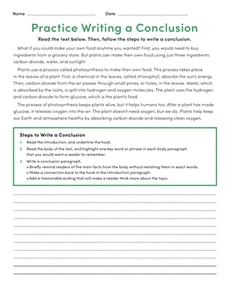
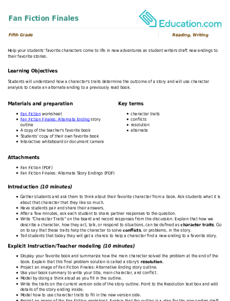
On Education.com, parents and teachers can explore a variety of resources to help 5th grade students practice writing conclusion paragraphs. These include printable worksheets, interactive exercises, and lesson plans focused on teaching students how to summarize main ideas and restate the thesis effectively. The site provides structured activities that support reading comprehension skills and paragraph development, ensuring students grasp essential writing concepts.
Educators can utilize graphic organizers and task cards designed for both opinion and expository writing. These tools make it easier for students to craft strong, clear conclusions that wrap up essays and stories. Parents can incorporate these materials into homework routines or offer structured practice at home, reinforcing classroom learning.
Realistic classroom applications include guided practice emphasizing summarization techniques, interpretive reading exercises that connect conclusions with texts, and hands-on writing activities. This approach helps streamline lesson planning, provides targeted exercises for mastery, and creates engaging learning opportunities. Using these resources can strengthen student confidence and encourage effective expression.
Educators can utilize graphic organizers and task cards designed for both opinion and expository writing. These tools make it easier for students to craft strong, clear conclusions that wrap up essays and stories. Parents can incorporate these materials into homework routines or offer structured practice at home, reinforcing classroom learning.
Realistic classroom applications include guided practice emphasizing summarization techniques, interpretive reading exercises that connect conclusions with texts, and hands-on writing activities. This approach helps streamline lesson planning, provides targeted exercises for mastery, and creates engaging learning opportunities. Using these resources can strengthen student confidence and encourage effective expression.