4th Grade Common Core Symmetry Resources
Common Core Quick Links:
Common Core Standards for 4th Grade Math, Common Core Standards for 4th Grade ELA
4th Grade Common Core Symmetry Resources
Common Core Quick Links:
Common Core Standards for 4th Grade Math, Common Core Standards for 4th Grade ELA15 results
Math
✕4th Grade
✕Common Core
✕15 results
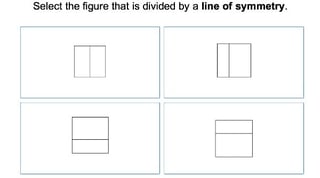

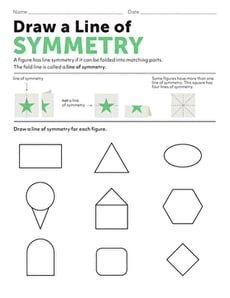

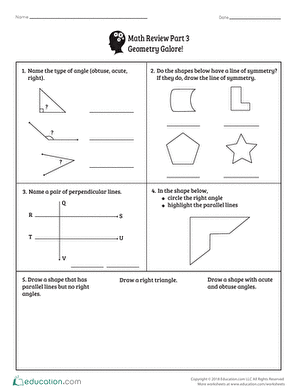











About 4th Grade Common Core Symmetry Resources
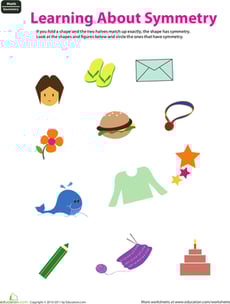
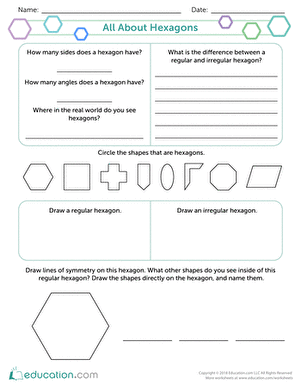
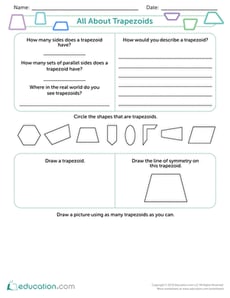
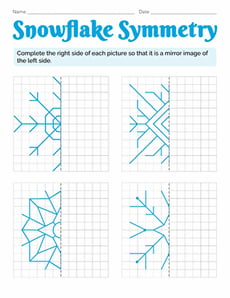
On Education.com, students can explore a variety of symmetry activities that help them understand how shapes and patterns mirror across a line. These resources include worksheets, printable cut-and-paste exercises, interactive digital games, and real-world examples that teach line symmetry concepts aligned with CCSS.MATH.CONTENT.4.G.A.3. Educators and parents can use these materials to reinforce geometric concepts while making learning engaging and accessible.
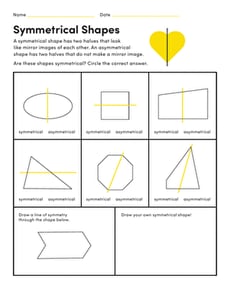
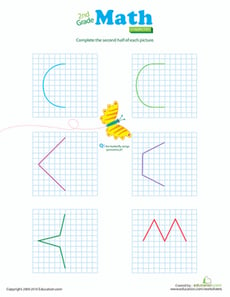
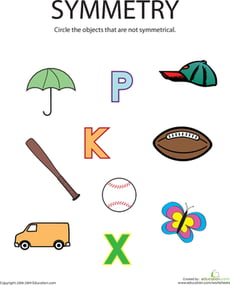
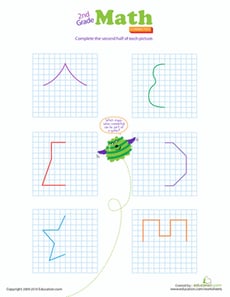
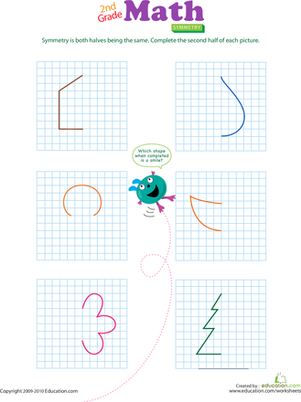
Materials on Education.com provide hands-on experiences that include identifying symmetrical shapes, completing symmetrical pictures, and differentiating between symmetric and non-symmetric figures. These resources encourage pattern recognition, spatial reasoning, and critical thinking. Interactive computer activities and printable worksheets are designed to make abstract symmetry principles clear and practical.
This collection allows teachers and parents to guide children through symmetry lessons at home or in the classroom. By using engaging exercises, students effectively practice identifying lines of symmetry, drawing symmetrical figures, and applying symmetry concepts to everyday objects. Access to versatile tools makes it easy to adapt learning to different skills levels and encourage creative problem-solving.
Materials on Education.com provide hands-on experiences that include identifying symmetrical shapes, completing symmetrical pictures, and differentiating between symmetric and non-symmetric figures. These resources encourage pattern recognition, spatial reasoning, and critical thinking. Interactive computer activities and printable worksheets are designed to make abstract symmetry principles clear and practical.
This collection allows teachers and parents to guide children through symmetry lessons at home or in the classroom. By using engaging exercises, students effectively practice identifying lines of symmetry, drawing symmetrical figures, and applying symmetry concepts to everyday objects. Access to versatile tools makes it easy to adapt learning to different skills levels and encourage creative problem-solving.