4th Grade Comparing Fractions With Unlike Denominators Exercises

2 results
Math
✕4th Grade
✕Exercises
✕2 results
4th Grade Comparing Fractions With Unlike Denominators Exercises
2 results
Math
✕4th Grade
✕Exercises
✕2 results

About 4th Grade Comparing Fractions With Unlike Denominators Exercises
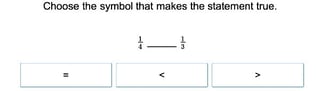
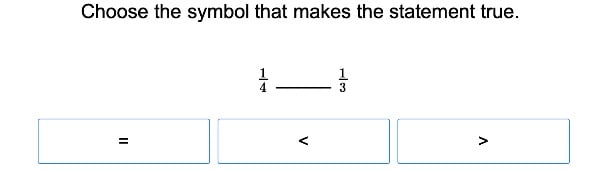
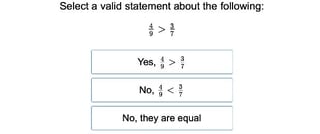
On Education.com, students can practice comparing fractions with unlike denominators using interactive worksheets, visual models, and printable exercises. These resources help learners understand concepts such as using common denominators, cross-multiplying to compare fractions, and leveraging benchmark fractions like 1/2. Materials include number line activities, shading shapes, and fraction strips to build conceptual understanding and confidence. Educators and parents can use these resources to strengthen fraction comparison skills in a structured, engaging way.
This page features digital simulations, hands-on activities, and guided lesson plans demonstrating how students compare fractions with different denominators through visual tools, number line exercises, selectors, and verbal reasoning. Each resource supports both classroom instruction and at-home practice, providing flexible options to reinforce foundational fraction concepts. By exploring these materials, educators can effectively teach students to analyze fractions, interpret their size relative to each other, and develop critical math reasoning skills.
Using these comparison exercises allows teachers and parents to reinforce fraction concepts through interactive practice that aligns with grade 4 math standards. These structured activities enable students to see fractions in context, develop cross-multiplication strategies, and interpret mathematical symbolism. Students can also practice solving real-world word problems involving fraction comparisons, strengthening problem-solving tools. By incorporating visual models, manipulatives, and digital exercises, educators provide diverse approaches to make fraction comparison engaging, pedagogically effective, and enjoyable.
This page features digital simulations, hands-on activities, and guided lesson plans demonstrating how students compare fractions with different denominators through visual tools, number line exercises, selectors, and verbal reasoning. Each resource supports both classroom instruction and at-home practice, providing flexible options to reinforce foundational fraction concepts. By exploring these materials, educators can effectively teach students to analyze fractions, interpret their size relative to each other, and develop critical math reasoning skills.
Using these comparison exercises allows teachers and parents to reinforce fraction concepts through interactive practice that aligns with grade 4 math standards. These structured activities enable students to see fractions in context, develop cross-multiplication strategies, and interpret mathematical symbolism. Students can also practice solving real-world word problems involving fraction comparisons, strengthening problem-solving tools. By incorporating visual models, manipulatives, and digital exercises, educators provide diverse approaches to make fraction comparison engaging, pedagogically effective, and enjoyable.