3rd Grade English Language Support Text Features Lesson Plans

1 result
English Language Arts
✕Lesson Plans
✕3rd Grade
✕English Language Support
✕1 result
3rd Grade English Language Support Text Features Lesson Plans
1 result
English Language Arts
✕Lesson Plans
✕3rd Grade
✕English Language Support
✕1 result
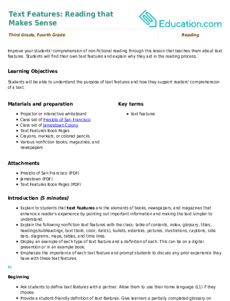

About 3rd Grade English Language Support Text Features Lesson Plans
On Education.com, the 3rd grade English Language Support (ELS) Text Features lesson plan offers interactive activities that help students learn to identify signs such as titles, headings, captions, glossaries, and indexes to enhance reading comprehension. This resource includes printable worksheets, graphic organizers, and sample texts that guide students in recognizing how these features support navigation of informational texts. Parents and teachers can use these materials to strengthen students’ ability to locate and understand key details in science, social studies, and other nonfiction subjects. The structured activities also introduce digital text features like hyperlinks, connecting students to digital literacy skills.
Explore comprehensive printables such as anchor charts, scavenger hunts, and label exercises that reveal how chapters, bold words, images, and other signposts help readers find and interpret information. These resources aim to build on students’ prior knowledge while providing practical ways to apply skills across subjects. Whether at school or home, the materials support structured lessons, practice, and family collaboration to reinforce reading strategies. Each worksheet is designed to make learning accessible, fun, and relevant while strengthening foundational comprehension abilities.
Discover practical teaching tools that save educators and parents time by integrating ready-made lessons and activities. with resources that encourage active engagement while supporting learning standards. These materials are suitable for homeschooling, classroom instruction, or remediation to boost literacy and confidence. Students practice locating details with familiar formats such as tables of contents, captions, headings, charts, and digital URLs, making content accessible and meaningful. Create structured lessons that promote reading comprehension, digital literacy, and the ability to use text features effectively.
Explore comprehensive printables such as anchor charts, scavenger hunts, and label exercises that reveal how chapters, bold words, images, and other signposts help readers find and interpret information. These resources aim to build on students’ prior knowledge while providing practical ways to apply skills across subjects. Whether at school or home, the materials support structured lessons, practice, and family collaboration to reinforce reading strategies. Each worksheet is designed to make learning accessible, fun, and relevant while strengthening foundational comprehension abilities.
Discover practical teaching tools that save educators and parents time by integrating ready-made lessons and activities. with resources that encourage active engagement while supporting learning standards. These materials are suitable for homeschooling, classroom instruction, or remediation to boost literacy and confidence. Students practice locating details with familiar formats such as tables of contents, captions, headings, charts, and digital URLs, making content accessible and meaningful. Create structured lessons that promote reading comprehension, digital literacy, and the ability to use text features effectively.