3rd Grade Adverbs Exercises

2 results
English Language Arts
✕3rd Grade
✕Exercises
✕2 results
3rd Grade Adverbs Exercises
2 results
English Language Arts
✕3rd Grade
✕Exercises
✕2 results
About 3rd Grade Adverbs Exercises
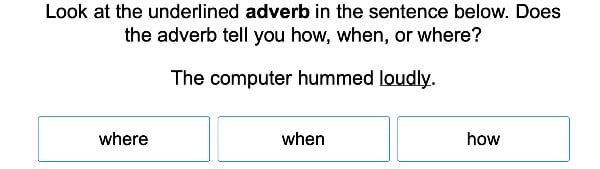
On Education.com, 3rd grade adverbs exercises help young learners identify and use words that modify verbs, adjectives, or other adverbs. These activities often include circling adverbs in sentences, filling in blanks with appropriate adverbs, or creating sentences that properly incorporate adverbs. Using guides and worksheets like these reinforces understanding of how words ending in "-ly" or that describe the manner, time, or place of an action fit into language. Educators and parents can access structured lesson plans and practice pages designed to build reading and writing fluency.
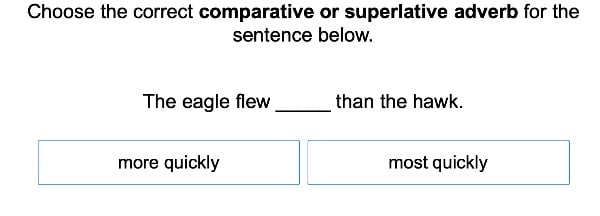
These exercises provide clear examples of adverbs in context, encouraging students to recognize them while strengthening grammar skills. Practice activities may include identifying adverbs in texts, choosing correct words in multiple-choice or fill-in-blanks questions, and forming superlative and comparative versions of adverbs such as "quickly" or "slowly." Both printable and digital resources create flexible ways to teach this important language part while maintaining student engagement and supporting mastery.
Using templates, worksheets, and interactive exercises, teachers and parents can make adverb practice engaging and educational. These materials save time by providing ready-made activities that promote accuracy and fluency in language usage. Regular practice with adverb exercises helps students develop better writing clarity, strong sentence structure, and confidence in applying grammar rules to everyday communication.
These exercises provide clear examples of adverbs in context, encouraging students to recognize them while strengthening grammar skills. Practice activities may include identifying adverbs in texts, choosing correct words in multiple-choice or fill-in-blanks questions, and forming superlative and comparative versions of adverbs such as "quickly" or "slowly." Both printable and digital resources create flexible ways to teach this important language part while maintaining student engagement and supporting mastery.
Using templates, worksheets, and interactive exercises, teachers and parents can make adverb practice engaging and educational. These materials save time by providing ready-made activities that promote accuracy and fluency in language usage. Regular practice with adverb exercises helps students develop better writing clarity, strong sentence structure, and confidence in applying grammar rules to everyday communication.