3rd Grade Common Core Figurative Language Exercises
Common Core Quick Links:
Common Core Standards for 3rd Grade Math, Common Core Standards for 3rd Grade ELA
1 result
English Language Arts
✕3rd Grade
✕Exercises
✕Common Core
✕1 result
Subtopics:
3rd Grade Common Core Figurative Language Exercises
Common Core Quick Links:
Common Core Standards for 3rd Grade Math, Common Core Standards for 3rd Grade ELA1 result
English Language Arts
✕3rd Grade
✕Exercises
✕Common Core
✕1 result

About 3rd Grade Common Core Figurative Language Exercises
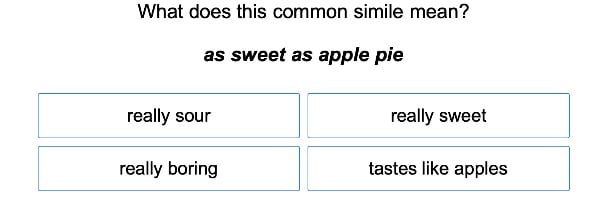
On Education.com, 3rd-grade common core figurative language exercises help students practice distinguishing literal from nonliteral language through activities involving similes, metaphors, and idioms. These exercises include interactive worksheets, printable tasks, and engaging lesson plans designed to improve reading comprehension and literary analysis. Educators and parents can use these resources to reinforce grammar concepts while encouraging creative thinking and interpretation skills. The site offers structured activities that make learning figurative language accessible and entertaining at the third-grade level.
Access on Education.com a variety of resources such as task cards, passage-based exercises, and matching games focused on similes, metaphors, and idioms. These materials provide hands-on practice that helps students identify figurative expressions in context, interpret their meanings, and create their own examples. Educators can incorporate these exercises into classroom lessons or homeschooling plans to strengthen language arts skills and support reading fluency. By browsing these worksheets, students gain confidence in understanding and applying figurative language effectively.
Use these compelling resources to save time creating materials while providing meaningful practice for 3rd-grade students. Each worksheet combines motivation and skill-building to enhance literary comprehension. Teachers and parents can monitor progress as children learn to recognize and interpret figurative language, contributing to higher reading engagement and confidence.
Access on Education.com a variety of resources such as task cards, passage-based exercises, and matching games focused on similes, metaphors, and idioms. These materials provide hands-on practice that helps students identify figurative expressions in context, interpret their meanings, and create their own examples. Educators can incorporate these exercises into classroom lessons or homeschooling plans to strengthen language arts skills and support reading fluency. By browsing these worksheets, students gain confidence in understanding and applying figurative language effectively.
Use these compelling resources to save time creating materials while providing meaningful practice for 3rd-grade students. Each worksheet combines motivation and skill-building to enhance literary comprehension. Teachers and parents can monitor progress as children learn to recognize and interpret figurative language, contributing to higher reading engagement and confidence.