2nd Grade Common Core Ecosystems Worksheets
Common Core Quick Links:
Common Core Standards for 2nd Grade Math, Common Core Standards for 2nd Grade ELA
2 results
Science
✕2nd Grade
✕Worksheets
✕Common Core
✕2 results
2nd Grade Common Core Ecosystems Worksheets
Common Core Quick Links:
Common Core Standards for 2nd Grade Math, Common Core Standards for 2nd Grade ELA2 results
Science
✕2nd Grade
✕Worksheets
✕Common Core
✕2 results


About 2nd Grade Common Core Ecosystems Worksheets
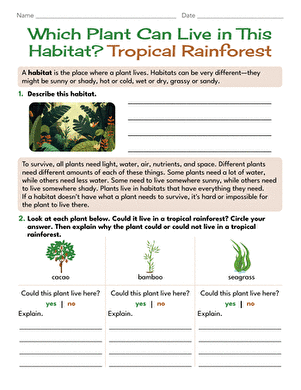
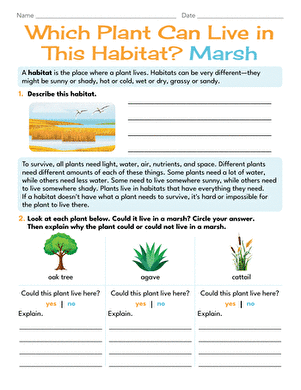
On Education.com, 2nd grade Common Core ecosystems worksheets explore habitats, animals, plants, and food chains, helping students understand how living things interact in nature. These visual activities, including reading comprehension, vocabulary puzzles, and classification exercises, support young learners in grasping ecological concepts while building literacy and critical thinking skills.
Browse printable resources such as habitat labeling pages, food chain sequencing exercises, and comparisons between forest, ocean, and wetland ecosystems. These materials provide structured practice that makes complex biological concepts accessible and engaging for 2nd-grade students. By using these resources, parents and teachers can introduce ecology concepts in an interactive and educational way.
Discover structured lesson plans and hands-on activities for teaching ecosystems that save teachers time and create engaging learning experiences. These resources enable educators to provide students with clear explanations, diagram exercises, and reasoning challenges, fostering a deeper understanding of ecological relationships while supporting science and reading standards.
Browse printable resources such as habitat labeling pages, food chain sequencing exercises, and comparisons between forest, ocean, and wetland ecosystems. These materials provide structured practice that makes complex biological concepts accessible and engaging for 2nd-grade students. By using these resources, parents and teachers can introduce ecology concepts in an interactive and educational way.
Discover structured lesson plans and hands-on activities for teaching ecosystems that save teachers time and create engaging learning experiences. These resources enable educators to provide students with clear explanations, diagram exercises, and reasoning challenges, fostering a deeper understanding of ecological relationships while supporting science and reading standards.