2nd Grade English Language Support Make Predictions Lesson Plans

1 result
English Language Arts
✕2nd Grade
✕Lesson Plans
✕English Language Support
✕1 result
2nd Grade English Language Support Make Predictions Lesson Plans
1 result
English Language Arts
✕2nd Grade
✕Lesson Plans
✕English Language Support
✕1 result

About 2nd Grade English Language Support Make Predictions Lesson Plans
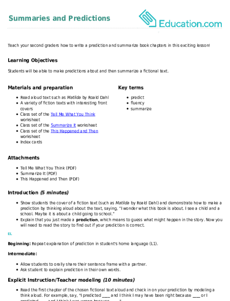
On Education.com, 2nd grade English Language Support make predictions lesson plans help students practice using visual clues, story context, and sentence frames like 'Based on, I think...' to anticipate what will happen next in a story. These lessons use hands-on activities, such as picture walks and interactive read-alouds, to build students' connections between prior knowledge and text evidence. They also emphasize that making guesses is part of reading comprehension and encourage justification with reasoning. Developed by educators, these lesson plans support both classroom instruction and at-home learning.
Educators and parents can access a variety of materials on Education.com, including printable worksheets, interactive activities, and classroom lesson plans that focus on reading comprehension skills. Materials are designed to make learning accessible by providing visual cues, graphic organizers, and audio supports. These resources help children build confidence in making predictions and strengthen their understanding of story structure and content. Using structured examples and guided practice, teachers can effectively scaffold instruction so students can connect prior knowledge to reading new texts.
This page offers structured, engaging lesson content that saves preschools and parents time by providing ready-to-use materials for teaching prediction strategies. Each lesson integrates visual supports, sentence frames, and interactive exercises to balance learning with fun. By providing accessible, step-by-step directions, this resource helps young readers develop essential comprehension skills while fostering a love of reading. Educators and parents can use these materials to support early literacy development in a structured and effective way.
Educators and parents can access a variety of materials on Education.com, including printable worksheets, interactive activities, and classroom lesson plans that focus on reading comprehension skills. Materials are designed to make learning accessible by providing visual cues, graphic organizers, and audio supports. These resources help children build confidence in making predictions and strengthen their understanding of story structure and content. Using structured examples and guided practice, teachers can effectively scaffold instruction so students can connect prior knowledge to reading new texts.
This page offers structured, engaging lesson content that saves preschools and parents time by providing ready-to-use materials for teaching prediction strategies. Each lesson integrates visual supports, sentence frames, and interactive exercises to balance learning with fun. By providing accessible, step-by-step directions, this resource helps young readers develop essential comprehension skills while fostering a love of reading. Educators and parents can use these materials to support early literacy development in a structured and effective way.