1st Grade Coloring Geometry Worksheets

Subtopics:
1st Grade Coloring Geometry Worksheets
6 results
Math
✕Worksheets
✕1st Grade
✕Coloring
✕6 results




About 1st Grade Coloring Geometry Worksheets
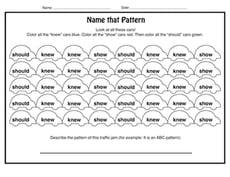
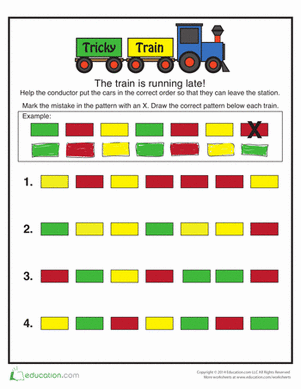
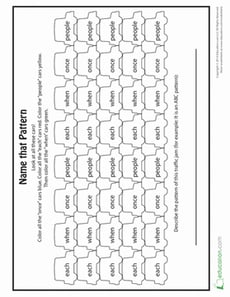
On Education.com, first-grade coloring geometry worksheets introduce young learners to shapes such as circles, squares, triangles, and rectangles by combining coloring activities with shape recognition. Students practice drawing, identifying, and matching elementary shapes while exploring geometric concepts. These worksheets support foundational math skills by making learning engaging through hands-on activities. Parents and teachers can use printable pages to supplement lessons on shapes and patterns, reinforcing children's understanding of geometric attributes.
Color-by-code exercises and shape matching pages on Education.com provide structured activities that help first-graders differentiate between two-dimensional and three-dimensional shapes. The resources also include worksheets that explore composing shapes from smaller parts and understanding symmetry. The hands-on nature of coloring activities enables children to develop fine motor skills and spatial awareness while enjoying creative expression.
Using these printable worksheets in educational settings, educators can track progress in shape recognition, attributes, and problem-solving. At home, parents can create interactive lessons that strengthen shape recognition, support hands-on learning, and encourage curiosity about geometry. Combining visual exploration with sensory engagement makes abstract concepts tangible and supports cognitive development.
Color-by-code exercises and shape matching pages on Education.com provide structured activities that help first-graders differentiate between two-dimensional and three-dimensional shapes. The resources also include worksheets that explore composing shapes from smaller parts and understanding symmetry. The hands-on nature of coloring activities enables children to develop fine motor skills and spatial awareness while enjoying creative expression.
Using these printable worksheets in educational settings, educators can track progress in shape recognition, attributes, and problem-solving. At home, parents can create interactive lessons that strengthen shape recognition, support hands-on learning, and encourage curiosity about geometry. Combining visual exploration with sensory engagement makes abstract concepts tangible and supports cognitive development.