Common Core Picture Graphs Exercises
Common Core Quick Links:
Common Core State Standards
1 result
Math
✕Exercises
✕Common Core
✕1 result
Common Core Picture Graphs Exercises
Common Core Quick Links:
Common Core State Standards1 result
Math
✕Exercises
✕Common Core
✕1 result

About Common Core Picture Graphs Exercises
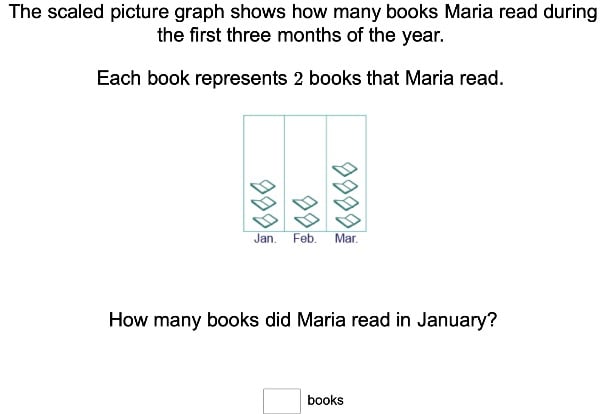
On Education.com, this page provides practice worksheets for 2nd and 3rd grade students to develop skills in reading, creating, and analyzing data using picture graphs. These exercises introduce children to graph interpretation by using symbols to represent quantities, often with scales where one picture equals multiple units. By engaging with themes like favorite foods, weather, or classroom surveys, students learn to compare, put-together, and take-apart sets of data while reinforcing number sense and observation skills.
This page features a variety of printable resources including data interpretation worksheets, chart analysis activities, and interactive lessons. Educators and parents can access structured activities that support learning objectives aligned with the Common Core standards (2.MD.D.10, 3.MD.B.3). Materials are designed to make graph comprehension accessible and engaging, helping students practice recording information visually and drawing conclusions from data representations.
Using these picture graph exercises in classrooms or at home simplifies the process of teaching data skills. Hands-on activities encourage children to interpret real-world information, compare datasets, and communicate findings visually. This structured approach makes learning about graphs interactive, supports critical thinking, and provides flexible resources that strengthen both mathematical understanding and observational accuracy.
This page features a variety of printable resources including data interpretation worksheets, chart analysis activities, and interactive lessons. Educators and parents can access structured activities that support learning objectives aligned with the Common Core standards (2.MD.D.10, 3.MD.B.3). Materials are designed to make graph comprehension accessible and engaging, helping students practice recording information visually and drawing conclusions from data representations.
Using these picture graph exercises in classrooms or at home simplifies the process of teaching data skills. Hands-on activities encourage children to interpret real-world information, compare datasets, and communicate findings visually. This structured approach makes learning about graphs interactive, supports critical thinking, and provides flexible resources that strengthen both mathematical understanding and observational accuracy.