Dot to Dot Letter F Resources

1 result
English Language Arts
✕Dot to Dot
✕1 result
Dot to Dot Letter F Resources
1 result
English Language Arts
✕Dot to Dot
✕1 result
About Dot To Dot Letter F Resources
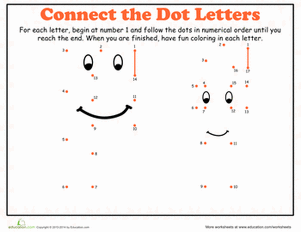
On Education.com, parents and teachers can explore printable dot-to-dot letter F activities that help children practice letter recognition, improve fine motor skills, and build early writing confidence. These engaging worksheets guide students through connecting numbered dots to reveal the shape of the uppercase or lowercase F, making learning to write fun and interactive.
This collection of dot-to-dot Letter F resources provides structured practice for young learners, including worksheets that progressively increase in difficulty and include tracing, coloring, or incorporating simple words. These pages provide a hands-on way to reinforce classroom lessons, home study routines, or early childhood education activities. All materials are designed to support cognitive development, letter identification, and handwriting practice.
Using these Dot to Dot Letter F activities enables educators and parents to prepare engaging lessons that combine repetition, auditory reinforcement, and visual recognition. Children can practice following directions, enhance concentration, and eagerly see the shape of the letter emerge on the page. This makes learning both effective and enjoyable, enriching young students’ literacy experiences.
This collection of dot-to-dot Letter F resources provides structured practice for young learners, including worksheets that progressively increase in difficulty and include tracing, coloring, or incorporating simple words. These pages provide a hands-on way to reinforce classroom lessons, home study routines, or early childhood education activities. All materials are designed to support cognitive development, letter identification, and handwriting practice.
Using these Dot to Dot Letter F activities enables educators and parents to prepare engaging lessons that combine repetition, auditory reinforcement, and visual recognition. Children can practice following directions, enhance concentration, and eagerly see the shape of the letter emerge on the page. This makes learning both effective and enjoyable, enriching young students’ literacy experiences.