
Subtopics:
- Complete Sentences, Fragments, and Run-Ons
- Types of Sentences
- Ending Punctuation
- Subjects and Predicates
- Phrases and Clauses
- Simple, Compound, and Complex Sentences
- Parts of Speech
- Subject-Verb Agreement
- Capitalization
- Commas
- Apostrophes
- Abbreviations
- Quotations
- Colons and Semicolons
- Dashes, Hyphens, and Ellipses✕
- Combining Sentences
- Expanding Sentences
- Parallel Structure
- Misplaced Modifiers
Dashes, Hyphens, and Ellipses Worksheets
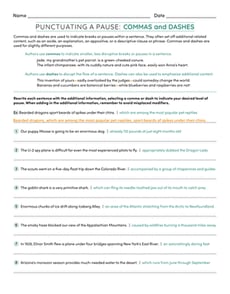
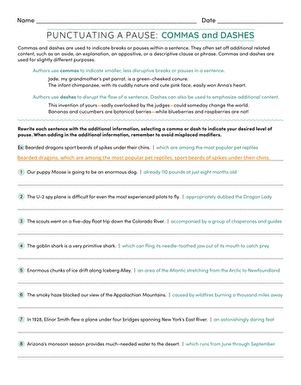
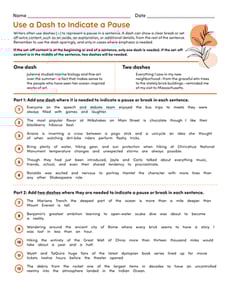
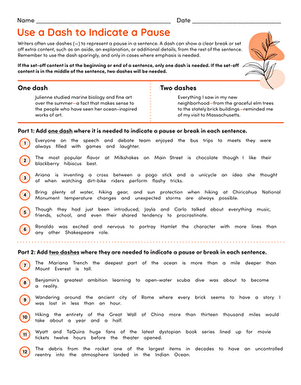



About Dashes, Hyphens, And Ellipses Worksheets
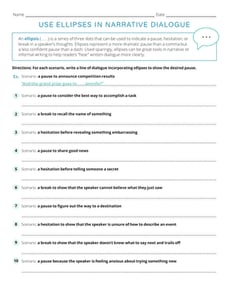
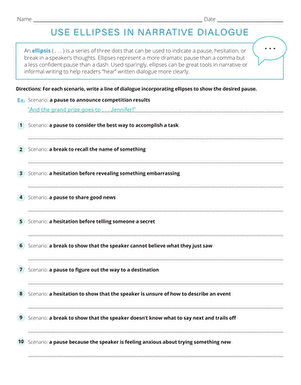
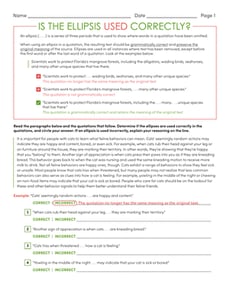
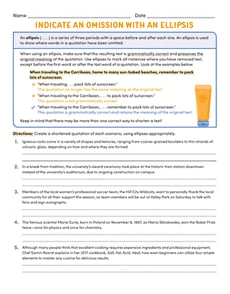
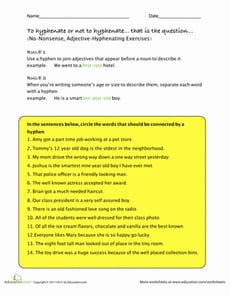
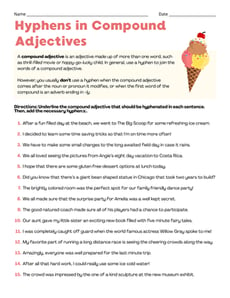
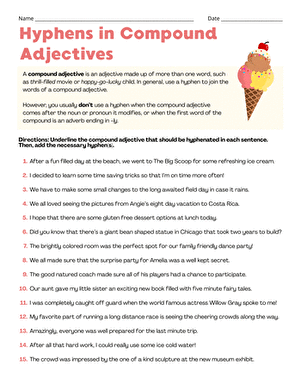
On Education.com, teachers and parents can find printable worksheets and activities to help students learn about punctuation marks such as dashes, hyphens, and ellipses. These resources include exercises that teach how to correctly use each mark in sentences, enhancing both writing and reading skills. Worksheets also provide practice in identifying punctuation in context and applying rules to improve clarity and expression. Using these printed and interactive materials supports structured learning and reinforces grammar lessons effectively.
This page offers a variety of educational resources, including digital pages with exercises, practice worksheets, and printable activities that teach the correct use of dashes, hyphens, and ellipses. These materials help learners understand punctuation rules while engaging in hands-on practice. Educators and parents can access structured lesson plans that introduce new concepts, reinforce classroom instruction, and provide at-home learning opportunities. By integrating these tools, students gain confidence in applying punctuation correctly across their writing.
By providing ready-to-use materials, educators can save time constructing exercises, focus on instruction and feedback, and ensure consistent practice. Parents can support children's literacy development with easily accessible worksheets that complement classroom lessons. Together, these resources make learning punctuation accessible and engaging for students at various levels. Whether in classroom or at-home settings, students can refine their writing skills through structured practice with these instructive activities.
This page offers a variety of educational resources, including digital pages with exercises, practice worksheets, and printable activities that teach the correct use of dashes, hyphens, and ellipses. These materials help learners understand punctuation rules while engaging in hands-on practice. Educators and parents can access structured lesson plans that introduce new concepts, reinforce classroom instruction, and provide at-home learning opportunities. By integrating these tools, students gain confidence in applying punctuation correctly across their writing.
By providing ready-to-use materials, educators can save time constructing exercises, focus on instruction and feedback, and ensure consistent practice. Parents can support children's literacy development with easily accessible worksheets that complement classroom lessons. Together, these resources make learning punctuation accessible and engaging for students at various levels. Whether in classroom or at-home settings, students can refine their writing skills through structured practice with these instructive activities.