
Offline Educational Understanding and Evaluating Exponents Games



About Offline Educational Understanding And Evaluating Exponents Games
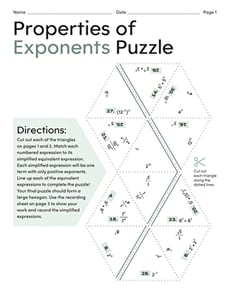
On Education.com, students can explore a variety of after-school activities and hand-on learning experiences, including worksheets, printables, and games designed to teach understanding and evaluating exponents. These resources help learners grasp how to work with powers and apply exponent rules in practical contexts. Using structured lesson plans and engaging exercises, students strengthen their math skills while building confidence in their ability to solve exponential problems.
The site offers interactive exercises, printable worksheets, and educational games that make mastering exponents fun and accessible. By combining visual aids, step-by-step problems, and problem-solving creativity, parents and teachers can reinforce classroom learning and provide meaningful practice. Each activity is designed to support grade-level learning goals and challenge students to apply concepts in real-world situations.
Educators and parents can use these materials to support guided lessons, homework practice, or independent exploration. By integrating educational games and exercises into everyday learning, students develop a clearer understanding of math operations and can connect mathematical concepts to broader critical-thinking skills. This hands-on approach encourages active engagement as learners practice applying exponent rules through structured and enjoyable activities.
The site offers interactive exercises, printable worksheets, and educational games that make mastering exponents fun and accessible. By combining visual aids, step-by-step problems, and problem-solving creativity, parents and teachers can reinforce classroom learning and provide meaningful practice. Each activity is designed to support grade-level learning goals and challenge students to apply concepts in real-world situations.
Educators and parents can use these materials to support guided lessons, homework practice, or independent exploration. By integrating educational games and exercises into everyday learning, students develop a clearer understanding of math operations and can connect mathematical concepts to broader critical-thinking skills. This hands-on approach encourages active engagement as learners practice applying exponent rules through structured and enjoyable activities.