
Subtopics:
Offline Educational Preschool Comparing Size Games



About Offline Educational Preschool Comparing Size Games
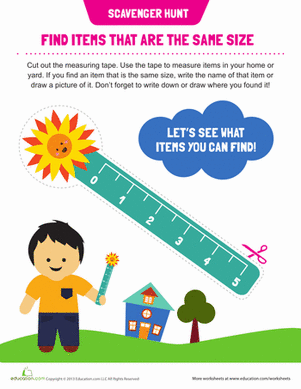
On Education.com, make incredible early childhood learning experience with offline preschool size comparison games. These engaging hands-on activities involve using physical objects such as blocks, toys, or crayons for children to compare attributes like length, height, weight, or quantity through sorting and matching exercises. This educational approach helps young learners develop foundational math skills while building vocabulary with words like 'taller,' 'shorter,' 'heavier,' and 'lighter.'
Explore a variety of printable activities, worksheets, and lesson plans on Education.com that support preschoolers in practicing size comparisons without screen time. These resources provide teachers and parents with structured and open-ended exercises that reinforce understanding while keeping children actively engaged. By incorporating physical play and tactile learning experiences, children enhance cognitive development and fine-motor skills.
Discover how offline preschool size comparison games enable educators and parents to teach placement, relative measurement, and quantitative analysis while making learning interactive and fun. These resources reduce reliance on digital tools, creating meaningful learning experiences that support early math education. Use this collection to easily access ready-to-use activities that promote hands-on exploration, critical thinking, and problem-solving skills.
Explore a variety of printable activities, worksheets, and lesson plans on Education.com that support preschoolers in practicing size comparisons without screen time. These resources provide teachers and parents with structured and open-ended exercises that reinforce understanding while keeping children actively engaged. By incorporating physical play and tactile learning experiences, children enhance cognitive development and fine-motor skills.
Discover how offline preschool size comparison games enable educators and parents to teach placement, relative measurement, and quantitative analysis while making learning interactive and fun. These resources reduce reliance on digital tools, creating meaningful learning experiences that support early math education. Use this collection to easily access ready-to-use activities that promote hands-on exploration, critical thinking, and problem-solving skills.