
Kindergarten Energy Resources




About Kindergarten Energy Resources
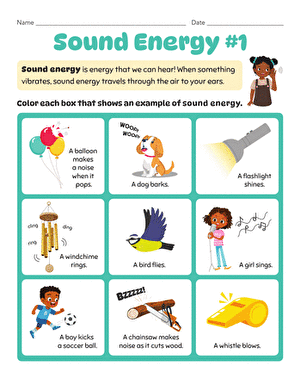
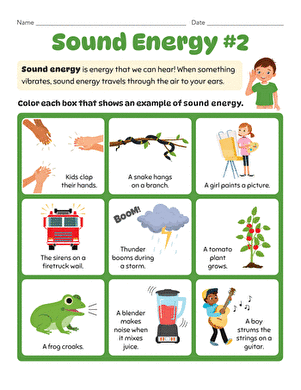
On Education.com, kindergarten energy resources introduce young students to basic concepts like light, heat, sound, and motion through simple hands-on activities. These materials help children connect scientific ideas to everyday experiences such as playing with toys, observing sunlight, and enjoying music. Educators and parents can access practical worksheets, printable experiments, and lesson plans that make energy concepts engaging and age-appropriate.
Explore a variety of resources that give children opportunities to experiment with renewable and nonrenewable energy sources, such as creating wind and water spinners, designing solar ovens, or sorting energy types using pictures. These activities promote curiosity, reinforce scientific thinking, and introduce conservation practices like turning off lights and recycling. Each resource supports interactive learning and helps students develop an early interest in sustainability and environmental awareness.
Discover structured materials on Education.com that track how young learners understand energy and the environment. Educators can easily integrate these resources into classroom lessons or use them to support at-home projects. Parents can engage children in educational activities that promote STEM thinking while making learning fun and meaningful.
Explore a variety of resources that give children opportunities to experiment with renewable and nonrenewable energy sources, such as creating wind and water spinners, designing solar ovens, or sorting energy types using pictures. These activities promote curiosity, reinforce scientific thinking, and introduce conservation practices like turning off lights and recycling. Each resource supports interactive learning and helps students develop an early interest in sustainability and environmental awareness.
Discover structured materials on Education.com that track how young learners understand energy and the environment. Educators can easily integrate these resources into classroom lessons or use them to support at-home projects. Parents can engage children in educational activities that promote STEM thinking while making learning fun and meaningful.