Kindergarten Recycled Crafts Composing Two-Dimensional Shapes Resources

1 result
Math
✕Kindergarten
✕Recycled Crafts
✕1 result
Kindergarten Recycled Crafts Composing Two-Dimensional Shapes Resources
1 result
Math
✕Kindergarten
✕Recycled Crafts
✕1 result

About Kindergarten Recycled Crafts Composing Two-dimensional Shapes Resources
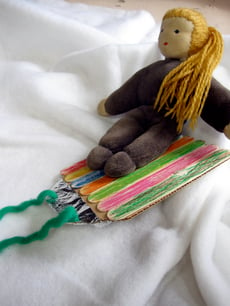
On Education.com, parents and teachers can explore recycled crafts activities for kindergarten students that promote creativity while reinforcing early math skills. These projects involve transforming everyday materials like cardboard, bottle caps, and paper into recognizable two-dimensional shapes such as circles, squares, and triangles to construct animals, houses, or abstract designs. Engaging in these hands-on exercises supports fine motor development and spatial awareness while making learning fun and meaningful. The resources provide step-by-step instructions, printable templates, and visual examples to help children learn through craft projects.
On Education.com, educators and caregivers can access lesson plans that combine recycled materials crafts with mathematical concepts, providing models that turn shape-sorting and pattern-recognition into art. These resources guide children in building textures, experimenting with form combinations, and creating structured compositions. This approach exemplifies experiential learning by linking math, qualitative reasoning, and creative expression. The materials are designed to boost confidence and inspire curiosity through structured yet playful challenges.
On Education.com, parents and teachers can explore worksheets and activity ideas that help children practice classifying and interacting with shapes through recyclable craft projects. These resources suggest ways to reinforce shape recognition, compare sizes and forms, and build confidence in mathematical reasoning while enjoying creative construction. Easy-to-follow instructions and prepared templates make it convenient to incorporate engaging hands-on activities into early learning lessons. Every activity supports hands-on, discovery-based learning that emphasizes problem-solving and critical thinking.
On Education.com, educators and caregivers can access lesson plans that combine recycled materials crafts with mathematical concepts, providing models that turn shape-sorting and pattern-recognition into art. These resources guide children in building textures, experimenting with form combinations, and creating structured compositions. This approach exemplifies experiential learning by linking math, qualitative reasoning, and creative expression. The materials are designed to boost confidence and inspire curiosity through structured yet playful challenges.
On Education.com, parents and teachers can explore worksheets and activity ideas that help children practice classifying and interacting with shapes through recyclable craft projects. These resources suggest ways to reinforce shape recognition, compare sizes and forms, and build confidence in mathematical reasoning while enjoying creative construction. Easy-to-follow instructions and prepared templates make it convenient to incorporate engaging hands-on activities into early learning lessons. Every activity supports hands-on, discovery-based learning that emphasizes problem-solving and critical thinking.