Kindergarten Mazes Classifying Two-Dimensional Shapes Resources

1 result
Math
✕Kindergarten
✕Mazes
✕1 result
Subtopics:
Kindergarten Mazes Classifying Two-Dimensional Shapes Resources
1 result
Math
✕Kindergarten
✕Mazes
✕1 result

About Kindergarten Mazes Classifying Two-dimensional Shapes Resources
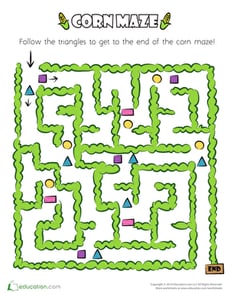
On Education.com, parents and educators can explore a variety of preschool-level materials focused on teaching the classification of two-dimensional shapes. This includes printable shape mazes, puzzle sheets, and hands-on activities that help students recognize and sort basic shapes like circles, squares, and triangles. These resources support early math skills, shape recognition, and problem-solving through engaging and interactive exercises.
Educators and parents can use shape worksheets and classroom resources on Education.com to create guided learning experiences, worksheets, and group activities that introduce shape sorting from the alphabet to Play-Doh modeling. Digital mini-games and printable games provide children with multiple opportunities to practice shape recognition and strengthen fine motor skills while having fun with learning. The site makes it easy to access primary and supplementary materials that expand foundational geometry knowledge.
This collection of resources allows teachers and parents to teach shape classification at home or in the classroom efficiently. Materials such as interactive puzzles, sorting games, and worksheet-based exercises help children connect shapes to objects in their environment, bolstering both spatial awareness and categorization skills. By working through these structured but playful activities, students gain confidence in identifying and comparing two-dimensional shapes.
Educators and parents can use shape worksheets and classroom resources on Education.com to create guided learning experiences, worksheets, and group activities that introduce shape sorting from the alphabet to Play-Doh modeling. Digital mini-games and printable games provide children with multiple opportunities to practice shape recognition and strengthen fine motor skills while having fun with learning. The site makes it easy to access primary and supplementary materials that expand foundational geometry knowledge.
This collection of resources allows teachers and parents to teach shape classification at home or in the classroom efficiently. Materials such as interactive puzzles, sorting games, and worksheet-based exercises help children connect shapes to objects in their environment, bolstering both spatial awareness and categorization skills. By working through these structured but playful activities, students gain confidence in identifying and comparing two-dimensional shapes.