SKIP TO CONTENT
Worksheet Generator
Subjects
Grades
Worksheets
Games
Build a Worksheet
More Resources
Roly Recommends
Reading Month
Subjects
Grades
Worksheets
Games
Build a Worksheet
More Resources
Roly Recommends
Reading Month
Filters
Search for: true, grid
✕
Lesson Plans
✕
Kindergarten - 4th Grade
✕
Subjects
Math
English Language Arts
Science
Social Studies
Grade Level
Pre-K
K
1st
2nd
3rd
4th
5th
6th
7th
8th
Early Childhood
Elementary School
Middle School
Resource Type
Worksheets
Games
Lesson Plans
Interactive Worksheets
Workbooks
Activities
Offline Games
Teacher Resources
Common Core
Yes
Roly Recommends
Social Emotional Learning
English Language Support
Yes
See More
Clear All
View 131 results
Showing Results for true grid : Page 2
131 results
Search for: true, grid
✕
Lesson Plans
✕
Kindergarten - 4th Grade
✕
Clear All
Sort by:
Relevance
Most recent
Most popular
Alphabetical A-Z
Alphabetical Z-A
All filters
131 results
Sort by:
Relevance
Most recent
Most popular
Alphabetical A-Z
Alphabetical Z-A
Researching the Past Using Primary Sources
Lesson Plan
Researching the Past Using Primary Sources
Fourth Grade
Reading
Knock, knock! It’s the U.S. Census Bureau! In this lesson plan, students analyze primary sources in the form of census data to do research that helps them answer questions about famous people and the time period during which they lived.
Lesson Plan
Researching the Past Using Primary Sources
Lesson Plan
Researching the Past Using Primary Sources
Knock, knock! It’s the U.S. Census Bureau! In this lesson plan, students analyze primary sources in the form of census data to do research that helps them answer questions about famous people and the time period during which they lived.
Fourth Grade
Reading
Lesson Plan
Nonfiction Text Features
Lesson Plan
Nonfiction Text Features
Second Grade
Students will be able to use and identify nonfiction text features. It can be a stand-alone lesson or a support lesson to the How Many Features? lesson plan.
Lesson Plan
Nonfiction Text Features
Lesson Plan
Nonfiction Text Features
Students will be able to use and identify nonfiction text features. It can be a stand-alone lesson or a support lesson to the How Many Features? lesson plan.
Second Grade
Lesson Plan
Roll the Dice: Skip Counting by Fives
Lesson Plan
Roll the Dice: Skip Counting by Fives
Second Grade
Five, ten, fifteen... Help your students practice their multiplication skills by teaching them to skip count by fives. In this lesson, they will use dice to practice math!
Lesson Plan
Roll the Dice: Skip Counting by Fives
Lesson Plan
Roll the Dice: Skip Counting by Fives
Five, ten, fifteen... Help your students practice their multiplication skills by teaching them to skip count by fives. In this lesson, they will use dice to practice math!
Second Grade
Lesson Plan
Diving into Earth's Oceans
Lesson Plan
Diving into Earth's Oceans
Fourth Grade
Writing
Get your students excited about geography with a lesson on Earth's oceans. After reading two different texts, they'll be ready to dive right into ocean paragraph writing.
Lesson Plan
Diving into Earth's Oceans
Lesson Plan
Diving into Earth's Oceans
Get your students excited about geography with a lesson on Earth's oceans. After reading two different texts, they'll be ready to dive right into ocean paragraph writing.
Fourth Grade
Writing
Lesson Plan
Facts and Opinions: What's the Truth?
Lesson Plan
Facts and Opinions: What's the Truth?
Second Grade
Use this lesson to teach your students about facts and opinions. Teach them that a certain belief that they have about someone or something is not a fact!
Lesson Plan
Facts and Opinions: What's the Truth?
Lesson Plan
Facts and Opinions: What's the Truth?
Use this lesson to teach your students about facts and opinions. Teach them that a certain belief that they have about someone or something is not a fact!
Second Grade
Lesson Plan
Figuring Out Tricky Words
Lesson Plan
Figuring Out Tricky Words
First Grade
Get ready to teach students strategies for understanding new words! Students will practice strategies to read new words in nonfiction books. This lesson can be used alone or with the New Words, New Ideas: Reading Nonfiction lesson plan.
Lesson Plan
Figuring Out Tricky Words
Lesson Plan
Figuring Out Tricky Words
Get ready to teach students strategies for understanding new words! Students will practice strategies to read new words in nonfiction books. This lesson can be used alone or with the New Words, New Ideas: Reading Nonfiction lesson plan.
First Grade
Lesson Plan
Fact or Opinion: Part 3
Lesson Plan
Fact or Opinion: Part 3
Second Grade
In Fact or Opinion: Part 3, your students will take what they learned from the previous lessons and apply it by writing their own personal opinion essays.
Lesson Plan
Fact or Opinion: Part 3
Lesson Plan
Fact or Opinion: Part 3
In Fact or Opinion: Part 3, your students will take what they learned from the previous lessons and apply it by writing their own personal opinion essays.
Second Grade
Lesson Plan
Justifying the Distributive Property
Lesson Plan
Justifying the Distributive Property
Fourth Grade
Let's talk about the distributive property! Give students a chance to explain their thinking of how and why this property of multiplication works. This lesson may be taught as a standalone or as support to the lesson Distributive Property.
Lesson Plan
Justifying the Distributive Property
Lesson Plan
Justifying the Distributive Property
Let's talk about the distributive property! Give students a chance to explain their thinking of how and why this property of multiplication works. This lesson may be taught as a standalone or as support to the lesson Distributive Property.
Fourth Grade
Lesson Plan
These Stories Are (Almost) the Same
Lesson Plan
These Stories Are (Almost) the Same
First Grade
Reading
Stories can change a lot depending on the point of view they are told from. In this lesson, students explore point of view by comparing and contrasting two versions of "The Three Little Pigs."
Lesson Plan
These Stories Are (Almost) the Same
Lesson Plan
These Stories Are (Almost) the Same
Stories can change a lot depending on the point of view they are told from. In this lesson, students explore point of view by comparing and contrasting two versions of "The Three Little Pigs."
First Grade
Reading
Lesson Plan
Can You Taste the Four Types of Tastes?
Lesson Plan
Can You Taste the Four Types of Tastes?
Kindergarten
Use this lesson to teach your students about the various tastes by tasting yummy foods! Make them imagine how boring it would be if food didn't have a taste.
Lesson Plan
Can You Taste the Four Types of Tastes?
Lesson Plan
Can You Taste the Four Types of Tastes?
Use this lesson to teach your students about the various tastes by tasting yummy foods! Make them imagine how boring it would be if food didn't have a taste.
Kindergarten
Lesson Plan
Fact vs. Opinion Sort
Lesson Plan
Fact vs. Opinion Sort
Second Grade
In this lesson, students develop an understand of the difference between facts and opinions. After analyzing different statements, students write their own sentences to sort and analyze.
Lesson Plan
Fact vs. Opinion Sort
Lesson Plan
Fact vs. Opinion Sort
In this lesson, students develop an understand of the difference between facts and opinions. After analyzing different statements, students write their own sentences to sort and analyze.
Second Grade
Lesson Plan
Shark Feeding Frenzy
Lesson Plan
Shark Feeding Frenzy
Pre-K
Numbers and Counting
Use your students' fascination with sharks to create a math feeding frenzy! Students will match numerals to quantity using "shark teeth" in this sensory rich math lesson.
Lesson Plan
Shark Feeding Frenzy
Lesson Plan
Shark Feeding Frenzy
Use your students' fascination with sharks to create a math feeding frenzy! Students will match numerals to quantity using "shark teeth" in this sensory rich math lesson.
Pre-K
Numbers and Counting
Lesson Plan
The Declaration's Purpose
Lesson Plan
The Declaration's Purpose
Third Grade
July 4, 1776, was an important day in U.S. history because an important document was signed. Use this civics lesson to help young historians learn about the purpose of the Declaration of Independence.
Lesson Plan
The Declaration's Purpose
Lesson Plan
The Declaration's Purpose
July 4, 1776, was an important day in U.S. history because an important document was signed. Use this civics lesson to help young historians learn about the purpose of the Declaration of Independence.
Third Grade
Lesson Plan
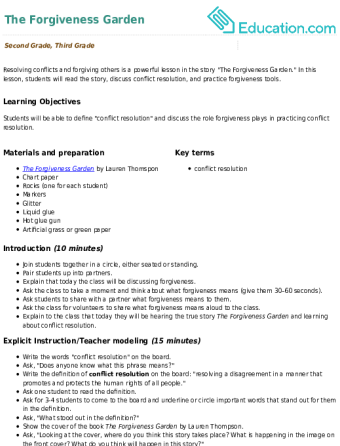
The Forgiveness Garden
Lesson Plan
The Forgiveness Garden
Second Grade
Resolving conflicts and forgiving others is a powerful lesson in the story "The Forgiveness Garden." In this lesson, students will read the story, discuss conflict resolution, and practice forgiveness tools.
Lesson Plan
The Forgiveness Garden
Lesson Plan
The Forgiveness Garden
Resolving conflicts and forgiving others is a powerful lesson in the story "The Forgiveness Garden." In this lesson, students will read the story, discuss conflict resolution, and practice forgiveness tools.
Second Grade
Lesson Plan
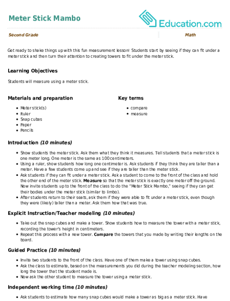
Meter Stick Mambo
Lesson Plan
Meter Stick Mambo
Second Grade
Get ready to shake things up with this fun measurement lesson! Students start by seeing if they can fit under a meter stick and then turn their attention to creating towers to fit under the meter stick.
Lesson Plan
Meter Stick Mambo
Lesson Plan
Meter Stick Mambo
Get ready to shake things up with this fun measurement lesson! Students start by seeing if they can fit under a meter stick and then turn their attention to creating towers to fit under the meter stick.
Second Grade
Lesson Plan
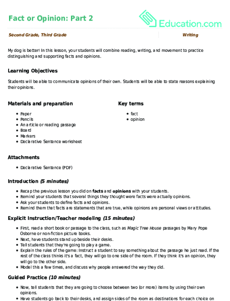
Fact or Opinion: Part 2
Lesson Plan
Fact or Opinion: Part 2
Second Grade
My dog is better! In this lesson, your students will combine reading, writing, and movement to practice distinguishing and supporting facts and opinions.
Lesson Plan
Fact or Opinion: Part 2
Lesson Plan
Fact or Opinion: Part 2
My dog is better! In this lesson, your students will combine reading, writing, and movement to practice distinguishing and supporting facts and opinions.
Second Grade
Lesson Plan
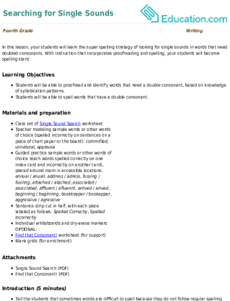
Searching for Single Sounds
Lesson Plan
Searching for Single Sounds
Fourth Grade
In this lesson, your students will learn the super spelling strategy of looking for single sounds in words that need doubled consonants. With instruction that incorporates proofreading and spelling, your students will become spelling stars!
Lesson Plan
Searching for Single Sounds
Lesson Plan
Searching for Single Sounds
In this lesson, your students will learn the super spelling strategy of looking for single sounds in words that need doubled consonants. With instruction that incorporates proofreading and spelling, your students will become spelling stars!
Fourth Grade
Lesson Plan
Learning About Maps
Lesson Plan
Learning About Maps
First Grade
From the compass rose to the map key, first grade students will learn about three characteristics that make up a map. Symbols are used on maps too, as students practice what they can do!
Lesson Plan
Learning About Maps
Lesson Plan
Learning About Maps
From the compass rose to the map key, first grade students will learn about three characteristics that make up a map. Symbols are used on maps too, as students practice what they can do!
First Grade
Lesson Plan
Mapping My World
Lesson Plan
Mapping My World
Second Grade
Geography
Give students an opportunity to show what they know! In this lesson, students will review key terms and construct a map of a familiar place. Whether it’s school or home, or a make believe place, students will enjoy mapping their world.
Lesson Plan
Mapping My World
Lesson Plan
Mapping My World
Give students an opportunity to show what they know! In this lesson, students will review key terms and construct a map of a familiar place. Whether it’s school or home, or a make believe place, students will enjoy mapping their world.
Second Grade
Geography
Lesson Plan
Understanding Communities and Differences
Lesson Plan
Understanding Communities and Differences
Fourth Grade
In this lesson students will complete an activity called "Raise Your Hand If You..." and be able to define the word “assumption.” This lesson supports the practice of compassion for oneself and others.
Lesson Plan
Understanding Communities and Differences
Lesson Plan
Understanding Communities and Differences
In this lesson students will complete an activity called "Raise Your Hand If You..." and be able to define the word “assumption.” This lesson supports the practice of compassion for oneself and others.
Fourth Grade
Lesson Plan
Fact or Assumption
Lesson Plan
Fact or Assumption
Second Grade
Distinguishing between facts and assumptions is an important life skill. In this lesson, students will articulate the difference between assumptions and facts through class discussion and a poster activity.
Lesson Plan
Fact or Assumption
Lesson Plan
Fact or Assumption
Distinguishing between facts and assumptions is an important life skill. In this lesson, students will articulate the difference between assumptions and facts through class discussion and a poster activity.
Second Grade
Lesson Plan
Money Math!
Lesson Plan
Money Math!
Second Grade
Time and Money
Money makes the world go 'round, but do your students know why money is important? In this lesson, students will learn the real world applications of money, as well as how to make a dollar with various coins.
Lesson Plan
Money Math!
Lesson Plan
Money Math!
Money makes the world go 'round, but do your students know why money is important? In this lesson, students will learn the real world applications of money, as well as how to make a dollar with various coins.
Second Grade
Time and Money
Lesson Plan
Does the Subject Agree with the Verb?
Lesson Plan
Does the Subject Agree with the Verb?
Third Grade
In this lesson, your students will learn that subject-verb agreement is very important, and without it, readers can get confused. By the end of this lesson, your students will be able to generate sentences that make sense!
Lesson Plan
Does the Subject Agree with the Verb?
Lesson Plan
Does the Subject Agree with the Verb?
In this lesson, your students will learn that subject-verb agreement is very important, and without it, readers can get confused. By the end of this lesson, your students will be able to generate sentences that make sense!
Third Grade
Lesson Plan
Candy Multiplication
Lesson Plan
Candy Multiplication
Third Grade
Multiplication
Delicious multiplication! In this sweet lesson, your students will learn how to relate multiplication to repeated addition using candy counters.
Lesson Plan
Candy Multiplication
Lesson Plan
Candy Multiplication
Delicious multiplication! In this sweet lesson, your students will learn how to relate multiplication to repeated addition using candy counters.
Third Grade
Multiplication
Lesson Plan
Getting Wordy with Subtraction
Lesson Plan
Getting Wordy with Subtraction
First Grade
This lesson will make solving subtraction word problems fun for students. It includes music and interaction to grab your students' attention.
Lesson Plan
Getting Wordy with Subtraction
Lesson Plan
Getting Wordy with Subtraction
This lesson will make solving subtraction word problems fun for students. It includes music and interaction to grab your students' attention.
First Grade
Lesson Plan
Multiply by 5
Lesson Plan
Multiply by 5
Third Grade
Multiplication
Help your students discover patterns when multiplying by five.
Lesson Plan
Multiply by 5
Lesson Plan
Multiply by 5
Help your students discover patterns when multiplying by five.
Third Grade
Multiplication
Lesson Plan
What's Your Opinion?
Lesson Plan
What's Your Opinion?
Third Grade
Writing
Being able to express and support opinions is greatly beneficial for young learners. This lesson plan includes fun exercises to help students learn about opinions and write supporting statements for their own opinions.
Lesson Plan
What's Your Opinion?
Lesson Plan
What's Your Opinion?
Being able to express and support opinions is greatly beneficial for young learners. This lesson plan includes fun exercises to help students learn about opinions and write supporting statements for their own opinions.
Third Grade
Writing
Lesson Plan
Stone Age
Lesson Plan
Stone Age
First Grade
History
Excite your students with knowledge of the past by showing them a film and pretending to live in the past! In this lesson, your students will learn about the Stone Age.
Lesson Plan
Stone Age
Lesson Plan
Stone Age
Excite your students with knowledge of the past by showing them a film and pretending to live in the past! In this lesson, your students will learn about the Stone Age.
First Grade
History
Lesson Plan
Whose Point Is It Anyway?
Lesson Plan
Whose Point Is It Anyway?
Fourth Grade
Writing
What if Cinderella’s stepsisters weren’t really evil? In this engaging lesson, you will introduce your students to multiple points of view and discuss how these different perspectives can change a reader’s experience.
Lesson Plan
Whose Point Is It Anyway?
Lesson Plan
Whose Point Is It Anyway?
What if Cinderella’s stepsisters weren’t really evil? In this engaging lesson, you will introduce your students to multiple points of view and discuss how these different perspectives can change a reader’s experience.
Fourth Grade
Writing
Lesson Plan
Main Idea or Topic? You Decide!
Lesson Plan
Main Idea or Topic? You Decide!
First Grade
Life Science
Provide students with an opportunity to closely examine the difference between a topic and main idea in a nonfiction text. Use as a stand-alone activity or a support for the Finding the Main Idea and Details in a Nonfiction Text lesson.
Lesson Plan
Main Idea or Topic? You Decide!
Lesson Plan
Main Idea or Topic? You Decide!
Provide students with an opportunity to closely examine the difference between a topic and main idea in a nonfiction text. Use as a stand-alone activity or a support for the Finding the Main Idea and Details in a Nonfiction Text lesson.
First Grade
Life Science
Lesson Plan
1
2
3
4
5