
8th Grade Simile Interactive Worksheets






About 8th Grade Simile Interactive Worksheets
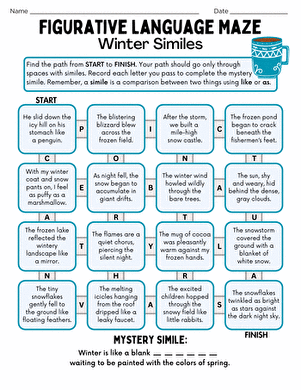
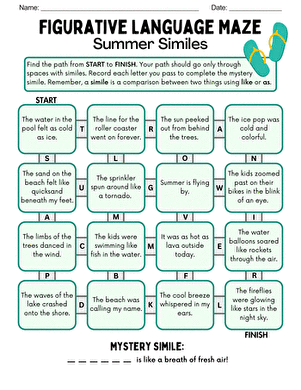
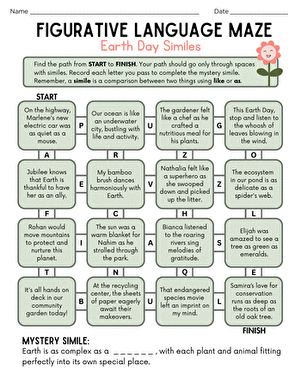
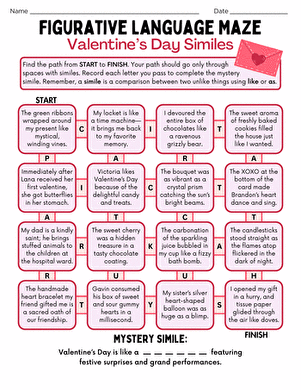
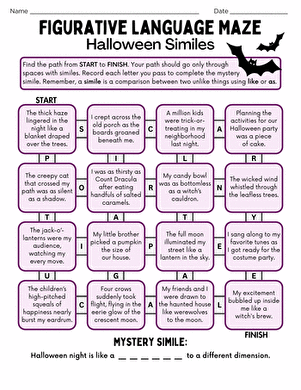
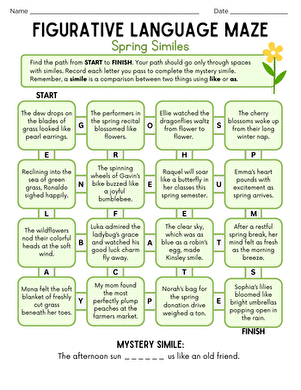
On Education.com, eighth grade simile interactive worksheets provide students with engaging exercises to practice and understand how to compare two different things using ‘like’ or ‘as’. These resources include printable activities, digital worksheets, and interactive lessons that help students strengthen reading, writing, and language skills. By reinforcing the use of similes in literature and daily communication, educators can enhance descriptive writing and creative thinking.
This page offers a collection of practice sheets, essays, and interactive tools designed to guide students through identifying and creating similes in sentences and stories. These resources support foundational language arts teaching by encouraging students to analyze comparisons, expand vocabulary, and express ideas creatively. Educators and parents can incorporate these materials into classroom lessons, homework, or homeschooling to make learning engaging and effective.
Using these structured worksheets, teachers and parents can save time while providing students with targeted practice in figurative language. Structured simulations and exercises allow learners to explore language expressions creatively and confidently. As a result, students develop a richer vocabulary, stronger reading comprehension, and skills that benefit both academic work and everyday communication.
This page offers a collection of practice sheets, essays, and interactive tools designed to guide students through identifying and creating similes in sentences and stories. These resources support foundational language arts teaching by encouraging students to analyze comparisons, expand vocabulary, and express ideas creatively. Educators and parents can incorporate these materials into classroom lessons, homework, or homeschooling to make learning engaging and effective.
Using these structured worksheets, teachers and parents can save time while providing students with targeted practice in figurative language. Structured simulations and exercises allow learners to explore language expressions creatively and confidently. As a result, students develop a richer vocabulary, stronger reading comprehension, and skills that benefit both academic work and everyday communication.