6th Grade Ecosystems Worksheets

9 results
Science
✕6th Grade
✕Worksheets
✕9 results
6th Grade Ecosystems Worksheets
9 results
Science
✕6th Grade
✕Worksheets
✕9 results







About 6th Grade Ecosystems Worksheets
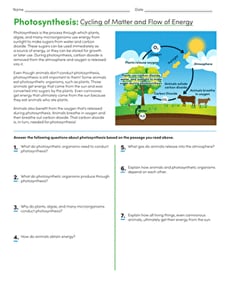
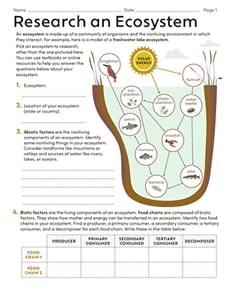
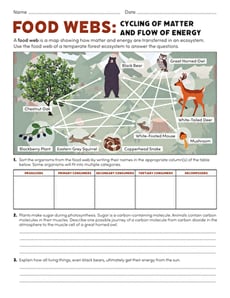
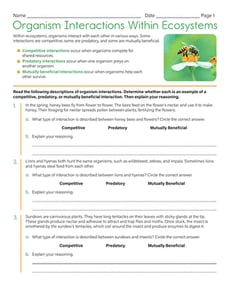
On Education.com, sixth-grade ecosystem worksheets help students explore topics like food webs, biotic and abiotic factors, habitats, and environmental interactions. These materials provide structured activities, printable diagrams, and interactive exercises to build understanding of plant and animal relationships within ecosystems. Educators and parents can access resources designed to make biology concepts engaging and accessible for middle-school students.
Digital simulations, lesson plans, and hands-on activities on Education.com enable students to observe how species interact in various habitats, such as forests or aquatic environments. These resources support curriculum standards while encouraging critical thinking, observation skills, and an appreciation for ecological diversity. Materials are tailored with materials and frameworks to facilitate both in-class instruction and study at home.
Educators and parents can incorporate these worksheets into science lesson plans, homework assignments, or homeschool activities. By using these trusted, structured materials, teaching ecosystem concepts becomes easier and more engaging. This helps students connect biological ideas to real-world environments while fostering curiosity and regional awareness.
Digital simulations, lesson plans, and hands-on activities on Education.com enable students to observe how species interact in various habitats, such as forests or aquatic environments. These resources support curriculum standards while encouraging critical thinking, observation skills, and an appreciation for ecological diversity. Materials are tailored with materials and frameworks to facilitate both in-class instruction and study at home.
Educators and parents can incorporate these worksheets into science lesson plans, homework assignments, or homeschool activities. By using these trusted, structured materials, teaching ecosystem concepts becomes easier and more engaging. This helps students connect biological ideas to real-world environments while fostering curiosity and regional awareness.