
6th Grade Archetypes Resources

About 6th Grade Archetypes Resources
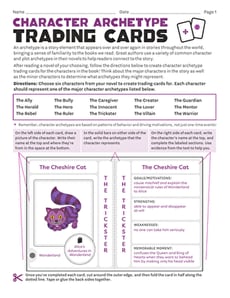
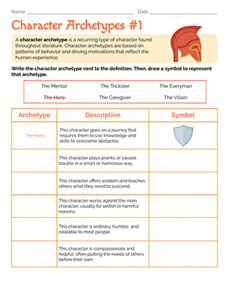
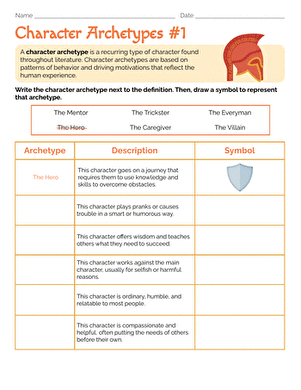
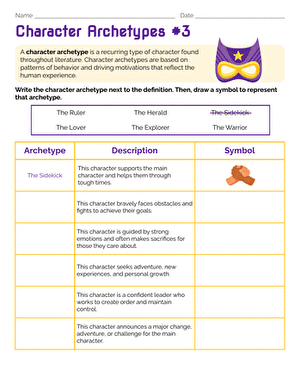
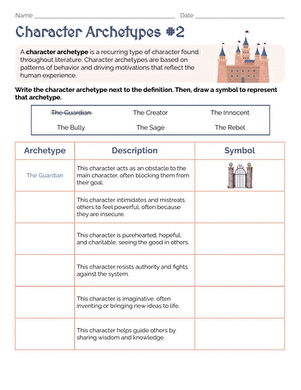
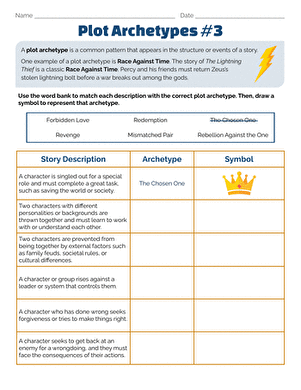
On Education.com, this page provides resources and materials for learning about 6th-grade archetypes, which are common character types found in stories and literature. Students can explore worksheets, printable cards, and lesson plans that introduce characters like the Hero, Mentor, Trickster, and more, using familiar examples from books and movies to connect with age-appropriate narratives. By learning about archetypes, students can analyze characters, identify patterns, and enhance reading comprehension and critical thinking skills.
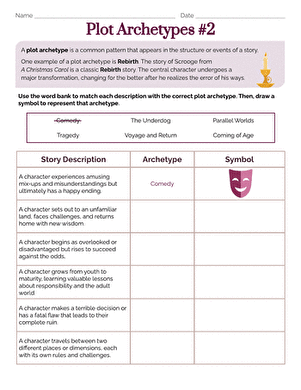
This page offers a variety of activities that demonstrate how to recognize and interpret different character types in storytelling. Educators and parents can access guided worksheets, interactive exercises, and real-world examples that highlight archetypes across genres. Each resource helps reinforce understanding through engaging formats that support reading, writing, and analytical skills in 6th-grade students.
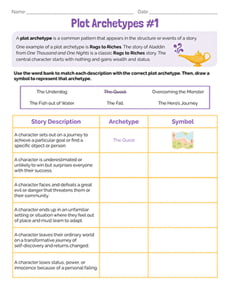
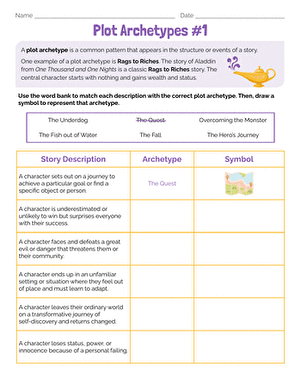
With these resources, teaching about 6th-grade archetypes becomes easier by providing ready-made classroom or homework activities that encourage explorative learning. By using templates, charts, and practice pages, students can identify archetypal characters in familiar stories, compare traits, and connect abstract concepts to concrete examples, making the lesson both effective and memorable.
This page offers a variety of activities that demonstrate how to recognize and interpret different character types in storytelling. Educators and parents can access guided worksheets, interactive exercises, and real-world examples that highlight archetypes across genres. Each resource helps reinforce understanding through engaging formats that support reading, writing, and analytical skills in 6th-grade students.
With these resources, teaching about 6th-grade archetypes becomes easier by providing ready-made classroom or homework activities that encourage explorative learning. By using templates, charts, and practice pages, students can identify archetypal characters in familiar stories, compare traits, and connect abstract concepts to concrete examples, making the lesson both effective and memorable.