
4th Grade Metaphor Worksheets





About 4th Grade Metaphor Worksheets
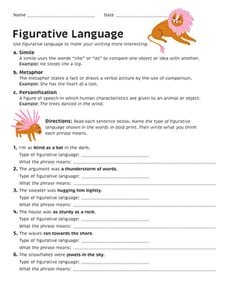
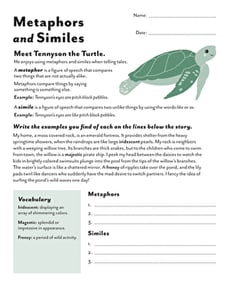
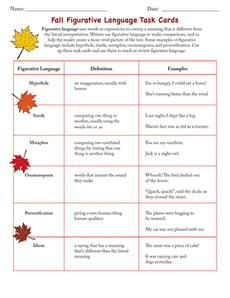
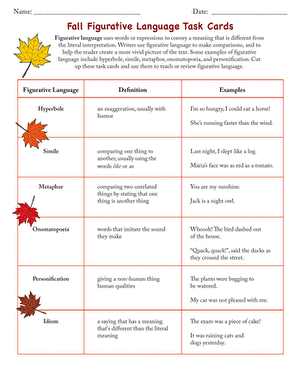
On Education.com, 4th grade metaphor worksheets provide educators and parents with printable exercises that help students recognize and interpret creative comparisons in language. These sheets include activities such as matching metaphors to meanings, completing figurative phrases, and exploring short passages to identify metaphors used by authors. Engaging lessons like these support reading comprehension, writing skills, and creative thinking using age-appropriate examples.
Explore a variety of educational resources on Education.com, including digital simulations, guided language exercises, and themed lesson plans that expand upon the concept of metaphors. These structured activities encourage critical analysis of figurative language, strengthen vocabulary, and inspire youngsters to appreciate literary devices. By integrating this content into teaching or practice, students gain confidence in reading and writing while developing a love for literature.
This collection of 4th grade metaphor worksheets saves teachers and parents time by providing ready-to-use materials that reinforce classroom instruction. Students can practice identifying metaphors in context, experimenting with creating their own comparative phrases, or analyzing passages from stories and poems. Educational resources like these support differentiated learning, foster creativity, and help young learners connect figurative language to real-world examples.
Explore a variety of educational resources on Education.com, including digital simulations, guided language exercises, and themed lesson plans that expand upon the concept of metaphors. These structured activities encourage critical analysis of figurative language, strengthen vocabulary, and inspire youngsters to appreciate literary devices. By integrating this content into teaching or practice, students gain confidence in reading and writing while developing a love for literature.
This collection of 4th grade metaphor worksheets saves teachers and parents time by providing ready-to-use materials that reinforce classroom instruction. Students can practice identifying metaphors in context, experimenting with creating their own comparative phrases, or analyzing passages from stories and poems. Educational resources like these support differentiated learning, foster creativity, and help young learners connect figurative language to real-world examples.