
3rd Grade Story Elements Worksheets











About 3rd Grade Story Elements Worksheets
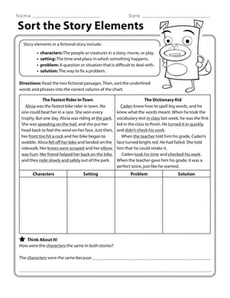
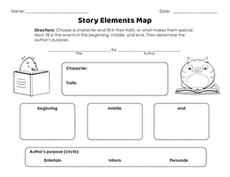
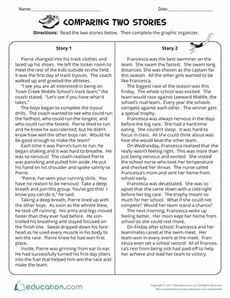
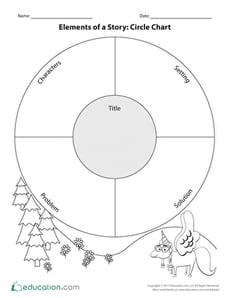
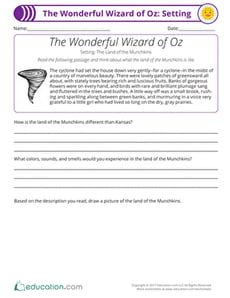
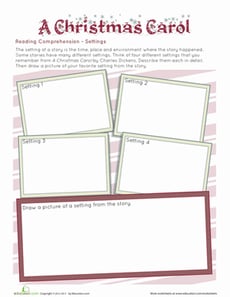
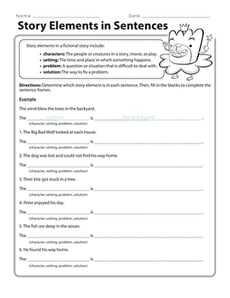
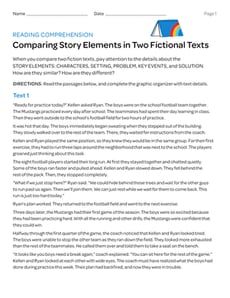
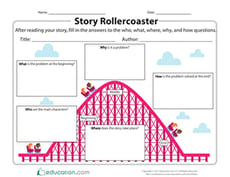
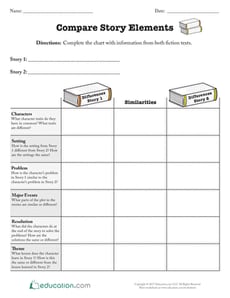
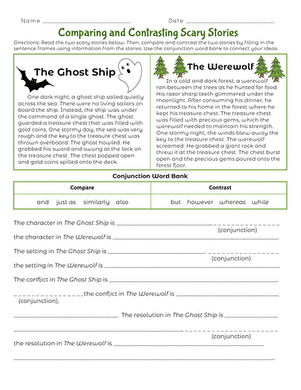
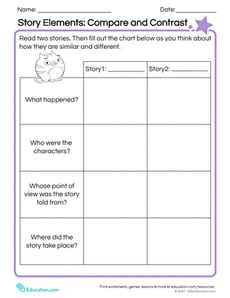
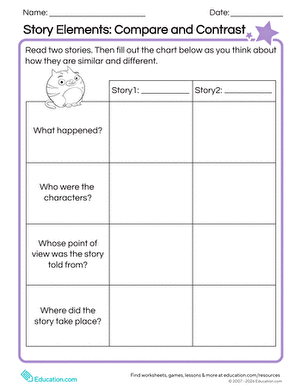
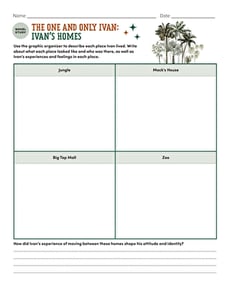
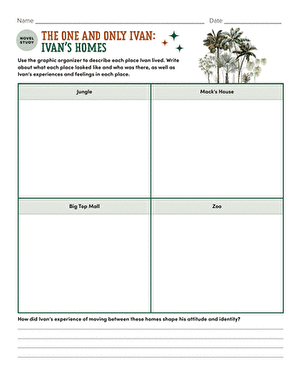
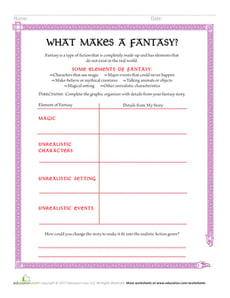
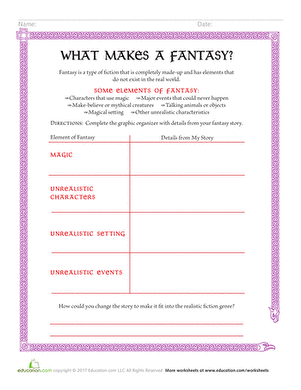
On Education.com, students can explore a variety of 3rd grade story elements worksheets that help them understand and identify key parts of a story. These printable activities focus on elements such as characters, setting, plot, conflict, and resolution, supporting reading comprehension and storytelling skills at an early age. By practicing with these worksheets, children learn to analyze stories, improve critical thinking, and enhance their ability to write and summarize narratives. Educators and parents can access structured materials that make learning fun and engaging.
Browse Education.com for 3rd grade story elements worksheets that offer hands-on activities and printable exercises suitable for classroom or at-home use. These resources include worksheets focused on labeling story components, identifying characters, sequencing events, and creating original stories. The materials provide scaffolding to help young learners connect with stories and build a strong foundation in reading and writing. Each worksheet is designed to provide clear guidance while encouraging creativity and comprehension.
Using page-by-page or interactive exercises on Education.com, parents and teachers can reinforce storytelling skills and reading comprehension in 3rd-grade students. These structured activities facilitate practice with story analysis, sequencing, and written expression. The materials also support curriculum standards, making it easy to integrate story elements lessons into reading and language arts lessons or homework reviews. Save time with ready-to-use worksheets that promote both engagement and education.
Browse Education.com for 3rd grade story elements worksheets that offer hands-on activities and printable exercises suitable for classroom or at-home use. These resources include worksheets focused on labeling story components, identifying characters, sequencing events, and creating original stories. The materials provide scaffolding to help young learners connect with stories and build a strong foundation in reading and writing. Each worksheet is designed to provide clear guidance while encouraging creativity and comprehension.
Using page-by-page or interactive exercises on Education.com, parents and teachers can reinforce storytelling skills and reading comprehension in 3rd-grade students. These structured activities facilitate practice with story analysis, sequencing, and written expression. The materials also support curriculum standards, making it easy to integrate story elements lessons into reading and language arts lessons or homework reviews. Save time with ready-to-use worksheets that promote both engagement and education.