
3rd Grade Genetics and Traits Resources

About 3rd Grade Genetics And Traits Resources
On Education.com, students can explore genetics and traits with hands-on activities such as parent and offspring matching games, onion labs to see invisible inherited features, and fruit card sorting to observe genetic variation. These resources promote understanding of basic inheritance concepts by engaging learners with age-appropriate experiments and interactive materials. The site offers clear, curated lessons that help third graders connect real-world examples to genetic principles. Educators and parents can access secondary-level projects that make genetics accessible and fun for young students.
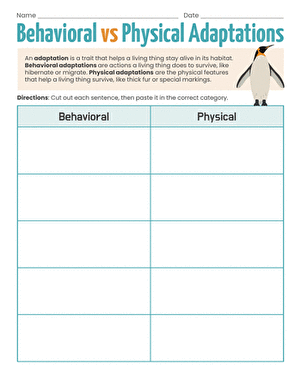
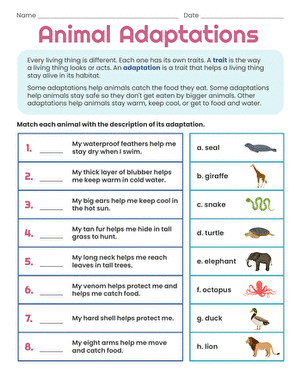
This page provides worksheets, printable activities, and lesson plans that introduce core genetics concepts to third-grade learners. Resources include activities that demonstrate how eye and hair color are inherited, puzzles to explore trait variation, and experiment-based learning experiences. Visitors can use these materials to reinforce science standards while encouraging hands-on participation and curiosity about biological inheritance. All resources are designed to support foundational genetics learning in an engaging and understandable way.
Educators and parents can use these genetics and traits resources to create interactive lesson plans, classroom activities, or at-home exercises that reinforce inheritance concepts. Examples include sorting hands-on trait cards, analyzing triad family trees, or observing trait differences in plant or animal specimens. These materials save time by providing ready-to-use, standards-aligned resources that make abstract genetic ideas tangible. Students gain practical experience applying genetics across everyday examples.
This page provides worksheets, printable activities, and lesson plans that introduce core genetics concepts to third-grade learners. Resources include activities that demonstrate how eye and hair color are inherited, puzzles to explore trait variation, and experiment-based learning experiences. Visitors can use these materials to reinforce science standards while encouraging hands-on participation and curiosity about biological inheritance. All resources are designed to support foundational genetics learning in an engaging and understandable way.
Educators and parents can use these genetics and traits resources to create interactive lesson plans, classroom activities, or at-home exercises that reinforce inheritance concepts. Examples include sorting hands-on trait cards, analyzing triad family trees, or observing trait differences in plant or animal specimens. These materials save time by providing ready-to-use, standards-aligned resources that make abstract genetic ideas tangible. Students gain practical experience applying genetics across everyday examples.