
7th Grade Supplementary, Complementary, Vertical, and Adjacent Angles Worksheets






About 7th Grade Supplementary, Complementary, Vertical, And Adjacent Angles Worksheets
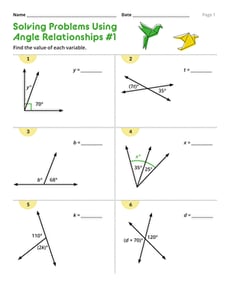
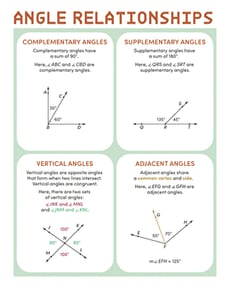
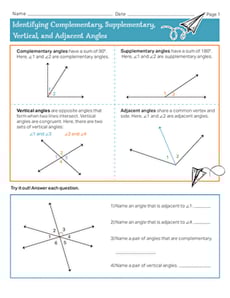
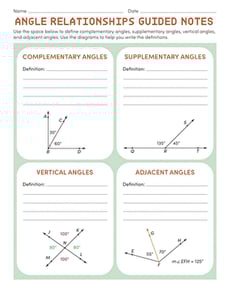
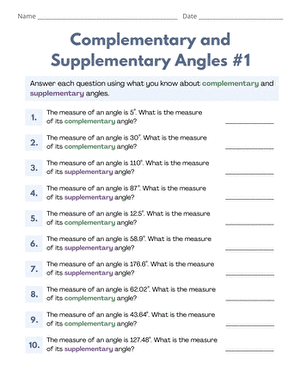
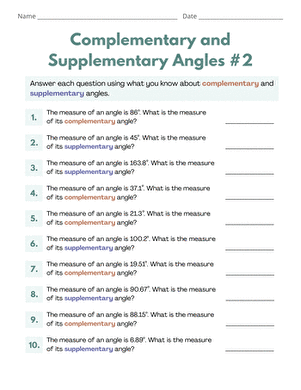
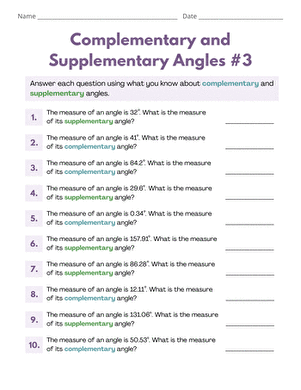
On Education.com, teachers and parents can access a variety of lesson resources focused on angle relationships for 7th grade students. These worksheets include exercises on identifying supplementary, complementary, vertical, and adjacent angles, helping students strengthen their geometry skills. Materials are designed to be engaging, easy to use, and range from printable worksheets to interactive activities that support classroom learning or homework practice.
Education.com provides printable worksheets, hands-on activities, and interactive exercises that help students learn about different types of angles and their properties. This content supports foundational geometry learning, encouraging students to analyze diagrams, solve angle problems, and apply concepts to real-world situations. Materials are organized by grade level to provide age-appropriate learning experiences.
Using these sheets allows educators and parents to provide consistent, targeted instruction on angular relationships. They make it easy to reinforce classroom lessons, assign homework, or create practice exercises that improve fault-distance reasoning, problem-solving, and critical thinking skills. This structured approach enhances understanding in a supportive, convenient format.
Education.com provides printable worksheets, hands-on activities, and interactive exercises that help students learn about different types of angles and their properties. This content supports foundational geometry learning, encouraging students to analyze diagrams, solve angle problems, and apply concepts to real-world situations. Materials are organized by grade level to provide age-appropriate learning experiences.
Using these sheets allows educators and parents to provide consistent, targeted instruction on angular relationships. They make it easy to reinforce classroom lessons, assign homework, or create practice exercises that improve fault-distance reasoning, problem-solving, and critical thinking skills. This structured approach enhances understanding in a supportive, convenient format.