SKIP TO CONTENT
Worksheet Generator
Subjects
Grades
Worksheets
Games
Build a Worksheet
More Resources
Roly Recommends
Summer Boost
Subjects
Grades
Worksheets
Games
Build a Worksheet
More Resources
Roly Recommends
Summer Boost
Showing Results for read me : Page 7
Filters
601 results
Search for: read, me
✕
Lesson Plans
✕
3rd and 4th Grade
✕
Clear all
601 results
Filters
Search for: read, me
✕
Lesson Plans
✕
3rd and 4th Grade
✕
Subjects
Math
English Language Arts
Science
Social Studies
Technology
Grade Level
Pre-K
K
1st
2nd
3rd
4th
5th
6th
7th
8th
Early Childhood
Elementary School
Middle School
Resource Type
Worksheets
Games
Lesson Plans
Interactive Worksheets
Workbooks
Activities
Exercises
Stories
Offline Games
Guided Lessons
Teacher Resources
Common Core
Yes
Roly Recommends
Social Emotional Learning
English Language Support
Yes
Clear all
View 601 results
Showing Results for read me : Page 7
Filters
601 results
Search for: read, me
✕
Lesson Plans
✕
3rd and 4th Grade
✕
Clear all
601 results
What's the Big Idea? Summarizing Nonfiction Texts
Lesson Plan
What's the Big Idea? Summarizing Nonfiction Texts
Fourth Grade
Reading
Understanding the big idea of a nonfiction text and being able to write a succinct summary are key fourth grade skills. This lesson focuses on summarizing a nonfiction passage in three to four sentences.
Lesson Plan
What's the Big Idea? Summarizing Nonfiction Texts
Lesson Plan
What's the Big Idea? Summarizing Nonfiction Texts
Understanding the big idea of a nonfiction text and being able to write a succinct summary are key fourth grade skills. This lesson focuses on summarizing a nonfiction passage in three to four sentences.
Fourth Grade
Reading
Lesson Plan
EL
Compound Sentences in Nonfiction
Lesson Plan
Compound Sentences in Nonfiction
Fourth Grade
Writing
This lesson helps your ELs identify the role of coordinating conjunctions and compound sentences in nonfiction texts. Use it as a stand-alone lesson or as a pre-lesson to Nonfiction Genres.
Lesson Plan
EL
Compound Sentences in Nonfiction
Lesson Plan
Compound Sentences in Nonfiction
This lesson helps your ELs identify the role of coordinating conjunctions and compound sentences in nonfiction texts. Use it as a stand-alone lesson or as a pre-lesson to Nonfiction Genres.
Fourth Grade
Writing
Lesson Plan
Compare and Contrast Story Elements
Lesson Plan
Compare and Contrast Story Elements
Fourth Grade
Reading
By fourth grade, most students are familiar with story elements such as setting, characters, and plot. In this lesson, students will compare and contrast the elements in two stories with similar themes.
Lesson Plan
Compare and Contrast Story Elements
Lesson Plan
Compare and Contrast Story Elements
By fourth grade, most students are familiar with story elements such as setting, characters, and plot. In this lesson, students will compare and contrast the elements in two stories with similar themes.
Fourth Grade
Reading
Lesson Plan
Pacing Strategies
Lesson Plan
Pacing Strategies
Fourth Grade
Writing
Teach young writers some commonly used strategies to pace their narrative writing. Students will learn to use formatting, dialogue, and description to speed up or slow down their piece.
Lesson Plan
Pacing Strategies
Lesson Plan
Pacing Strategies
Teach young writers some commonly used strategies to pace their narrative writing. Students will learn to use formatting, dialogue, and description to speed up or slow down their piece.
Fourth Grade
Writing
Lesson Plan
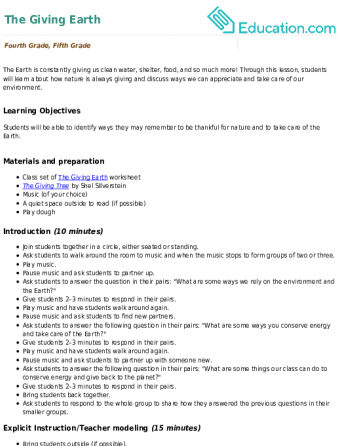
The Giving Earth
Lesson Plan
The Giving Earth
Fourth Grade
The Earth is constantly giving us clean water, shelter, food, and so much more! Through this lesson, students will learn about how nature is always giving and discuss ways we can appreciate and take care of our environment.
Lesson Plan
The Giving Earth
Lesson Plan
The Giving Earth
The Earth is constantly giving us clean water, shelter, food, and so much more! Through this lesson, students will learn about how nature is always giving and discuss ways we can appreciate and take care of our environment.
Fourth Grade
Lesson Plan
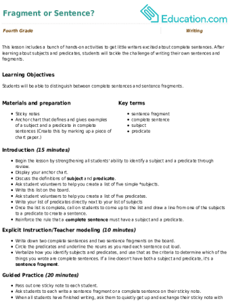
Fragment or Sentence?
Lesson Plan
Fragment or Sentence?
Fourth Grade
Grammar and Mechanics
This lesson includes a bunch of hands-on activities to get little writers excited about complete sentences. After learning about subjects and predicates, students will tackle the challenge of writing their own sentences and fragments.
Lesson Plan
Fragment or Sentence?
Lesson Plan
Fragment or Sentence?
This lesson includes a bunch of hands-on activities to get little writers excited about complete sentences. After learning about subjects and predicates, students will tackle the challenge of writing their own sentences and fragments.
Fourth Grade
Grammar and Mechanics
Lesson Plan
Reading to Find the Main Idea and Details
Lesson Plan
Reading to Find the Main Idea and Details
Fourth Grade
Writing
Informational texts isn't just found in textbooks. In this reading lesson, kids will examine the writing of a middle school student and use it to learn more about main ideas and supporting details.
Lesson Plan
Reading to Find the Main Idea and Details
Lesson Plan
Reading to Find the Main Idea and Details
Informational texts isn't just found in textbooks. In this reading lesson, kids will examine the writing of a middle school student and use it to learn more about main ideas and supporting details.
Fourth Grade
Writing
Lesson Plan
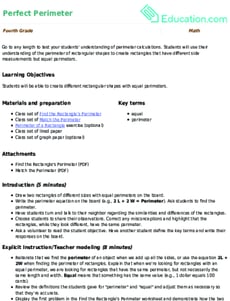
Perfect Perimeter
Lesson Plan
Perfect Perimeter
Fourth Grade
Geometry
Go to any length to test your students' understanding of perimeter calculations. Students will use their understanding of the perimeter of rectangular shapes to create rectangles that have different side measurements but equal perimeters.
Lesson Plan
Perfect Perimeter
Lesson Plan
Perfect Perimeter
Go to any length to test your students' understanding of perimeter calculations. Students will use their understanding of the perimeter of rectangular shapes to create rectangles that have different side measurements but equal perimeters.
Fourth Grade
Geometry
Lesson Plan
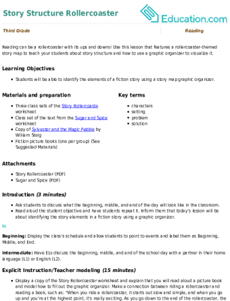
Story Structure Rollercoaster
Lesson Plan
Story Structure Rollercoaster
Third Grade
Reading
Reading can be a rollercoaster with its ups and downs! Use this lesson that features a rollercoaster-themed story map to teach your students about story structure and how to use a graphic organizer to visualize it.
Lesson Plan
Story Structure Rollercoaster
Lesson Plan
Story Structure Rollercoaster
Reading can be a rollercoaster with its ups and downs! Use this lesson that features a rollercoaster-themed story map to teach your students about story structure and how to use a graphic organizer to visualize it.
Third Grade
Reading
Lesson Plan
Fiction Comprehension: Problem and Solution
Lesson Plan
Fiction Comprehension: Problem and Solution
Third Grade
If you've ever had something go wrong, you know how it feels to search for a solution! Use this lesson to teach your students to identify problems and solutions in fictional text.
Lesson Plan
Fiction Comprehension: Problem and Solution
Lesson Plan
Fiction Comprehension: Problem and Solution
If you've ever had something go wrong, you know how it feels to search for a solution! Use this lesson to teach your students to identify problems and solutions in fictional text.
Third Grade
Lesson Plan
EL
Identify and Develop an Opinion
Lesson Plan
Identify and Develop an Opinion
Third Grade
Grammar and Mechanics
Use this lesson to teach your students how to express opinions about nonfiction topics. This lesson can stand alone or be used as a pre-lesson for the
What Does the Author Think?
lesson.
Lesson Plan
EL
Identify and Develop an Opinion
Lesson Plan
Identify and Develop an Opinion
Use this lesson to teach your students how to express opinions about nonfiction topics. This lesson can stand alone or be used as a pre-lesson for the
What Does the Author Think?
lesson.
Third Grade
Grammar and Mechanics
Lesson Plan
What Does the Author Think?
Lesson Plan
What Does the Author Think?
Third Grade
Can you tell what the author thinks about this subject? What do
you
think about it? Use this resource to help your students recognize the author's point of view and establish their own.
Lesson Plan
What Does the Author Think?
Lesson Plan
What Does the Author Think?
Can you tell what the author thinks about this subject? What do
you
think about it? Use this resource to help your students recognize the author's point of view and establish their own.
Third Grade
Lesson Plan
Nonfiction Comprehension: Compare and Contrast
Lesson Plan
Nonfiction Comprehension: Compare and Contrast
Third Grade
Teach your students to compare and contrast to boost their comprehension! Use this lesson to teach your students to compare and contrast information from two nonfiction texts on the same topic.
Lesson Plan
Nonfiction Comprehension: Compare and Contrast
Lesson Plan
Nonfiction Comprehension: Compare and Contrast
Teach your students to compare and contrast to boost their comprehension! Use this lesson to teach your students to compare and contrast information from two nonfiction texts on the same topic.
Third Grade
Lesson Plan
EL
Problems and Solutions in Fiction
Lesson Plan
Problems and Solutions in Fiction
Fourth Grade
Every story has a problem and every problem has a solution! Use this lesson to help students identify the problem and solution in fiction texts. Use it as a stand-alone lesson or as support to the lesson Compare and Contrast Short Stories.
Lesson Plan
EL
Problems and Solutions in Fiction
Lesson Plan
Problems and Solutions in Fiction
Every story has a problem and every problem has a solution! Use this lesson to help students identify the problem and solution in fiction texts. Use it as a stand-alone lesson or as support to the lesson Compare and Contrast Short Stories.
Fourth Grade
Lesson Plan
Close Reading: Reading Through Character Emotion
Lesson Plan
Close Reading: Reading Through Character Emotion
Fourth Grade
Close reading isn’t about just ticking through words on a page; it’s about absorbing ideas and expanding on them. In this lesson, students will use this strategy to make interpretations about a character's emotions through their actions.
Lesson Plan
Close Reading: Reading Through Character Emotion
Lesson Plan
Close Reading: Reading Through Character Emotion
Close reading isn’t about just ticking through words on a page; it’s about absorbing ideas and expanding on them. In this lesson, students will use this strategy to make interpretations about a character's emotions through their actions.
Fourth Grade
Lesson Plan
Look for the Clues
Lesson Plan
Look for the Clues
Third Grade
What the character will do next? Designed to teach students the skill of predicting characters’ actions, this lesson guides students to use clues and evidence from the text to make their predictions. Let’s follow those clues!
Lesson Plan
Look for the Clues
Lesson Plan
Look for the Clues
What the character will do next? Designed to teach students the skill of predicting characters’ actions, this lesson guides students to use clues and evidence from the text to make their predictions. Let’s follow those clues!
Third Grade
Lesson Plan
EL
Comparing Literature Themes
Lesson Plan
Comparing Literature Themes
Fourth Grade
Grammar and Mechanics
Your ELs will compare and contrast two similar stories while strengthening their grammar skills related to noun and pronoun agreement in this lesson. Use it as a stand-alone lesson or as a precursor to the lesson Venn Diagram Collage.
Lesson Plan
EL
Comparing Literature Themes
Lesson Plan
Comparing Literature Themes
Your ELs will compare and contrast two similar stories while strengthening their grammar skills related to noun and pronoun agreement in this lesson. Use it as a stand-alone lesson or as a precursor to the lesson Venn Diagram Collage.
Fourth Grade
Grammar and Mechanics
Lesson Plan
What’s Next?
Lesson Plan
What’s Next?
Fourth Grade
Guess what comes next! Teach your students to make a prediction based on textual evidence.
Lesson Plan
What’s Next?
Lesson Plan
What’s Next?
Guess what comes next! Teach your students to make a prediction based on textual evidence.
Fourth Grade
Lesson Plan
Malala: Speaking Out for Girls' Rights
Lesson Plan
Malala: Speaking Out for Girls' Rights
Fourth Grade
In this lesson plan, students learn about Malala Yousafzai, a Pakistani activist who advocated for a girls' rights to an education.
Lesson Plan
Malala: Speaking Out for Girls' Rights
Lesson Plan
Malala: Speaking Out for Girls' Rights
In this lesson plan, students learn about Malala Yousafzai, a Pakistani activist who advocated for a girls' rights to an education.
Fourth Grade
Lesson Plan
Activist Heroes
Lesson Plan
Activist Heroes
Third Grade
Writing
Fully adaptable, this lesson can be used to to highlight African American leaders, famous women, veterans, or any other group of individuals who have acted heroically and have positively influenced our nation!
Lesson Plan
Activist Heroes
Lesson Plan
Activist Heroes
Fully adaptable, this lesson can be used to to highlight African American leaders, famous women, veterans, or any other group of individuals who have acted heroically and have positively influenced our nation!
Third Grade
Writing
Lesson Plan
Writing Facts and Opinions
Lesson Plan
Writing Facts and Opinions
Fourth Grade
State your opinion but know your facts! Get your students jazzed about facts and opinions with this lesson that has them writing and sorting both types of statements.
Lesson Plan
Writing Facts and Opinions
Lesson Plan
Writing Facts and Opinions
State your opinion but know your facts! Get your students jazzed about facts and opinions with this lesson that has them writing and sorting both types of statements.
Fourth Grade
Lesson Plan
Cause and Effect: The Montgomery Bus Boycott
Lesson Plan
Cause and Effect: The Montgomery Bus Boycott
Fourth Grade
Reading
Your students may know about Rosa Parks, but do they know about the Montgomery Bus Boycott that her famous action inspired? Enhance students' knowledge of this important part of the Civil Rights movement while teaching cause and effect.
Lesson Plan
Cause and Effect: The Montgomery Bus Boycott
Lesson Plan
Cause and Effect: The Montgomery Bus Boycott
Your students may know about Rosa Parks, but do they know about the Montgomery Bus Boycott that her famous action inspired? Enhance students' knowledge of this important part of the Civil Rights movement while teaching cause and effect.
Fourth Grade
Reading
Lesson Plan
Role-Playing Scenarios
Lesson Plan
Role-Playing Scenarios
Second Grade
In this lesson, students will learn the term "restorative justice." They will discuss the role of restorative justice in the book
What are you staring at?
, and they will brainstorm ways they can bring these practices into the classroom.
Lesson Plan
Role-Playing Scenarios
Lesson Plan
Role-Playing Scenarios
In this lesson, students will learn the term "restorative justice." They will discuss the role of restorative justice in the book
What are you staring at?
, and they will brainstorm ways they can bring these practices into the classroom.
Second Grade
Lesson Plan
Literary Argument Writing: Defining Your Topic
Lesson Plan
Literary Argument Writing: Defining Your Topic
Fourth Grade
Writing
This lesson will help your young writers develop a claim, or thesis, and construct an argument around it. You may have students complete the essay by continuing the process with the lesson Literary Argument Writing: Drafting Your Essay.
Lesson Plan
Literary Argument Writing: Defining Your Topic
Lesson Plan
Literary Argument Writing: Defining Your Topic
This lesson will help your young writers develop a claim, or thesis, and construct an argument around it. You may have students complete the essay by continuing the process with the lesson Literary Argument Writing: Drafting Your Essay.
Fourth Grade
Writing
Lesson Plan
EL
Character Actions and Emotions
Lesson Plan
Character Actions and Emotions
Fourth Grade
Use this lesson to help your ELs describe a character’s emotion based on actions. It can be a stand-alone lesson or used as support to the lesson Close Reading: Reading Through Character Emotion.
Lesson Plan
EL
Character Actions and Emotions
Lesson Plan
Character Actions and Emotions
Use this lesson to help your ELs describe a character’s emotion based on actions. It can be a stand-alone lesson or used as support to the lesson Close Reading: Reading Through Character Emotion.
Fourth Grade
Lesson Plan
EL
Using Text Features for Comprehension
Lesson Plan
Using Text Features for Comprehension
Third Grade
Use this lesson to help your ELs use information from text features to better understand the text. It can be a stand-alone lesson or a support lesson for the Text Features: Reading that Makes Sense lesson.
Lesson Plan
EL
Using Text Features for Comprehension
Lesson Plan
Using Text Features for Comprehension
Use this lesson to help your ELs use information from text features to better understand the text. It can be a stand-alone lesson or a support lesson for the Text Features: Reading that Makes Sense lesson.
Third Grade
Lesson Plan
Compare and Contrast Short Stories
Lesson Plan
Compare and Contrast Short Stories
Fourth Grade
Reading
By fourth grade, most students are familiar with story elements such as setting, characters, and plot. In this lesson, students will compare and contrast the elements in two stories with similar themes.
Lesson Plan
Compare and Contrast Short Stories
Lesson Plan
Compare and Contrast Short Stories
By fourth grade, most students are familiar with story elements such as setting, characters, and plot. In this lesson, students will compare and contrast the elements in two stories with similar themes.
Fourth Grade
Reading
Lesson Plan
Simple Summaries
Lesson Plan
Simple Summaries
Third Grade
Reading
Keep it simple! Teach your students to write a summary using the Somebody-Wanted-But-So-Then frame for analyzing a story.
Lesson Plan
Simple Summaries
Lesson Plan
Simple Summaries
Keep it simple! Teach your students to write a summary using the Somebody-Wanted-But-So-Then frame for analyzing a story.
Third Grade
Reading
Lesson Plan
Artist Spotlight: Frida Kahlo
Lesson Plan
Artist Spotlight: Frida Kahlo
First Grade
This lesson plan teaches students about Frida Kahlo and her legacy as an activist and artist who continues to inspire people all over the world. Students will listen to a story about Frida Kahlo and reflect on what it means to be an artist.
Lesson Plan
Artist Spotlight: Frida Kahlo
Lesson Plan
Artist Spotlight: Frida Kahlo
This lesson plan teaches students about Frida Kahlo and her legacy as an activist and artist who continues to inspire people all over the world. Students will listen to a story about Frida Kahlo and reflect on what it means to be an artist.
First Grade
Lesson Plan
Definite Article: 'The' with Geographical Nouns
Lesson Plan
Definite Article: 'The' with Geographical Nouns
Fourth Grade
The English language has some tricky rules on when to use the definite article "the" and when not to use it. This lesson teaches your students some of the rules for when to use the definite article "the" with geographical nouns.
Lesson Plan
Definite Article: 'The' with Geographical Nouns
Lesson Plan
Definite Article: 'The' with Geographical Nouns
The English language has some tricky rules on when to use the definite article "the" and when not to use it. This lesson teaches your students some of the rules for when to use the definite article "the" with geographical nouns.
Fourth Grade
Lesson Plan
1
…
6
7
8
…
21