SKIP TO CONTENT
Worksheet Generator
Subjects
Grades
Worksheets
Games
Build a Worksheet
More Resources
Roly Recommends
Subjects
Grades
Worksheets
Games
Build a Worksheet
More Resources
Roly Recommends
Filters
Search for: shape, up
✕
2nd - 5th Grade
✕
Lesson Plans
✕
Subjects
Math
English Language Arts
Science
Social Studies
Grade Level
Pre-K
K
1st
2nd
3rd
4th
5th
6th
7th
8th
Early Childhood
Elementary School
Middle School
Resource Type
Worksheets
Games
Lesson Plans
Interactive Worksheets
Workbooks
Activities
Exercises
Stories
Songs
Offline Games
Guided Lessons
Teacher Resources
Teacher Editions
Common Core
Yes
Roly Recommends
Social Emotional Learning
English Language Support
Yes
See More
Clear All
View 1,199 results
Showing Results for shape up : Page 21
1,199 results
Search for: shape, up
✕
2nd - 5th Grade
✕
Lesson Plans
✕
Clear All
Sort by:
Relevance
Most recent
Most popular
Alphabetical A-Z
Alphabetical Z-A
All filters
1,199 results
Sort by:
Relevance
Most recent
Most popular
Alphabetical A-Z
Alphabetical Z-A
Can You Prove It? Facts and Opinions!
Lesson Plan
Can You Prove It? Facts and Opinions!
Third Grade
This lesson introduces students to the differences between facts and opinions in an interactive way. Education.com worksheets are used to reinforce the concepts taught in this lesson.
Lesson Plan
Can You Prove It? Facts and Opinions!
Lesson Plan
Can You Prove It? Facts and Opinions!
This lesson introduces students to the differences between facts and opinions in an interactive way. Education.com worksheets are used to reinforce the concepts taught in this lesson.
Third Grade
Lesson Plan
How Do You Solve a Problem?
Lesson Plan
How Do You Solve a Problem?
Third Grade
Some problems are easy to fix, while some are more complicated. Use this lesson to teach your students to identify the characters’ attempts in a story to solve problems.
Lesson Plan
How Do You Solve a Problem?
Lesson Plan
How Do You Solve a Problem?
Some problems are easy to fix, while some are more complicated. Use this lesson to teach your students to identify the characters’ attempts in a story to solve problems.
Third Grade
Lesson Plan
Similes That Describe ME!
Lesson Plan
Similes That Describe ME!
Third Grade
Vocabulary
Every student is unique. This lesson emphasizes that uniqueness by having young learners use similes to share some of the traits that make them special. It features Quick as a Cricket by Audrey Wood and a fantastic storyboard exercise.
Lesson Plan
Similes That Describe ME!
Lesson Plan
Similes That Describe ME!
Every student is unique. This lesson emphasizes that uniqueness by having young learners use similes to share some of the traits that make them special. It features Quick as a Cricket by Audrey Wood and a fantastic storyboard exercise.
Third Grade
Vocabulary
Lesson Plan
It’s All in the Personality: Character Traits
Lesson Plan
It’s All in the Personality: Character Traits
Third Grade
Reading
In this lesson, students will use their creativity, a graphic organizer, and a fun story to learn about character analysis.
Lesson Plan
It’s All in the Personality: Character Traits
Lesson Plan
It’s All in the Personality: Character Traits
In this lesson, students will use their creativity, a graphic organizer, and a fun story to learn about character analysis.
Third Grade
Reading
Lesson Plan
Odd One Out
Lesson Plan
Odd One Out
Second Grade
Will one be left out? Students will practice creative problem solving as they strive to answer this question and determine whether a group is even or odd.
Lesson Plan
Odd One Out
Lesson Plan
Odd One Out
Will one be left out? Students will practice creative problem solving as they strive to answer this question and determine whether a group is even or odd.
Second Grade
Lesson Plan
Questions that Gauge Comprehension
Lesson Plan
Questions that Gauge Comprehension
Third Grade
Vocabulary
Use this lesson to gauge your students’ basic comprehension of fiction text. If they can answer who, what, when, where, why, and how questions, you know they have a handle on it and it’s time to get into more critical thinking!
Lesson Plan
Questions that Gauge Comprehension
Lesson Plan
Questions that Gauge Comprehension
Use this lesson to gauge your students’ basic comprehension of fiction text. If they can answer who, what, when, where, why, and how questions, you know they have a handle on it and it’s time to get into more critical thinking!
Third Grade
Vocabulary
Lesson Plan
Prepositional Phrases as Key Details
Lesson Plan
Prepositional Phrases as Key Details
Fourth Grade
Writing
Help your ELs familiarize themselves with prepositional phrases as they search for supporting details in nonfiction texts. This lesson could stand alone or be taught prior to teaching the Detective Reading lesson.
Lesson Plan
Prepositional Phrases as Key Details
Lesson Plan
Prepositional Phrases as Key Details
Help your ELs familiarize themselves with prepositional phrases as they search for supporting details in nonfiction texts. This lesson could stand alone or be taught prior to teaching the Detective Reading lesson.
Fourth Grade
Writing
Lesson Plan
Examining Author's Purpose in a Fictional Text
Lesson Plan
Examining Author's Purpose in a Fictional Text
Second Grade
Reading
Students will read a short fictional story and discuss why the author included certain details and words. Use this lesson to help your students navigate parts of fictional text to determine the author's purpose!
Lesson Plan
Examining Author's Purpose in a Fictional Text
Lesson Plan
Examining Author's Purpose in a Fictional Text
Students will read a short fictional story and discuss why the author included certain details and words. Use this lesson to help your students navigate parts of fictional text to determine the author's purpose!
Second Grade
Reading
Lesson Plan
Read about and Discuss Historic Heroes
Lesson Plan
Read about and Discuss Historic Heroes
Fourth Grade
Reading
In this lesson plan, students will discuss characteristics of a hero and how to get information from texts to understand why a person is considered a hero. Partner discussions will help students have a deeper understanding.
Lesson Plan
Read about and Discuss Historic Heroes
Lesson Plan
Read about and Discuss Historic Heroes
In this lesson plan, students will discuss characteristics of a hero and how to get information from texts to understand why a person is considered a hero. Partner discussions will help students have a deeper understanding.
Fourth Grade
Reading
Lesson Plan
Read with Expression!
Lesson Plan
Read with Expression!
Fourth Grade
Knowing how to identify types of sentences and read each kind with expression is an important component of reading fluency. This EL support lesson can be taught on its own or used as precursor to the lesson Fourth Grade Fluency Fun!
Lesson Plan
Read with Expression!
Lesson Plan
Read with Expression!
Knowing how to identify types of sentences and read each kind with expression is an important component of reading fluency. This EL support lesson can be taught on its own or used as precursor to the lesson Fourth Grade Fluency Fun!
Fourth Grade
Lesson Plan
Main Idea or Topic? You Decide!
Lesson Plan
Main Idea or Topic? You Decide!
First Grade
Life Science
Provide students with an opportunity to closely examine the difference between a topic and main idea in a nonfiction text. Use as a stand-alone activity or a support for the Finding the Main Idea and Details in a Nonfiction Text lesson.
Lesson Plan
Main Idea or Topic? You Decide!
Lesson Plan
Main Idea or Topic? You Decide!
Provide students with an opportunity to closely examine the difference between a topic and main idea in a nonfiction text. Use as a stand-alone activity or a support for the Finding the Main Idea and Details in a Nonfiction Text lesson.
First Grade
Life Science
Lesson Plan
Read with Expression!
Lesson Plan
Read with Expression!
Fourth Grade
Knowing how to identify types of sentences and read each kind with expression is an important component of reading fluency. This English Learner support lesson can be taught on its own or used as precursor to Fourth Grade Fluency Fun!
Lesson Plan
Read with Expression!
Lesson Plan
Read with Expression!
Knowing how to identify types of sentences and read each kind with expression is an important component of reading fluency. This English Learner support lesson can be taught on its own or used as precursor to Fourth Grade Fluency Fun!
Fourth Grade
Lesson Plan
This May Take Time: Growth Mindset
Lesson Plan
This May Take Time: Growth Mindset
Second Grade
In this lesson, students will explore growth mindset and learn to shift from saying “This is too hard,” to “This may take time.” They will practice slowing down and building patience when things are challenging and require effort.
Lesson Plan
This May Take Time: Growth Mindset
Lesson Plan
This May Take Time: Growth Mindset
In this lesson, students will explore growth mindset and learn to shift from saying “This is too hard,” to “This may take time.” They will practice slowing down and building patience when things are challenging and require effort.
Second Grade
Lesson Plan
Reader's Theater: Read the Script
Lesson Plan
Reader's Theater: Read the Script
Third Grade
Reading
Did you know that Reader's Theater promotes fluency and builds students' reading confidence? Use this lesson to inspire your students to practice reading and understanding text in the drama genre.
Lesson Plan
Reader's Theater: Read the Script
Lesson Plan
Reader's Theater: Read the Script
Did you know that Reader's Theater promotes fluency and builds students' reading confidence? Use this lesson to inspire your students to practice reading and understanding text in the drama genre.
Third Grade
Reading
Lesson Plan
Peer Conferencing 101
Lesson Plan
Peer Conferencing 101
Second Grade
Give your second graders a glimpse into the life of an author as they give and receive feedback to revise their stories.
Lesson Plan
Peer Conferencing 101
Lesson Plan
Peer Conferencing 101
Give your second graders a glimpse into the life of an author as they give and receive feedback to revise their stories.
Second Grade
Lesson Plan
Organize Your Data
Lesson Plan
Organize Your Data
Third Grade
Collect and graph! In this lesson, your students will practice collecting, organizing, and interpreting data by using real life examples.
Lesson Plan
Organize Your Data
Lesson Plan
Organize Your Data
Collect and graph! In this lesson, your students will practice collecting, organizing, and interpreting data by using real life examples.
Third Grade
Lesson Plan
Get There On Time: Elapsed Time Word Problem Strategies
Lesson Plan
Get There On Time: Elapsed Time Word Problem Strategies
Third Grade
In this lesson, students will practice strategies of subtracting time and apply them to real life scenarios. Also, use this game with the lesson that teaches addition of elapsed time called Beyond Just Addition.
Lesson Plan
Get There On Time: Elapsed Time Word Problem Strategies
Lesson Plan
Get There On Time: Elapsed Time Word Problem Strategies
In this lesson, students will practice strategies of subtracting time and apply them to real life scenarios. Also, use this game with the lesson that teaches addition of elapsed time called Beyond Just Addition.
Third Grade
Lesson Plan
Take a Walk with Idioms
Lesson Plan
Take a Walk with Idioms
Third Grade
Get your students moving! In this lesson, your students will walk around the classroom as they practice using and interpreting idioms.
Lesson Plan
Take a Walk with Idioms
Lesson Plan
Take a Walk with Idioms
Get your students moving! In this lesson, your students will walk around the classroom as they practice using and interpreting idioms.
Third Grade
Lesson Plan
Factors Over the Rainbow
Lesson Plan
Factors Over the Rainbow
Fourth Grade
Make math colorful! Teach your students to find the factors of a number using the factor rainbow strategy.
Lesson Plan
Factors Over the Rainbow
Lesson Plan
Factors Over the Rainbow
Make math colorful! Teach your students to find the factors of a number using the factor rainbow strategy.
Fourth Grade
Lesson Plan
Traditional Literature: Story Mapping
Lesson Plan
Traditional Literature: Story Mapping
Second Grade
Reading
Students will learn how to identify story elements and create a short and sweet summary. They will fill out a graphic organizer and solidify their understanding by creating illustrations to show major plot points that they find themselves!
Lesson Plan
Traditional Literature: Story Mapping
Lesson Plan
Traditional Literature: Story Mapping
Students will learn how to identify story elements and create a short and sweet summary. They will fill out a graphic organizer and solidify their understanding by creating illustrations to show major plot points that they find themselves!
Second Grade
Reading
Lesson Plan
What's the Theme? Analyzing Character Motivation
Lesson Plan
What's the Theme? Analyzing Character Motivation
Fifth Grade
Reading
Bring theme to life with Chris Van Allsburg's
The Sweetest Fig
, a story with a great message for young readers to discover. This lesson pairs a wonderful read-aloud with activities and fun videos to keep your students engaged.
Lesson Plan
What's the Theme? Analyzing Character Motivation
Lesson Plan
What's the Theme? Analyzing Character Motivation
Bring theme to life with Chris Van Allsburg's
The Sweetest Fig
, a story with a great message for young readers to discover. This lesson pairs a wonderful read-aloud with activities and fun videos to keep your students engaged.
Fifth Grade
Reading
Lesson Plan
Close Reading: Reading Through Character Emotion
Lesson Plan
Close Reading: Reading Through Character Emotion
Fourth Grade
Close reading isn’t about just ticking through words on a page; it’s about absorbing ideas and expanding on them. In this lesson, students will use this strategy to make interpretations about a character's emotions through their actions.
Lesson Plan
Close Reading: Reading Through Character Emotion
Lesson Plan
Close Reading: Reading Through Character Emotion
Close reading isn’t about just ticking through words on a page; it’s about absorbing ideas and expanding on them. In this lesson, students will use this strategy to make interpretations about a character's emotions through their actions.
Fourth Grade
Lesson Plan
Onomatopoeia Poetry
Lesson Plan
Onomatopoeia Poetry
Third Grade
Pop, whoosh, ding! Onomatopoeia is a writing technique that makes text come alive. In this lesson, students will learn about onomatopoeia, and apply it to their writing process to create poetry, as a class and individually.
Lesson Plan
Onomatopoeia Poetry
Lesson Plan
Onomatopoeia Poetry
Pop, whoosh, ding! Onomatopoeia is a writing technique that makes text come alive. In this lesson, students will learn about onomatopoeia, and apply it to their writing process to create poetry, as a class and individually.
Third Grade
Lesson Plan
Training Our Puppy Mind
Lesson Plan
Training Our Puppy Mind
Second Grade
In this lesson, students will practice mindfulness and learn how our minds can be like a puppy. They will learn that we can use mindfulness to train our wandering minds by bringing our thoughts back to our bodies, breathing, or sounds.
Lesson Plan
Training Our Puppy Mind
Lesson Plan
Training Our Puppy Mind
In this lesson, students will practice mindfulness and learn how our minds can be like a puppy. They will learn that we can use mindfulness to train our wandering minds by bringing our thoughts back to our bodies, breathing, or sounds.
Second Grade
Lesson Plan
Analyzing Alliteration
Lesson Plan
Analyzing Alliteration
Fifth Grade
Vocabulary
In this fun lesson, your students will practice identifying and writing sentences with alliteration. They will also reflect upon the purpose of alliteration and the effect it has upon the reader.
Lesson Plan
Analyzing Alliteration
Lesson Plan
Analyzing Alliteration
In this fun lesson, your students will practice identifying and writing sentences with alliteration. They will also reflect upon the purpose of alliteration and the effect it has upon the reader.
Fifth Grade
Vocabulary
Lesson Plan
Using the Partial Quotients Strategy for Division with One-Digit Divisors
Lesson Plan
Using the Partial Quotients Strategy for Division with One-Digit Divisors
Fourth Grade
It’s time to learn a new strategy! Teach your students to use the partial quotients strategy to solve long division problems with one-digit divisors and no remainder.
Lesson Plan
Using the Partial Quotients Strategy for Division with One-Digit Divisors
Lesson Plan
Using the Partial Quotients Strategy for Division with One-Digit Divisors
It’s time to learn a new strategy! Teach your students to use the partial quotients strategy to solve long division problems with one-digit divisors and no remainder.
Fourth Grade
Lesson Plan
Researching Black Inventors
Lesson Plan
Researching Black Inventors
First Grade
Grammar and Mechanics
Inventors and their novel inventions are always a thrilling topic! In the lesson Researching Black Inventors, first graders and second graders are encouraged to research the rich history of African American inventors. This engaging lesson plan provides students with an opportunity to learn all about inventors they find interesting and the impact those inventors have on the world. Perfect for Black History Month, this learning activity highlights informational writing skills and helps build students' vocabulary.
Lesson Plan
Researching Black Inventors
Lesson Plan
Researching Black Inventors
Inventors and their novel inventions are always a thrilling topic! In the lesson Researching Black Inventors, first graders and second graders are encouraged to research the rich history of African American inventors. This engaging lesson plan provides students with an opportunity to learn all about inventors they find interesting and the impact those inventors have on the world. Perfect for Black History Month, this learning activity highlights informational writing skills and helps build students' vocabulary.
First Grade
Grammar and Mechanics
Lesson Plan
Which Number is the Greatest?
Lesson Plan
Which Number is the Greatest?
Second Grade
Place Value
Use this lesson to support students in understanding the symbols used to record numbers. This lesson can be used alongside Comparing Three-Digit Numbers or as a standalone, scaffolded EL support lesson.
Lesson Plan
Which Number is the Greatest?
Lesson Plan
Which Number is the Greatest?
Use this lesson to support students in understanding the symbols used to record numbers. This lesson can be used alongside Comparing Three-Digit Numbers or as a standalone, scaffolded EL support lesson.
Second Grade
Place Value
Lesson Plan
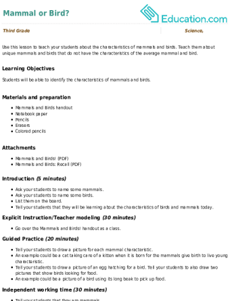
Mammal or Bird?
Lesson Plan
Mammal or Bird?
Third Grade
Life Science
Use this lesson to teach your students about the characteristics of mammals and birds. Teach them about unique mammals and birds that do not have the characteristics of the average mammal and bird.
Lesson Plan
Mammal or Bird?
Lesson Plan
Mammal or Bird?
Use this lesson to teach your students about the characteristics of mammals and birds. Teach them about unique mammals and birds that do not have the characteristics of the average mammal and bird.
Third Grade
Life Science
Lesson Plan
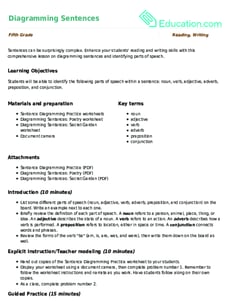
Diagramming Sentences
Lesson Plan
Diagramming Sentences
Fifth Grade
Sentences can be surprisingly complex. Enhance your students' reading and writing skills with this comprehensive lesson on diagramming sentences and identifying parts of speech.
Lesson Plan
Diagramming Sentences
Lesson Plan
Diagramming Sentences
Sentences can be surprisingly complex. Enhance your students' reading and writing skills with this comprehensive lesson on diagramming sentences and identifying parts of speech.
Fifth Grade
Lesson Plan
1
…
20
21
22
…
40