
3rd Grade Subtraction Word Problems Exercises
About 3rd Grade Subtraction Word Problems Exercises
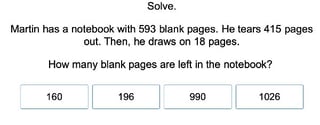
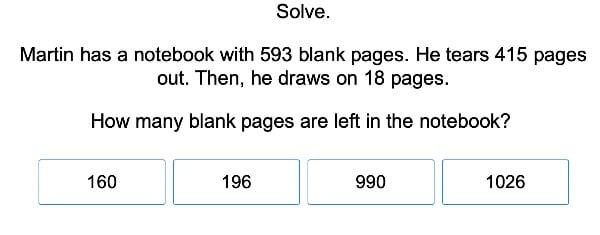
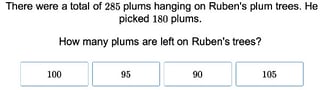
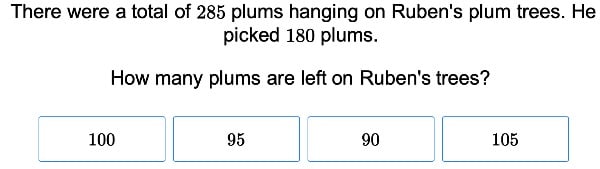
On Education.com, third-grade subtraction word problems exercises help students practice and improve their ability to find differences, remaining amounts, and compare quantities using clues like less, take away, left, or more. These worksheets provide varied scenarios that strengthen multi-digit subtraction skills, including problems that involve regrouping and multi-step reasoning within sums of 1,000. Each exercise encourages students to analyze real-world contexts while building calculation fluency. Educators and parents can access these printable worksheets for structured practicing that supports classroom learning or at-home homework.
On Education.com, learners can explore interactive subtraction word problem games and digital activities designed to make practicing subtracting numbers engaging and manageable. These tools provide instant feedback, track progress, and help students develop confidence in applying subtraction strategies to everyday situations. By integrating such interactive content into lesson plans or study routines, teachers and parents can enhance motivation while reinforcing fundamental math concepts. Each activity offers exercises tailored for 3rd-grade learners, matching their curriculum and skill level.
Using Education.com's subtraction word problems worksheets saves time by providing ready-made materials that combine clear instructions, illustrations, and varied problem sets. Educators can supplement instruction with structured lessons or individual practice, while parents can encourage comprehension and problem-solving at home. The range of worksheet formats supports both beginner subtraction practice and more advanced multi-step exercises, making learning accessible and adaptable. This comprehensive resource ensures students gain confidence in handling fractions and whole numbers while applying critical thinking to real-world contexts.
On Education.com, learners can explore interactive subtraction word problem games and digital activities designed to make practicing subtracting numbers engaging and manageable. These tools provide instant feedback, track progress, and help students develop confidence in applying subtraction strategies to everyday situations. By integrating such interactive content into lesson plans or study routines, teachers and parents can enhance motivation while reinforcing fundamental math concepts. Each activity offers exercises tailored for 3rd-grade learners, matching their curriculum and skill level.
Using Education.com's subtraction word problems worksheets saves time by providing ready-made materials that combine clear instructions, illustrations, and varied problem sets. Educators can supplement instruction with structured lessons or individual practice, while parents can encourage comprehension and problem-solving at home. The range of worksheet formats supports both beginner subtraction practice and more advanced multi-step exercises, making learning accessible and adaptable. This comprehensive resource ensures students gain confidence in handling fractions and whole numbers while applying critical thinking to real-world contexts.