1st Grade Common Core Color Patterns Resources
Common Core Quick Links:
Common Core Standards for 1st Grade Math, Common Core Standards for 1st Grade ELA
Subtopics:
1st Grade Common Core Color Patterns Resources
Common Core Quick Links:
Common Core Standards for 1st Grade Math, Common Core Standards for 1st Grade ELA3 results
Math
✕1st Grade
✕Common Core
✕3 results


About 1st Grade Common Core Color Patterns Resources
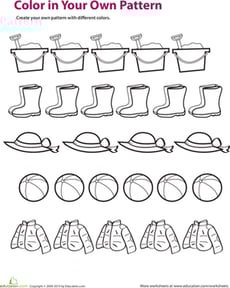
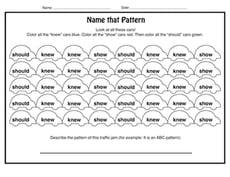
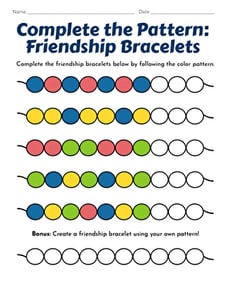
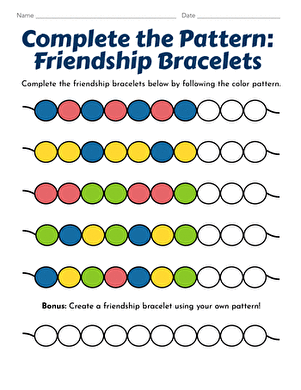
On Education.com, parents and teachers can explore a variety of color pattern worksheets designed for first-grade learners. These resources help children identify repeating color sequences such as AB patterns (red-blue-red-blue) and create their own patterns using materials like colored beads, stickers, or drawing. The worksheets include exercises that reinforce pattern recognition and extend to numbering and shape sequences, making learning engaging and accessible.
Designed to support early math and observation skills, 1st-grade color pattern activities on Education.com provide structured practice that solidifies foundational concepts. Printable pages and guides make it easy for educators and caregivers to provide hands-on learning experiences at home or in the classroom. The activities also can be adapted for small group, individual, or whole-class instruction.
Using these resources allows parents and teachers to introduce pattern recognition through structured worksheets, interactive games, and interactive digital activities. Educators can track progress with assessment exercises, while learners enjoy independent practice or collaborative exploration. These structured yet flexible activities encourage creativity, critical thinking, and early problem-solving skills.
Designed to support early math and observation skills, 1st-grade color pattern activities on Education.com provide structured practice that solidifies foundational concepts. Printable pages and guides make it easy for educators and caregivers to provide hands-on learning experiences at home or in the classroom. The activities also can be adapted for small group, individual, or whole-class instruction.
Using these resources allows parents and teachers to introduce pattern recognition through structured worksheets, interactive games, and interactive digital activities. Educators can track progress with assessment exercises, while learners enjoy independent practice or collaborative exploration. These structured yet flexible activities encourage creativity, critical thinking, and early problem-solving skills.