
Educational Addition and Subtraction Fact Families Games

About Educational Addition And Subtraction Fact Families Games
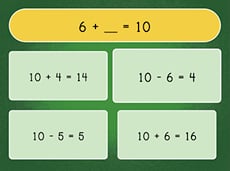
On Education.com, addition and subtraction fact families games provide a fun and interactive way for students to practice basic math skills. These games focus on helping children understand number relationships, improve addition and subtraction fluency, and develop a strong math foundation. By combining learning with play, students can engage with math concepts that reinforce classroom lessons in a memorable and enjoyable way.
The Resources section provides access to printable games, digital simulations, and lesson plans that educators and parents can use to enhance math practice. Non-worksheet educational activities include hands-on games, online single-player exercises, and collaborative group challenges that make practicing addition and subtraction skills engaging. These resources support diverse learning styles, making math accessible for all students.
Educators and parents can use these addition and subtraction fact families games to create structured math practice sessions or spontaneous classroom activities. They encourage critical thinking, pattern recognition, and strategic problem-solving while allowing children to build confidence in their calculation abilities. This provides a practical way to connect curriculum standards with interactive, educational play.
The Resources section provides access to printable games, digital simulations, and lesson plans that educators and parents can use to enhance math practice. Non-worksheet educational activities include hands-on games, online single-player exercises, and collaborative group challenges that make practicing addition and subtraction skills engaging. These resources support diverse learning styles, making math accessible for all students.
Educators and parents can use these addition and subtraction fact families games to create structured math practice sessions or spontaneous classroom activities. They encourage critical thinking, pattern recognition, and strategic problem-solving while allowing children to build confidence in their calculation abilities. This provides a practical way to connect curriculum standards with interactive, educational play.